
 E-Paper



The other Ghalib: Meet one of the last calligraphers of Old Delhi’s Urdu Bazaar
One of the last calligraphers of Old Delhi’s Urdu Bazaar, Mohammad Ghalib, talks about the art of calligraphy, why it is fading and the reason why he chose to be a Katib (calligrapher).

 Prefer HTon Google


Near Old Delhi’s Jama Masjid, there are food vendors of Urdu Bazaar and, in a small makeshift shop sits Mohammad Ghalib — one of Delhi’s last Katibs (calligraphers). “A game of the youthful,” is how this Ghalib describes his profession, recalling the long history behind the art of calligraphy.
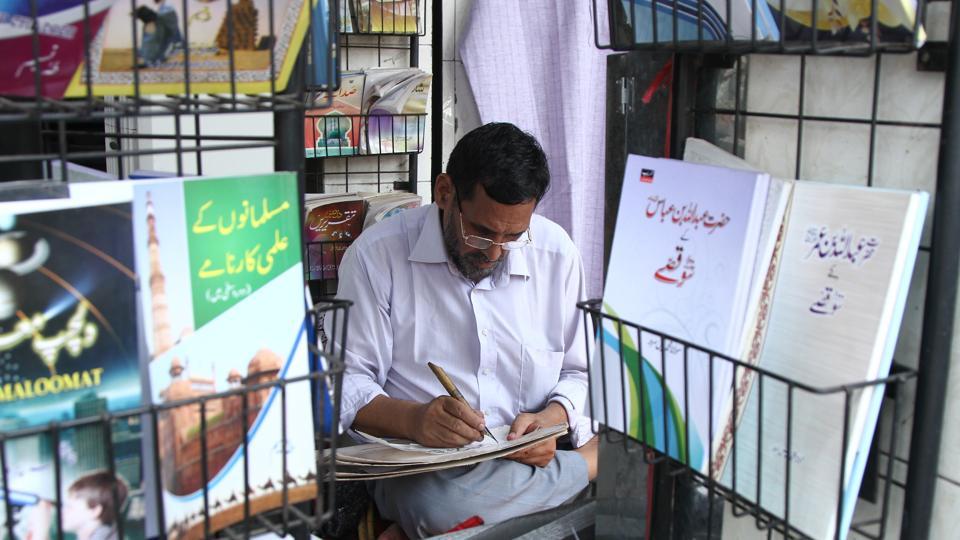
One might consider passion as the reason to why a calligrapher would champion such an ancient art, but Ghalib tells us his reason: “We Katibs learnt this art as a means to earn bread. I did it because I knew it was a respectable job alongside educated people, who I would be forging relationships with... The passion was born later.”
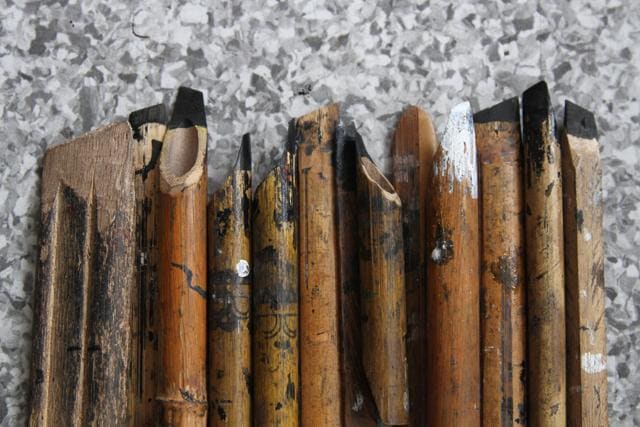
Before the advent of computers, he says, it was one of the most valued jobs. “From offices to newspapers — every type of design used to come to us. That’s how we Katibs worked,” Ghalib says. He adds that the art of calligraphy was a need for people earlier. “Books were written in Urdu and the newspapers needed Katibs, too. We were valued,” he explains.
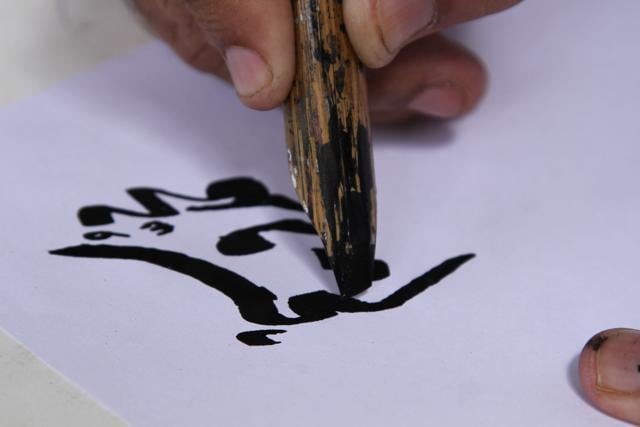
Calligraphy is an art, which only a few can master in one lifetime. “There is a special way to sit when writing letters in calligraphic style. We would follow it, especially when writing for the newspapers. We were told that we will be able to learn calligraphy only if we sit in a particular manner,” said Ghalib.
And that’s not all. He had to perfect the other skills too, which were essential to become a good calligrapher. “We were told to hold our breath when writing, so that our hands don’t shake. I am 55 now and it’s not easy at all,” says Ghalib adding, “The times have changed; not many from the new generation are taking up calligraphy, professionally, now. Like many other professions, this too has ended with the advent of technology.”
Follow @htlifeandstyle for more


