E-Paper



More houses for AIIMS staff as Cabinet clears revamp of residential colonies
The Union cabinet on Thursday approved redevelopment of residential colonies at West Ansari Nagar and Ayur Vigyan Nagar campuses of All India Institute of Medical Sciences (AIIMS).


Two residential colonies, part of AIIMS complex in the Capital, that came up over 50 years ago are up for a makeover.
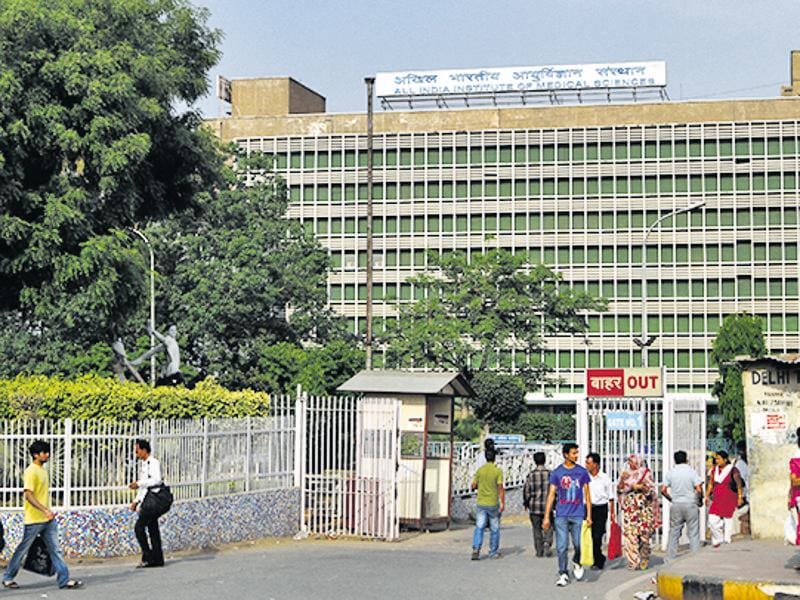
The Union cabinet on Thursday approved redevelopment of residential colonies at West Ansari Nagar and Ayur Vigyan Nagar campuses of All India Institute of Medical Sciences (AIIMS).
The project will be implemented by the National Buildings Construction Corporation (NBCC), an autonomous body under Union urban development (UD) ministry, to replace the existing housing stock of 1,444 dwelling units of Type I to IV and 3,928 dwelling units of Type II to VI.
It will also create social infrastructure facilities, including a dharamshala.
“The total estimated cost of the project is Rs 4,441 crore, including maintenance and operation costs for 30 years. The project will be implemented on self-financing basis by sale of commercial space on free hold basis with no cost to the exchequer,” a government release said.
The present residential accommodations at West Ansari Nagar and Ayur Vigyan Nagar campuses are almost old and have outlived their utility and are unsafe to live in.
More houses for AIIMS staff
Close to 25% faculty members are expected to find accommodation within the hospital campus in next five years.
The hospital has been facing an acute shortage of staff accommodation for more than a decade and currently just about 4% of the staff entitled for accommodation gets to live on campus.
“We understand there is need for a lot more as the staff strength has also increased over the years, but a beginning has been made at least. We will gradually keep on making additions,” said JP Nadda, Union health minister.
The hospital has nearly 10,000 staff—4,500 doctors, 5,500 nurses and technicians. The present residential accommodations at West Ansari Nagar and Ayur Vigyan Nagar campuses are more than 50 years old.
The shortage of residential accommodation can be gauged by the fact that 20 professor flats are available on campus as opposed to the faculty strength of close to 700.
“We are trying to bring as many faculty members as possible on campus. The construction will be done in a phased manner so that no one from the existing residents has to move out. As and when the blocks are completed, people will be moved there,” said Dr MC Misra, director, AIIMS.
What is being termed as the biggest ever redevelopment plan in the healthcare sector, the bed strength of AIIMS will also double in the next two years.
The hospital is on the verge of completing the construction of a surgical block, followed by a mother and child block. For patients and their attendants, AIIMS is also coming up with a couple of dharamshala that will be able to accommodate close to 3,000 people.
The total estimated cost of the project is Rs 4441 crore, including maintenance and operation costs for 30 years.