Marked by three key events in the past week, India’s Covid-19 vaccination drive is showing remarkable progress. First, on Thursday, India covered half of its adult population with at least one shot of the vaccine. Second, a day later, more than 10 million doses were administered in a single day across the country for the first time. And third, also on Friday, the seven-day average of daily vaccine shot administration soared to a record high of 6.9 million doses a
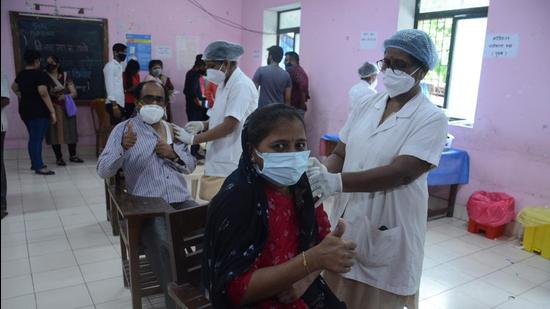
Marked by three key events in the past week, India’s Covid-19 vaccination drive is showing remarkable progress. First, on Thursday, India covered half of its adult population with at least one shot of the vaccine. Second, a day later, more than 10 million doses were administered in a single day across the country for the first time. And third, also on Friday, the seven-day average of daily vaccine shot administration soared to a record high of 6.9 million doses a day. Of these, it is the third achievement (average dose administration) that is the most significant. By Sunday, this average had surpassed seven million for the first time ever – a huge improvement for a drive that had consistently remained at the sub-two million level through most of May and only crossed six million once at the end of June.
What is needed now, however, is building on this energy to enhance second-dose coverage. According to Our World in Data, India’s overall coverage of population, with at least one dose, is 34% — placing it marginally above the global average of 33%. But India’s share of fully vaccinated population lags heavily — only 10% have received both doses, compared to a global average of 26%. Even countries such as Russia and Indonesia, both behind India in total coverage (30% and 22% respectively), are ahead in their share of fully vaccinated, with 24% and 12% of their population covered.
To grasp the importance of the second dose, one must understand how multiple-dose vaccines work. Simply put, the first dose of the vaccine is a primer for the body. It teaches the immune system what to look for. Once the immune system is primed, it is challenged again with a second dose which puts this knowledge into practice, creating a larger immune response. This is why countries such as the United States and United Kingdom are already considering a third booster shot (which will create an even better immune response, according to studies). While India’s lag in number of fully vaccinated can be partly explained by the decision to delay the second dose of Covishield (a vaccine responsible for nine out of 10 shots in India), it is critical that the country starts covering this gap. Of every 10 people who have received shots in the country, only three have been fully vaccinated, too small a share for the country to return to normalcy.
One Subscription.
Get 360° coverage—from daily headlines
to 100 year archives.
Archives
HT App & Website