The fact that the Delhi police has found texts that pointed to a “toxic relationship” between 21-year-old Muskan, and 28-year-old Imran who is accused of murdering her on August 26, is a crucial detail of the investigation that must make us sit up and take notice — not because it offers the rest of us a salacious bit of information about a private relationship between two adults, but because of how easily we accept the fact of its existence in
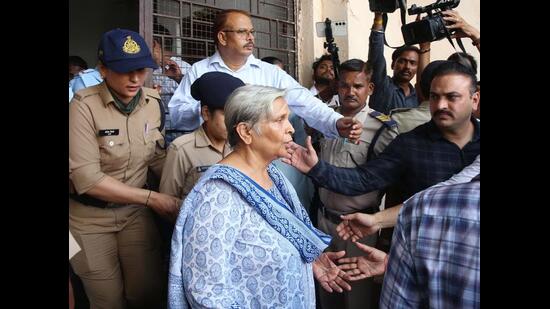
The fact that the Delhi police has found texts that pointed to a “toxic relationship” between 21-year-old Muskan, and 28-year-old Imran who is accused of murdering her on August 26, is a crucial detail of the investigation that must make us sit up and take notice — not because it offers the rest of us a salacious bit of information about a private relationship between two adults, but because of how easily we accept the fact of its existence in a relationship between two adults.
What exactly happened on the day of the crime, when the life of a budding model and content-creator was tragically cut short, is for the police to investigate and present before the court. Till then — and even afterwards — any assumption about the criminal is a sign of pre-existing bias. To be clear, there is nothing intrinsic about gender-based violence: It exists across caste, class, and religion.
What we must examine, however, is what we consider intrinsic to relationships between adults. Investigation into the deaths of Nikki Bhati, Twisha Sharma, and Deepika Nagar, to name just a few victims of dowry demands, revealed months of regular harassment and violence that began soon after their weddings. It is our tendency to exceptionalise murder, extreme violence, or rape, but what we allow to exist — and this lies at the root of gender-based violence — is the idea of a fundamental inequality between the genders, which gives one indisputable power over the other. This is not to claim that all relationships are violent, but to assert simply that inequity is a sliding scale of difference. For instance, anthropologists who have studied gender in the subcontinent have found that within the same household, the weight of women’s utterances is less than men’s when it comes to political/electoral opinions. The researcher was studying voter behaviour during elections, and what leads women to exercise their right to have a say in polity. Now, does this difference in the weight of opinions escalate to gender-based violence? Probably not. But it does lie in all too common belief that inequity is natural and correct.
Make no mistake, relationships where abuse, physical or mental torture, harassment, accusations and possessiveness exist, also operate under the same assumption. Muskan’s death points to a deeply disturbing aspect of her life that we, as a society, have repeatedly turned a blind eye towards — that “toxic relationships” are possible because we think it’s natural for men to be powerful.
One Subscription.
Get 360° coverage—from daily headlines
to 100 year archives.
Archives
HT App & Website