A grave looking man — always a man — in judicial robes, with or without the peruke, pronounces “to be hanged till death” and breaks the nib of his pen after signing the relevant papers awarding capital punishment to the defendant. In Hindi cinema of a certain vintage, this was an oft repeated scene, establishing either the injustice meted out to the protagonist or fate catching up with his nemesis at last. Scriptwriters, understandably, leaned heavily on the emotion capital
A grave looking man — always a man — in judicial robes, with or without the peruke, pronounces “to be hanged till death” and breaks the nib of his pen after signing the relevant papers awarding capital punishment to the defendant. In Hindi cinema of a certain vintage, this was an oft repeated scene, establishing either the injustice meted out to the protagonist or fate catching up with his nemesis at last. Scriptwriters, understandably, leaned heavily on the emotion capital punishment evokes in the masses. Whether cinematic tropes were mirroring jurisprudence, or vice-versa, is actually irrelevant. What matters is that discussions on the legitimacy of capital punishment in India are as old as the Constitution. The latest debate, oddly, is only on the method of execution.
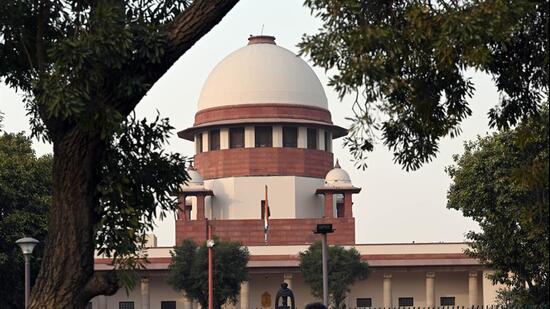
Per Section 393(5) of the Bharatiya Nagarik Suraksha Sanhita (BNSS), executions are carried out by hanging despite the Law Commission’s recommendation in 2015 that more advanced methods should be adopted. The Supreme Court (SC) has now rejected a petition challenging the constitutional validity of hanging on the grounds that it violates the right to a dignified death protected under Article 21. The SC maintained that the process causes no greater pain than any other known method and avoids “barbarity, torture and degradation”. Interestingly, the SC keeps the issue open, not precluding further government deliberation and the evolution of constitutionality. This is exactly where the punishment must take precedence over the method. By retaining the capital punishment even in the decolonised doctrine of dispensing justice, India has stuck to a relic that even the UK shed in 1965. Since India has notably progressive laws, the death penalty sticks out as a badly produced masala film from the 1980s screening at an arthouse cinema retrospective.
One Subscription.
Get 360° coverage—from daily headlines
to 100 year archives.
Archives
HT App & Website