It might be a semi-final to 2024 as the victors will no doubt claim, or it may not be that (as the losers will insist), but there are five trends evident in the results of the latest round of assembly elections that will continue to play out over the next two years.
One, this is the end of Mandal politics. The Samajwadi Party (SP)’s vote share in Uttar Pradesh (UP) — 32.02% at 9pm — is among the highest it
It might be a semi-final to 2024 as the victors will no doubt claim, or it may not be that (as the losers will insist), but there are five trends evident in the results of the latest round of assembly elections that will continue to play out over the next two years.
One, this is the end of Mandal politics. The Samajwadi Party (SP)’s vote share in Uttar Pradesh (UP) — 32.02% at 9pm — is among the highest it has ever seen and is perhaps a reflection of the perfect consolidation of Muslim and Yadav votes. But the party’s efforts to attract other backward classes (OBCs) has clearly failed. Indeed, the consolidation of “upper caste”, OBC, and non-Jatav Dalit voters that helped the Bharatiya Janata Party (BJP) in the last three elections in the state (two Lok Sabha and one assembly) is evident this time too. The Bahujan Samaj Party’s vote share of 12.82% (at 9pm) is actually lower than that in 2017 (22%) and 2019 (19%), perhaps indicative of migration of more of its Dalit voter base to the BJP. This may well be the end of the road for that party and its leader Mayawati.
Two, there is a new pole in Indian politics. This is the potent combination of welfarism and Hindutva. If the latter helps the BJP retain its core, and actually build on it, the former ensures the support of OBCs that have not benefitted from the Mandal wave in politics (which is actually most OBCs) and Dalits. The BJP’s messaging on this front has also been spot-on: In later phases of the UP elections, welfarism was the most dominant strand in the party’s campaign. It’s entirely possible that this combination (welfarism+Hindutva) results in the party benefitting from pro-incumbency in coming elections. At 9pm, the BJP’s vote share in UP (along with allies) was 44%, only marginally lower than the 50% it touched in the 2019 Lok Sabha elections when the SP and BSP were in alliance.
Three, the Aam Àadmi Party (AAP) has clearly emerged the first among equals among India’s Opposition parties with its victory in Punjab. If the party manages to do in the state what it has achieved in Delhi in terms of education and, to some extent, health care, it may well become a significant political force in at least a few other states. For a political start-up that is less than a decade old, to achieve this is very significant. Already, the AAP is the only political party other than the BJP and the Congress that is in power in two regions — Punjab and Delhi. The AAP has to be an important constituent of the political grouping that comes together to take on the BJP in 2024 if such an alliance hopes to pose any sort of challenge (although national elections, as 2019 has shown, are very different).
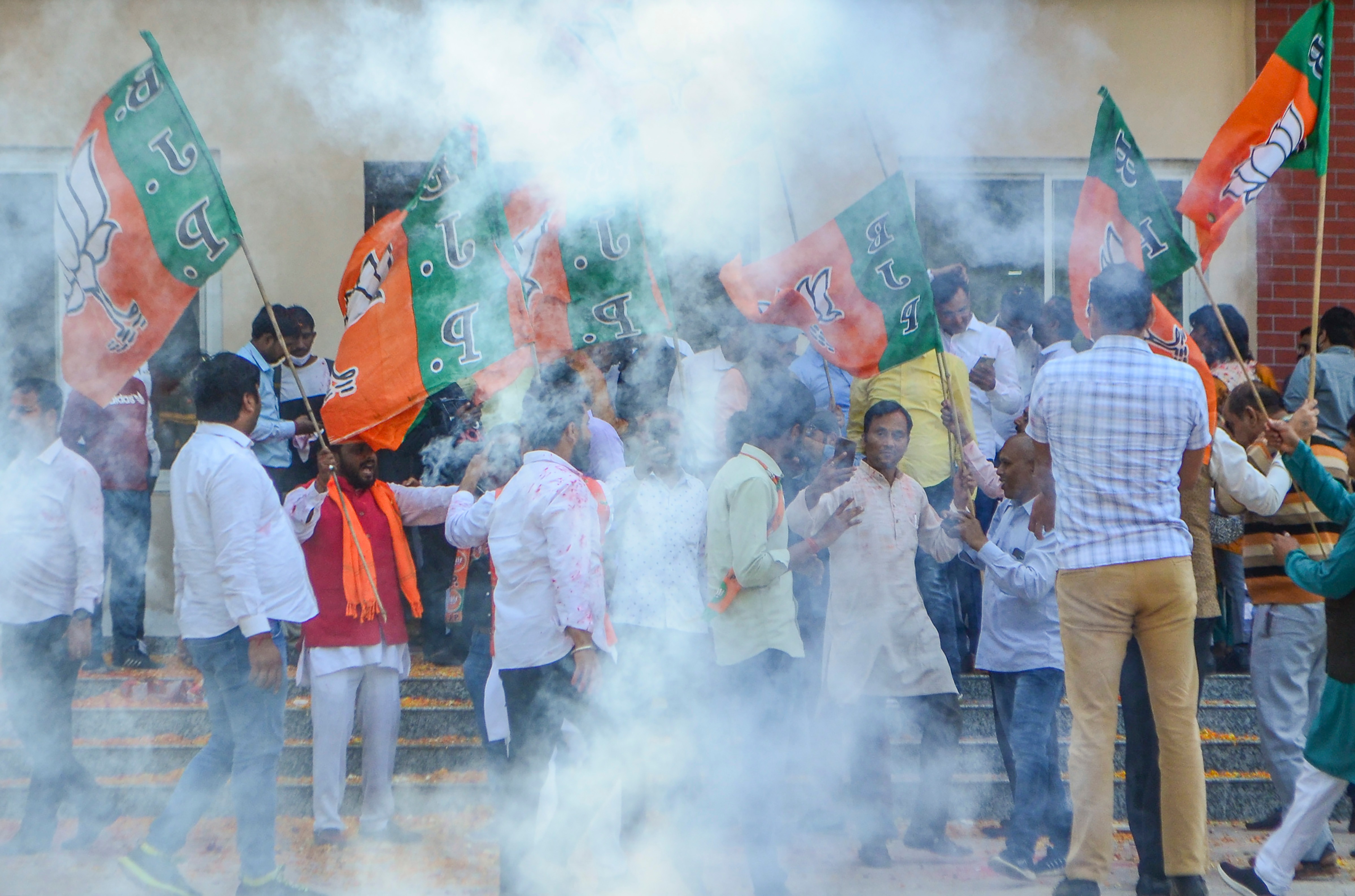
Four, Narendra Modi has delivered UP to his party. Since late last year it has been clear that Prime Minister Narendra Modi was making UP his election (his Lok Sabha constituency is in the state) — something that became even more evident with every phase of the election. The clear win for the party in a state that rarely returns incumbents to power is a definite vote for him. With wins in UP, Uttarakhand, Goa, and Manipur, his party, the BJP, is also sitting pretty. The BJP has retained all four states where it was in power. The trend that has played out since 2014, when the BJP became the clear national hegemon of Indian politics is for people to vote overwhelmingly for the party in national elections, and pick strong regional parties in at least some provinces. The results of the latest round of assembly elections show that the BJP is well placed to win again in 2024. The party’s resounding win in UP will also enhance the standing of the state’s incumbent chief minister Yogi Adityanath, who will now become one of the tallest leaders in the party.
Five, the Congress continues to fade. Its decimation in Punjab (a state that it looked like winning just a year ago), and Uttarakhand, and its continued irrelevance in UP should worry the Congress. Forget opposing the BJP, even the party’s efforts to be a constituent of the national Opposition to the BJP is now under threat. The Gujarat election, later this year, the Karnataka election in mid-2023, and polls in three key heartland states in December that year, could well decide the party’s future.
One Subscription.
Get 360° coverage—from daily headlines
to 100 year archives.
Archives
HT App & Website