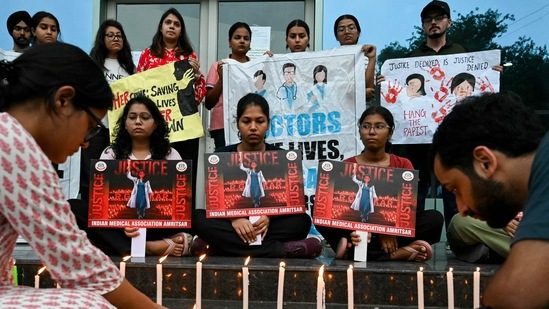
A multi-tiered failure of the State and society underpins the strike by doctors across the nation, though the immediate triggers are the rape and murder of a doctor in a government-run hospital in Kolkata and the cover-up attempted by the authorities in its aftermath. This failure is writ large in more ways than one in the matter.
It turns out that the accused’s history of assault was overlooked while retaining him in a quasi-official capacity in the state police and
A multi-tiered failure of the State and society underpins the strike by doctors across the nation, though the immediate triggers are the rape and murder of a doctor in a government-run hospital in Kolkata and the cover-up attempted by the authorities in its aftermath. This failure is writ large in more ways than one in the matter.
It turns out that the accused’s history of assault was overlooked while retaining him in a quasi-official capacity in the state police and letting him gain undue access and clearance in the hospital — if all this was deliberate, the rot in the system is indeed deep. Then, there was the initial distortion of the nature of the doctor’s death communicated to her parents, a hurried cremation allegedly with prodding from the police, and efforts to rehabilitate the college principal who was forced to resign over his inaction. These failures suggest a desperation to deflect blame and show why the transfer of the probe to the Central Bureau of Investigation, as the Kolkata high court has directed, was merited. Against this backdrop came Thursday’s vandalism at the medical college with the police as a
bystander. Given the long work hours, crumbling infrastructure, and poor conditions at most public health facilities, which exacerbate the vulnerability of medical staff to violence by patients’ families, the outpouring of rage at the Kolkata incident is not hard to comprehend.
However, society’s failure in how it responds to rape and sexual violence is equally consequential, which is also why the stringent rape laws enacted after the 2012 Delhi gang rape and murder have led to little deterrence. Calls for justice are sufficiently loud only when a case seizes the public attention for its barbarity, more so in an urban setting. And once the public furore dies down, there is little attention paid to rapes elsewhere, involving victims marginalised by poverty, caste, and the many other markers of vulnerability. The outrage over the doctor’s murder must serve as a reminder that there is no room for a systemic or societal blame game when it comes to crimes against women — failures across all fronts need to be acknowledged and stamped out urgently.
One Subscription.
Get 360° coverage—from daily headlines
to 100 year archives.
Archives
HT App & Website