The India-Bangladesh relationship, over the past decade, has been the brightest spot in Indian foreign policy. After a tense 1990s and 2000s, when power alternated between the moderate Awami League, led by Sheikh Hasina, and the extremist Bangladesh Nationalist Party, led by Begun Khaleda Zia, and a short period of indirect army rule, the Awami League returned to power in 2009. Sheikh Hasina, the daughter of Bangladesh’s iconic freedom fighter and first president, Mujibur Rahman, was clear that having good relations with India, externally, was essential for Bangladesh’s progress and cracking down on Islamists, internally, was essential for maintaining democracy and peace.
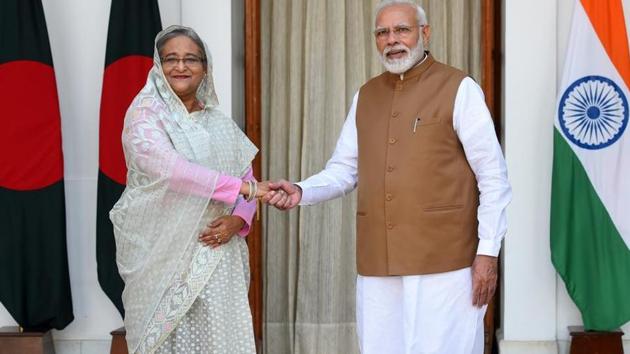
This translated into unprecedented security cooperation between the two countries, when Dhaka cracked down on militants and terrorists who used Bangladesh as a base to conduct activities in India, particularly the Northeast. Delhi consistently backed Ms Hasina in her domestic political battles. This often meant arguing against the international community, particularly the United States and European Union, which was worried about the growing democratic deficit in Bangladesh. Delhi and Dhaka also signed a landmark boundary deal, resolving a four-decade-old problem.
But it was not all smooth. India was unable to deliver on a Teesta water-sharing seal, which undermined Ms Hasina’s political standing. But in recent years, two other significant developments have taken place. The Indian political discourse over the Citizenship (Amendment) Act-National Register of Citizens appeared, on the Dhaka street, as targeted towards Bangladesh.
Dhaka scaled down diplomatic engagement substantially and made it clear that it did not approve of being at the receiving end of hostile political rhetoric, even if it was for domestic political purposes. The second has been the enhanced Chinese influence, engagement and investment in Bangladesh — on the lines of what Beijing is doing elsewhere in the region. This has encouraged a section of the Bangladeshi opinion-making elite, and political elite, to see China as a counter-weight to Indian influence.
{{/usCountry}}Dhaka scaled down diplomatic engagement substantially and made it clear that it did not approve of being at the receiving end of hostile political rhetoric, even if it was for domestic political purposes. The second has been the enhanced Chinese influence, engagement and investment in Bangladesh — on the lines of what Beijing is doing elsewhere in the region. This has encouraged a section of the Bangladeshi opinion-making elite, and political elite, to see China as a counter-weight to Indian influence.
{{/usCountry}}In this backdrop, there have been reports that Ms Hasina refused to see the Indian ambassador in Dhaka for months, despite requests. Irrespective of the accuracy of the reports — there is a view that the meeting could not be held due to the pandemic — it is clear that the relationship needs work. India must not let its domestic political discourse affect its most important relationship in its eastern neighbourhood; it must reach out to Ms Hasina and provide her with deliverables, which can enhance the domestic political space for her to pursue closer ties with India; it must deploy its soft power and attempt an image-correction.
Bangladesh has been a steadfast ally. Don’t let it slip.