Unified Payments Interface (UPI) has a rightful claim to be in an elite club of game changing financial innovations in India. It took digital payments from point-of-sale machines in elite sanitised spaces to the proverbial last man in the queue. This was made possible by a trinity of widespread financial inclusion, mobile based internet and, last but not the least, free rollout of UPI.
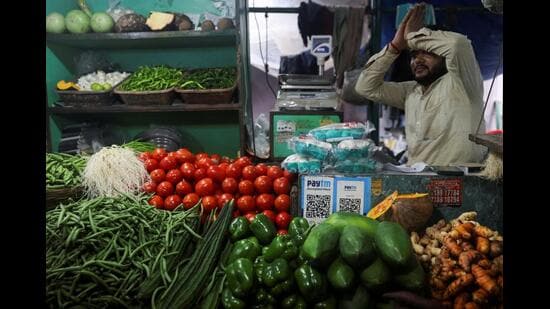
The last of this trinity has now been tweaked to make it quasi payable. To be
Unified Payments Interface (UPI) has a rightful claim to be in an elite club of game changing financial innovations in India. It took digital payments from point-of-sale machines in elite sanitised spaces to the proverbial last man in the queue. This was made possible by a trinity of widespread financial inclusion, mobile based internet and, last but not the least, free rollout of UPI.
The last of this trinity has now been tweaked to make it quasi payable. To be sure, a large part of the UPI payment universe, including person-to-person payments, person-to-business transactions below a certain threshold and regular payment mandates such as mutual fund contributions will continue to remain free of charge. The rest will have a merchant discount rate (MDR) of 0.4% subject to a cap of ₹300.
There are three issues which need to be looked at while evaluating the end of blanket free-of-charge UPI payments.
The first is of monetising a genuine innovation which has reached its desired scale so as to raise resources for future innovation driven by a public good rather than a profit motive. NCPI’s announcements to use a part of the fee for such purposes including for supporting smaller merchants etc. needs to be seen in this light.
The second issue is the disadvantage free UPI payments inflicted on other payment systems which always had an MDR to begin with. Many global financial giants had to suffer because of this disruption. The roll-out of MDR in parts of the UPI universe will undo some of the disadvantage these payment platforms had to face to vis-à-vis UPI.
Last but not the least is also the issue of the revenue which UPI MDR will generate for private players, including those with foreign stakes, in the UPI universe.
The last two decisions might have given some leverage to the government in the ongoing trade negotiations with the US which is home to a lot of companies with stakes in the Indian payment system universe.
The opposition has criticised the government by focusing on the second and third aspects of the decisions. The criticism, however, is slightly overboard. A large universe of UPI payments, especially for the poor will continue to be free. Leverage, as perhaps has been used by the government in this case, exists so that it can be used.
One Subscription.
Get 360° coverage—from daily headlines
to 100 year archives.
Archives
HT App & Website