There has been a steady tempo of high-level visits between India and Bangladesh in the past few months of which external affairs minister Sushma Swaraj’s recent visit is the latest. Her Bangladeshi counterpart was not long ago in India and finance minister Arun Jaitley dropped by Dhaka earlier. And this does not even count the bilateral and multilateral meetings the two countries have held with each other in third countries, including on the sidelines of the United Nations General Assembly session in September.
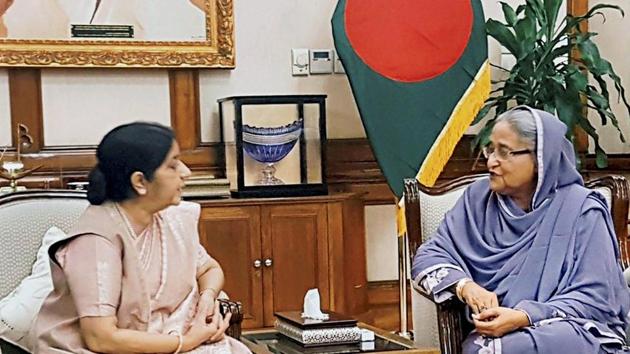
The Centre is known to have decided to make official interactions between New Delhi and Dhaka a part of its bilateral firmament — and hopes to replicate this with other South Asian neighbours over time. A similar pattern of back and forth, for example, is becoming evident with other strategically important neighbours like Nepal and Afghanistan.
There are a number of positives in such frequent-flying diplomacy. Ms Swaraj has spoken of India’s determination to “resolve all outstanding issues” between India and Bangladesh. As many of these issues are highly sensitive to domestic interest groups in both countries regular contact helps both sides get a sense of the lay of the political land in real time.
Additionally, if India and Bangladesh are to become as close as the Narendra Modi government wants them to be, meetings between ministers and other high-level officials from both governments should come to be seen as normal rather than an aberration.
Summit meetings are all to the good, but if they also indicate a certain distance between two countries, a sign that convergence is taking place only at the head of government level. As the foreign minister noted, India is heading to issue 1.4 million visas to Bangladeshis this year making the delta state the single-largest source of travellers to India. With people-to-people relations doing so well, it makes sense that every level of officialdom should be equally familiar.
{{/usCountry}}Summit meetings are all to the good, but if they also indicate a certain distance between two countries, a sign that convergence is taking place only at the head of government level. As the foreign minister noted, India is heading to issue 1.4 million visas to Bangladeshis this year making the delta state the single-largest source of travellers to India. With people-to-people relations doing so well, it makes sense that every level of officialdom should be equally familiar.
{{/usCountry}}Finally, such regular visits inevitably help boost the profile of the Sheikh Hasina government and other groups who believe India is logically Bangladesh’s primary strategic and economic partner. As the fallout of the Rohingya refugee crisis showed, the India-Bangladesh relationship is still vulnerable to sudden political storms and squalls.
The kind of connectivity projects and deliberate intertwining that the two countries are carrying out will take decades to complete. The unconscious acceptance of this special relationship among the larger public requires an even longer-term vision. Both of them will require much political hand-holding which regular interactions can only be beneficial.