
 E-Paper



In Myanmar, a coup-induced crisis
Nearly 15,000 people from Myanmar have entered India since February, a Mizoram government official told Reuters on Tuesday

 Prefer HTon Google


Nearly 15,000 people from Myanmar have entered India since February, a Mizoram government official told Reuters on Tuesday. More are expected to enter, as the fighting between the military regime and insurgents intensifies. On March 10, the Centre sent a note to Mizoram, Manipur, Nagaland and Arunachal Pradesh, asking them to stop the influx and deport anyone who managed to get in. However, Mizoram’s chief minister, Zoramthanga, said that his government would take a humanitarian approach. This was not surprising; communities in the region share deep cultural and ethnic ties across the political border.
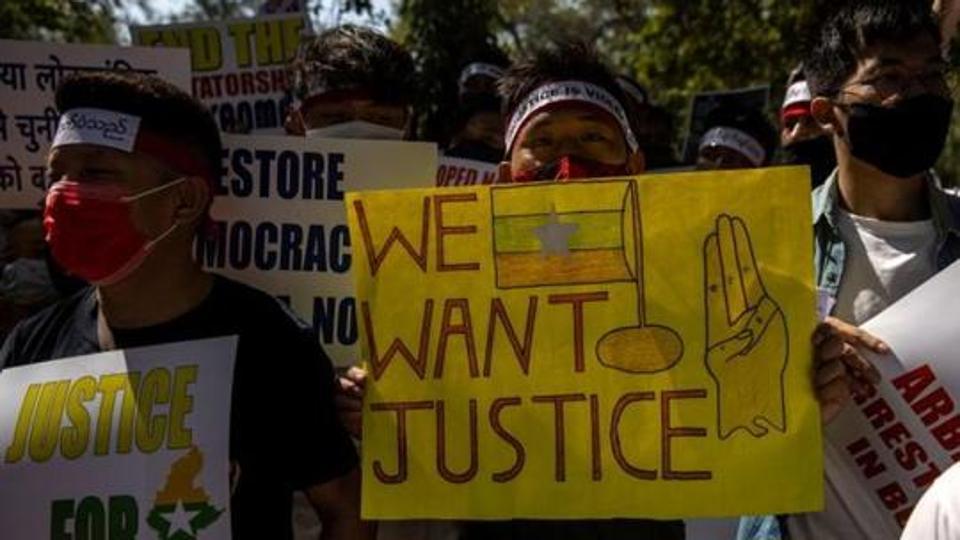
For Delhi, the coup in Myanmar presented a dilemma, since it was torn between its values (which would require standing with democracy) and interests (which would require working with the military). But it is quite clear that this distinction doesn’t hold, for Myanmar’s undemocratic turn is clearly impinging on Indian interests — including its connectivity efforts and security interests. Domestically, New Delhi’s stance on the conflict-generated migrants can also impact Centre-state relations, especially in a sensitive region such as the Northeast. To be sure, India is not under any legal obligation to provide shelter because it is not a party to the 1951 UN Refugee Convention and its 1967 Protocol. The lack of a formal legal framework, domestically and internationally, has allowed India to follow an ad hoc approach on conflict-generated migrants, depending on their salience in domestic politics and the larger public mood. However, the customary principle of non-refoulement prohibits any State from deporting an individual back to a country where they face a threat.
Also Read | More than 15,000 people from Myanmar shelter in Mizoram: Official
India has to reconcile its immediate interest (keeping the influx at a manageable level) with its long-term humanitarian and democratic traditions. New Delhi should have a calibrated approach, as it seems to be doing now, leaving the humanitarian assistance to the states. But in the long-term, India must debate and formulate a refugee policy, which should look at repatriation, engagement with United Nations High Commissioner for Refugees, so that other executive authorities are not put to the test every time there is an inflow of migrants. In addition, to tackle the roots of the crisis, as academic Avinash Paliwal wrote in these pages, New Delhi must bury its Tatmadaw-centric approach and quickly build relations with other power centres that seek a federal and inclusive Myanmar. Supporting Asean’s mediation efforts in Myanmar will help, but so will bring India’s own diplomatic weight to strongly counsel and warn the military regime.


