After escalatory rhetoric, and more important, aggressive actions, a process to slowly, in a calibrated manner, defuse the tensions at the Line of Actual Control (LAC), has commenced. China’s slight withdrawal of troops from Galwan, and the Hot Springs Area, and what appears to be a minor thinning of its presence at Finger 4 in Pangong-Tso, is a positive development. With a two-hour-long conversation between National Security Adviser Ajit Doval and Chinese foreign minister Wang Yi — the designated special representatives on border talks — there appears to be a degree of convergence between the two countries on the need to first disengage, and eventually de-escalate, from the current stand-off.
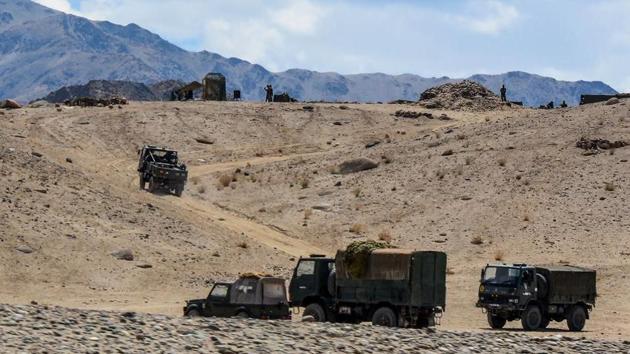
There are structural reasons why disengagement makes sense for both countries. China was solely responsible for transgressing across LAC. Even the finest scholars who study China have not been able to offer a fully rounded explanation on why Beijing has behaved the way it did. Is it linked to its pattern of aggression elsewhere? Is it to overcome domestic legitimacy issues Xi Jinping may be confronting? Is it a message to India to not cosy up to the United States? Is it to halt India’s border infrastructure development? Is it to gain tactical advantage to secure Aksai Chin and the China-Pakistan Economic Corridor? Beijing may have been motivated by all these factors, but the fact is, even for a rising power, its actions defied rational calculation, for it has alienated India, and Indian public opinion entirely, throwing the entire relationship — of which China too has been a beneficiary — off-gear. It will also push India in the very direction Beijing does not want it to move. If Beijing is now waking up to what is a miscalculation, that is wise. New Delhi too does not want conflict. It was left with no choice but to respond aggressively to Chinese incursions and defend its territorial integrity. But given the internal economic weaknesses, the Covid-19 challenge, the gaps in military preparation, and the costs of any conflict, peace is, of course, the most desirable option.
But this seeming thaw needs to be accompanied with two caveats. One is immediate. As the Indian establishment has made clear, every step of the disengagement process will be carefully monitored and verified. China has violated past understandings; its statement contained a hint of continued belligerence; and there doesn’t appear to be a deal on it stepping back from the finger area in Pangong-Tso. India must ensure complete restoration of status quo ante. The second is medium-term. Irrespective of a possible de-escalation, it cannot be business-as-usual. India must ramp up its capabilities, deepen external partnerships, reduce dependence on China, and remain wary, for this is possibly the beginning, not the end, of an era of a new strategic competition.
{{/usCountry}}But this seeming thaw needs to be accompanied with two caveats. One is immediate. As the Indian establishment has made clear, every step of the disengagement process will be carefully monitored and verified. China has violated past understandings; its statement contained a hint of continued belligerence; and there doesn’t appear to be a deal on it stepping back from the finger area in Pangong-Tso. India must ensure complete restoration of status quo ante. The second is medium-term. Irrespective of a possible de-escalation, it cannot be business-as-usual. India must ramp up its capabilities, deepen external partnerships, reduce dependence on China, and remain wary, for this is possibly the beginning, not the end, of an era of a new strategic competition.
{{/usCountry}}