For years now, Delhi’s citizens have had to put up with the refrain that the problems that plague the city (and many do) can’t be addressed by its elected government because the Lieutenant Governor won’t allow it to. On Wednesday, a five-judge bench of the Supreme Court headed by the Chief Justice of India did its bid to resolve the impasse.
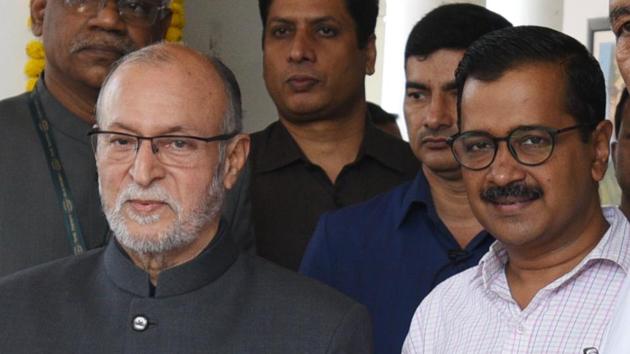
The apex court did not strike down a previous Delhi High Court verdict that gave the LG more powers. But it emphasised the need for collective responsibility – on the part of the LG and the ministers – for the effective administration of Delhi. The verdict lays down and interprets the broad constitutional contours governing the relationship between the LG and the elected government.
The Aam Aadmi Party’s response to the judgement has been celebratory, but while the Supreme Court has acknowledged the primacy of the elected government of Delhi over the LG in the administration of the national capital, it is not as though it has handed the elected government untrammelled powers. The Centre, and, by extension, the LG, retains the power to legislate on the issues of land, law and order and police.
Still, the court has said the LG has to act on the aid and advice of the council of ministers and does not enjoy any independent decision-making power. Clearing the air surrounding the roles of the elected government and the LG, the court ruled that the “status of NCT of Delhi is sui generis, a class apart, and the status of the Lieutenant Governor of Delhi is not that of a Governor of a State, rather he remains an administrator, in a limited sense, working with the designation of Lieutenant Governor”.
{{/usCountry}}Still, the court has said the LG has to act on the aid and advice of the council of ministers and does not enjoy any independent decision-making power. Clearing the air surrounding the roles of the elected government and the LG, the court ruled that the “status of NCT of Delhi is sui generis, a class apart, and the status of the Lieutenant Governor of Delhi is not that of a Governor of a State, rather he remains an administrator, in a limited sense, working with the designation of Lieutenant Governor”.
{{/usCountry}}This reiteration of the constitutional scheme by the top court does not clarify everything, though.
The five-judge bench has said that a smaller bench of two judges will decide on pending matters in which, because of a conflict between the government and the LG, resolution is pending. The Centre too, may seek a review of at least some parts of the ruling.
The seeds of this confusion between the LG and the elected government were sown by the 69 constitutional amendments in 1991 that created a legislative assembly and made a national capital of Delhi. While the idea of the amendment was to give a larger say to the people of Delhi in its governance, it gave rise to friction between the elected government and the LG.
Another important ongoing issue is whether Delhi can be granted statehood. The bench categorically ruled out that option “under our present constitutional scheme”.
The elected government in Delhi may have more authority than it has had of late. But with power comes responsibility. It should have no further excuse to not get down to working on and finding solutions to problems that plague the capital.