A cursory look at the state of political play in states heading for assembly polls throws up a common thread — the persistence of identity politics, on the axis of religion and caste. In Bengal, the Bharatiya Janata Party (BJP) is hoping to ensure a substantial degree of Hindu consolidation, often through micro-caste management and co-option of marginalised groups. The Trinamool Congress is hoping to win over Muslim support, while making a targeted outreach to Hindu sub-groups. In Assam, the salience of identity politics, particularly on the outsider-insider axis, remains deeply entrenched. In Tamil Nadu, even as the ruling National Democratic Alliance combine hopes to win over the support of Hindu sub-castes through social engineering, the Dravida Munnetra Kazhagam-led alliance is hoping to create its social coalition of backward communities, Dalits and Muslims. In Kerala, it is the balance between Hindus-Muslims-Christians, and the balance within Hindus, that will play a key role in shaping the electoral outcome.
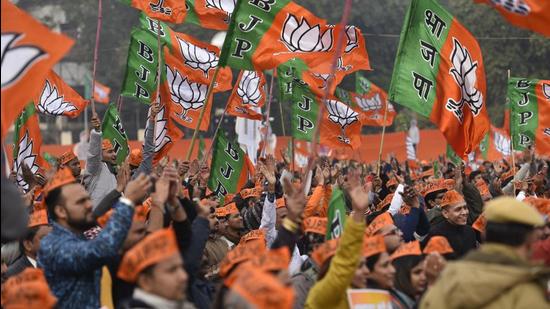
To be sure, this is not the whole story of the elections. Issues such as the performance of the state government, welfare schemes, governance promises of an Opposition party, the interplay of urbanisation, mobility, migration and enhanced aspiration of citizens across castes, the role of media and social media, the popularity of local candidates, and the organisational strength of various forces in competition play an important role. But it is remarkable that identity — which is determined by where one is born — remains so central in both the calculus of political parties and of voters.
For politicians, it is much easier to appeal to group identities, when group identities serve as the basis for social organisation, to consolidate their base and polarise. For voters, access to power, often, depends on whether a member of one’s own group is the directly elected representative who can ensure services to constituents belonging to that caste group, or if a party that is broadly sensitive to one’s group interests is in power. This leads to a vicious cycle — where both politicians and voters develop incentives in perpetuating this pattern. This form of politics defeats the idea of treating each voter as an individual citizen and reinforces narrow identities.