India and the United States are the world’s largest democracies, separated by different worldviews. That has been the fundamental source of friction in the Indo-US relationship. US Secretary of State Rex Tillerson on Wednesday outlined Washington’s big picture view of the Indo-US relationship. The degree of consonance with New Delhi’s present strategic perspective was striking.
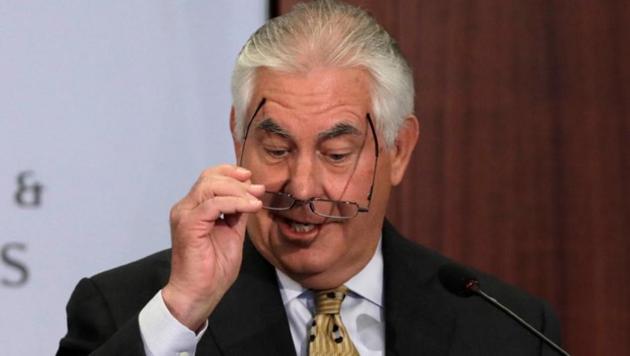
The strategic core of the speech was his declaration that “the Indo-Pacific – including the entire Indian Ocean, the Western Pacific, and the nations that surround them – will be the most consequential part of the globe in the 21st century” and that the greatest challenge to a stable, rules-based Indo-Pacific is a China that has taken to reworking the international system to its own benefit. In contrast, India has been responsible and law-abiding even as it acquires greater power. The US secretary of state took direct aim at China’s Belt Road Initiative, echoing Indian arguments that the strings Beijing attaches to its projects, most dangerously in the form of its financing structures, result in a loss of sovereignty and minimal economic gain. Finally, he commits the US to partnering with India and doing what it can to help India in facing this challenge, especially in the field of defence.
This is a hand-in-glove fit with the prevailing sense in New Delhi that control of the Indian Ocean will be their primary security concern in the coming decades. The speech puts geopolitical icing on a series of positive Indian interactions with the Trump administration. However, India has heard similar words from earlier US administrations, notably that of George W. Bush. The question is why such sentiments have struggled to become action on the ground.
{{/usCountry}}This is a hand-in-glove fit with the prevailing sense in New Delhi that control of the Indian Ocean will be their primary security concern in the coming decades. The speech puts geopolitical icing on a series of positive Indian interactions with the Trump administration. However, India has heard similar words from earlier US administrations, notably that of George W. Bush. The question is why such sentiments have struggled to become action on the ground.
{{/usCountry}}Both sides have been to blame. Washington has found it hard to keep focussed on India, finding itself easily diverted by other immediate international problems. New Delhi retains a blinkered approach to a number of policy areas such as trade where it echoes global attitudes of a previous century. Tillerson was silent on the degree of convergence India and the US had on international economic policy. And that is no surprise: India’s commerce ministry remains bereft of any sense of strategic thinking. Defence cooperation is another bureaucratic labyrinth that continues to trap the best of political intentions. Solving economic problems is what the Narendra Modi government claims to be all about. It needs to channel some of that energy in the direction of its US policy so that an overlap in worldviews becomes an overlap in tangible reality.