
 E-Paper



Wager beneath the mission
The second phase of India’s semiconductor mission spells out a realistic ambition for the country

 Prefer HTon Google


The Union Cabinet’s approval of the ₹1.27 lakh crore India Semiconductor Mission 2.0 broadens the government’s chip push from the fab to the ecosystem around it. Six pillars now cover chip design, machines and materials, more fabs, advanced packaging, research and development, and the design-engineer pipeline the world is a million short of. Silicon photonics and advanced-node research qualify for support of up to 75%. This is the structural correction ISM 1.0 needed.
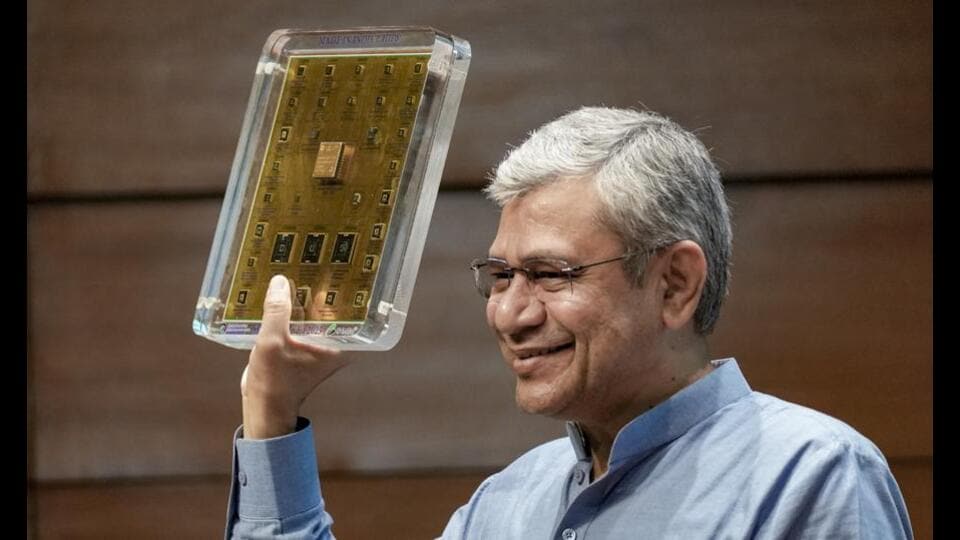
That correction comes with unusual candour about limits. The ecosystem, officials said, must first stabilise at 28nm — a mature node accounting for around 70% of global chip demand and running everything from cars to power grids. The advanced range of 7-3nm — an entirely new generation of chips powering today’s AI revolution — is on the roadmap for 2032, and sits under research, not manufacturing. Fiscal support has been recalibrated downward too: 40% for silicon logic and memory fabs, from 50% under ISM 1.0. IT minister Ashwini Vaishnaw’s rationale, that a maturing ecosystem needs less subsidy, is a calibration industrial policy rarely admits to. It should be credited.
To be sure, calibration is not sovereignty. The chips that anchor the frontier of the AI economy will not be manufactured on this mission’s horizon. Where the frontier itself will sit five years from now is unknowable. The target for 100,000 design engineers over five years is a bet on India as the design and services layer, not as the chip-making sovereign.
The government has answered the sovereignty question by other means. “Hundred per cent self-reliance is difficult,” a senior official said, framing the West, especially the US, as a trusted supplier. The phrase deserves attention. Trusted supply chains are today front and centre of geopolitical conversations dominated by the China versus West rivalry. Placing India within the layer of trust that earns access to the bleeding edge of technology is a wager on the interdependent order that built this technology — an order under stress now, but not entirely irrelevant. ISM 2.0 will build the parts of the semiconductor economy India can realistically own. The rest it will buy from partners the government has judged trustworthy. This may be the only wager available on the mission’s timeline — and the most realistic. Industrial policy rarely names its bets.


