There is no iota of doubt that artificial intelligence is becoming a practical presence in classrooms. Walk into a modern classroom today and you may come across artificial intelligence at work - from creating quizzes in seconds to tailoring lessons for every student!
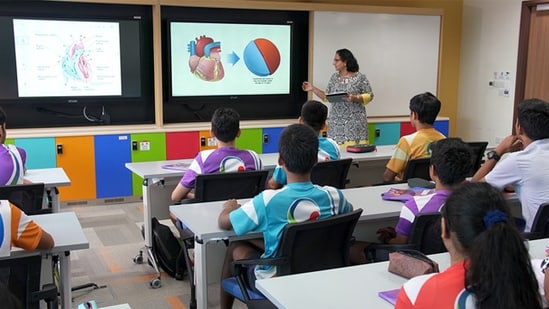
But the important question to be asked here is will generative AI simply make teaching more efficient, or could it eventually replace educators? Experts from the academic landscape believe that although AI has a plethora of advantages, the heart of education - from mentorship to human connection, lies only on the teacher.
Here's what some experts have to say:
Dr. Umesh Dutta, CEO, Manav Rachna Innovation & Incubation Foundation
1. AI as a classroom support, not a replacement
AI is not here to replace teachers—it’s here to support them. Think of it as a super-efficient teaching assistant. It can take care of routine tasks like drafting lesson plans, creating practice questions, or preparing material for students with different needs. This gives teachers something far more valuable—time. And with that time, they can focus on mentoring, encouraging critical thinking, and supporting the emotional and social growth of students—things no machine can ever do.
2. Opportunities in personal learning and efficiency
AI opens up exciting possibilities. It can track a student’s progress in real time, find where they’re struggling, and suggest extra practice or resources. Imagine a student finding calculus difficult—AI can give them step-by-step problems until they get it right, something a teacher with 40 students can’t always manage.
{{/usCountry}}AI opens up exciting possibilities. It can track a student’s progress in real time, find where they’re struggling, and suggest extra practice or resources. Imagine a student finding calculus difficult—AI can give them step-by-step problems until they get it right, something a teacher with 40 students can’t always manage.
{{/usCountry}}It can also grade objective tests quickly and even give structured feedback on essays—like pointing out grammar or flow issues—so teachers can spend their energy on deeper, more meaningful feedback. Outside the classroom, AI can manage attendance, schedule parent-teacher meetings, or prepare reports, reducing the admin load for schools.
3. The need for ethics and teacher training
With all these benefits, we can’t ignore the challenges. AI depends on student data, so protecting privacy is critical. If the system itself carries bias, its output will too—we have to make sure it doesn’t create or worsen inequalities. Most importantly, teachers need proper training to use AI wisely. The idea is not to let technology take over, but to help teachers use it in ways that make learning better.
4. Bridging gaps in India’s education system
For a country like India, AI can truly be a game-changer. With so many students in rural areas, AI tools can act like tutors where expert teachers are hard to find. AI can also work in multiple languages and dialects, making learning resources more accessible and relatable. In a classroom with children from diverse backgrounds, AI can help teachers customize lessons so that no one is left behind.
5. Why teachers will always matter more
At the end of the day, AI can support teaching, but it cannot replace the heart of it. A teacher notices when a child is upset, motivates them when they feel low, or inspires them to dream bigger. Machines can generate answers, but only a teacher can spark curiosity, encourage creativity, and guide a student through life’s ups and downs. Education is not just about information—it’s about connection, trust, and inspiration. That’s something only a human teacher can give.
Nishtha Shukla Anand, Director & Trustee Shoolini University and Google Woman Entrepreneur
AI isn’t just another tool in education, it’s changing the way we teach and learn. For teachers, it can make everyday tasks like grading, organising lessons, or even planning the curriculum much easier. For students, it can turn boring lessons into something more engaging, with flashcards, quizzes, or personalised study aids. What makes AI truly exciting is its ability to understand how each student learns differently and adjust the teaching to match. This can make classrooms more engaging, inclusive, and effective for everyone.
India has always been quick to embrace new technologies, and with our strong edtech sector, AI in education will only grow faster. Soon, we’ll see learning tools built especially for India’s diverse needs bridging language barriers and helping students in even the most remote areas. With AI, education here can finally move beyond a one-size-fits-all model and become something personal, meaningful, and accessible to every learner.
Dr. Raul V. Rodriguez, Vice-President, Woxen University
Generative AI is becoming a strong support system in classrooms, not to replace teachers, but to make their work easier and more effective. By taking over routine tasks like grading, assessments, and admin work, AI gives teachers more time to focus on what really matters: guiding, mentoring, and teaching at a deeper level. It also makes learning more personal, adjusting the pace and content to match each student’s needs something that can help bridge gaps in India’s diverse education system.
Also read: From copying books to creative assignments: How homework in Indian schools is changing
But bringing AI into education also comes with challenges. We need to think carefully about issues like data privacy, ethical use, and the danger of relying too much on technology. Teachers will also need proper training to use these tools in the right way. At the end of the day, AI can improve efficiency and make classrooms more inclusive, but it can never replace the empathy, creativity, and human connection a teacher brings. The real future is a partnership, where AI supports teachers so they can become even better mentors and guides for their students.