The debate over whether a degree still matters has become one of the loudest arguments in technology. Yet much of it is shaped by those building AI, rather than scientists, engineers and other professionals whose work depends on years of specialised training.
AI has undoubtedly raised the floor. It can summarise research papers, generate code, analyse data and draft business strategies in seconds. Work that once took hours can increasingly be completed in minutes.
But raising the floor is not the same as raising the ceiling.
Canada, UK or Germany: What should matter most to Indian students in 2026?
A paper can be summarised in seconds, but judging whether its research holds up takes years of expertise. The same is true of code: producing it is one thing; knowing whether it can be trusted in a system where mistakes have serious consequences is another.
The first draft, in many professions, is becoming easier. The harder questions remain: Is this answer reliable? What has been overlooked? Which assumptions are flawed? What happens if the recommendation is wrong?
{{/usCountry}}The first draft, in many professions, is becoming easier. The harder questions remain: Is this answer reliable? What has been overlooked? Which assumptions are flawed? What happens if the recommendation is wrong?
{{/usCountry}}Education beyond algorithms: Building skills AI cannot replace
This is where the value of higher education is often misunderstood. A degree should not simply represent the accumulation of information. Information has never been easier to access. The deeper purpose of rigorous education is learning how knowledge is created, questioned, tested and applied.
That process takes time.
A researcher learns through hypotheses that fail. An engineer discovers that an elegant solution may collapse under real-world constraints. Years spent working within a discipline gradually build the ability to recognise weak evidence, question assumptions and understand the limits of one's own certainty.
This matters particularly in complex technical fields. Research in nanoscale science, semiconductor technology or advanced manufacturing often deals with problems for which the answer does not yet exist. Progress requires more than retrieving information. It requires interpreting imperfect results and understanding how one decision affects a larger system.
Teaching beyond textbooks: How AI is reshaping management education
Semiconductor operations, for instance, connect engineering, manufacturing, suppliers, quality systems and global supply chains. A decision may look right on paper but create problems elsewhere in the system. Dealing with these complexities takes deep expertise as well as the judgment that comes from years of learning and practical experience.
Academic learning and professional experience therefore serve complementary purposes. Education builds the intellectual foundation; experience tests it against reality. As responsibilities grow, learning must continue to evolve. A career can move from engineering into scientific research, technology development, global operations and business strategy, with each discipline adding another layer to how complex problems are understood. This is also why a growing number of experienced professionals are choosing to return to the classroom mid-career. Not because their expertise is insufficient, but because the problems they face have outgrown any single discipline.
This is why AI does not make deep expertise obsolete. It makes expertise more consequential.
When AI drafts an email, an imperfect answer is usually easy to correct. When it informs decisions in engineering, healthcare, law or scientific research, misplaced confidence can carry far greater consequences. In these environments, experts are valuable not because they can remember more facts than a machine, but because they know how to question an answer that appears convincing.
Higher education must, of course, evolve with this reality. Universities cannot prepare students for a world in which information retrieval itself remains a competitive advantage. If AI can generate a competent essay or solve a standard problem, education must move beyond simply producing answers.
Education must focus less on producing information and more on learning how to question and assess it.
Education also compounds in ways that are difficult to predict at the beginning of a career. Engineering can intersect with physics; physics can lead into nanoscale science; research can inform semiconductor manufacturing; and technical experience can eventually demand an understanding of supply chains and business strategy. What initially appear to be separate disciplines can become different lenses through which increasingly complex problems are understood.
The strongest case for higher education in the age of AI, therefore, is not that humans must compete with machines at tasks machines perform well. It is that someone still needs to decide which problems are worth solving, ask the right questions and recognise when a plausible answer is wrong.
AI has raised the baseline of what people can produce. That is progress. But as routine work becomes easier, judgment becomes more valuable.
The floor has moved. The ceiling still depends on how deeply we are willing to learn.
About the author
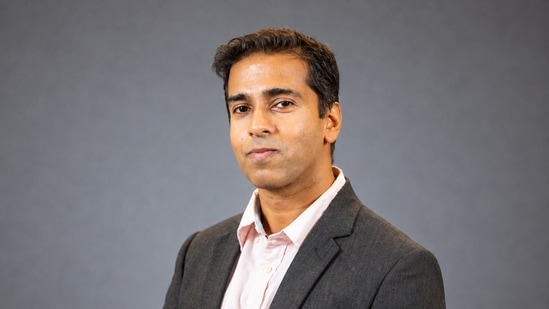
Dr. Mihirkant Upadhyaya is a Senior Supply Chain Technical Program Manager at Intel Corporation, currently pursuing an MBA at the University of Washington’s Foster School of Business. He holds four degrees including a PhD in Nanoscale Science and Engineering, and is a six-time certified world record holder as the most academically qualified individual to trek to Mt. Everest Base Camp. He is currently training for a full Everest summit attempt in 2028.