HS Foundation, in collaboration with Blockchain For Impact (BFI), has organised a research and innovation capacity-building programme at the Foundation for Innovation and Technology Transfer (FITT), IIT Delhi, with the aim of strengthening innovation ecosystems in tier-2 and tier-3 districts, particularly across Uttar Pradesh.
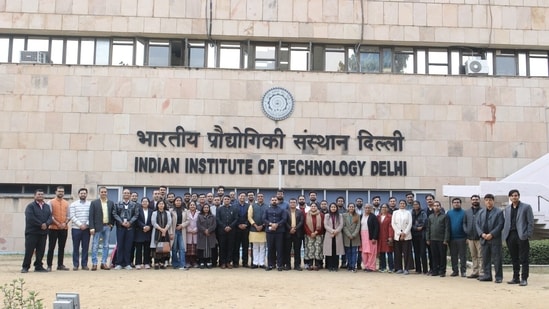
The three-day residential programme brought together 63 faculty members from 35 educational institutions, representing 25 tier-2 and tier-3 districts. Participants came from a diverse range of academic backgrounds, including engineering, medicine, ayurveda, veterinary sciences, law and management. Institutions from cities such as Lucknow, Meerut, Mathura, Moradabad, Saharanpur and Bulandshahr participated in the programme, along with colleges from the Delhi-NCR region.
According to the organisers, the initiative is expected to indirectly impact over 1.35 lakh graduate and postgraduate students through trained faculty members. Rather than focusing on short-term student interventions, the programme emphasised institution-level research and incubation capacity building, with faculty positioned as long-term drivers of innovation and entrepreneurship on campus.
Faculty-led incubation focus
The central objective of the initiative was to enable participating colleges to establish functional incubation cells within their institutions. Faculty members were trained to identify real-world problems, translate academic research into practical and scalable solutions, and mentor students interested in innovation-led entrepreneurship.
Hosted within IIT Delhi’s innovation and technology-transfer ecosystem, the programme introduced participants to structured approaches covering problem identification, faculty-led entrepreneurship models, funding and incubation pathways, intellectual property management, and technology transfer mechanisms. These sessions were complemented by hands-on exercises, group discussions and pitching workshops, allowing faculty members to apply concepts in practical settings.
{{/usCountry}}Hosted within IIT Delhi’s innovation and technology-transfer ecosystem, the programme introduced participants to structured approaches covering problem identification, faculty-led entrepreneurship models, funding and incubation pathways, intellectual property management, and technology transfer mechanisms. These sessions were complemented by hands-on exercises, group discussions and pitching workshops, allowing faculty members to apply concepts in practical settings.
{{/usCountry}}As part of the initiative, FITT–IIT Delhi committed to providing continued mentorship and guidance to participating institutions to support the operationalisation of incubation cells and early-stage innovation projects on their campuses.
“Innovation in India must move beyond a few urban centres,” said Ashish Dhar Dwivedi, Managing Trustee, HS Foundation. He added that empowering faculty across disciplines and regions was essential to building sustainable research and entrepreneurship ecosystems in Uttar Pradesh.
Nikhil Agarwal, Director, FITT–IIT Delhi, said faculty-driven innovation was critical for long-term research translation. He added that IIT Delhi would continue to support regional institutions in building credible incubation and innovation capabilities.
The organisers said the programme is expected to serve as a replicable model for expanding research, innovation and entrepreneurship capacity across states, particularly outside major metropolitan hubs.
(Based on press note issued by Blockchain for Impact (BFI))