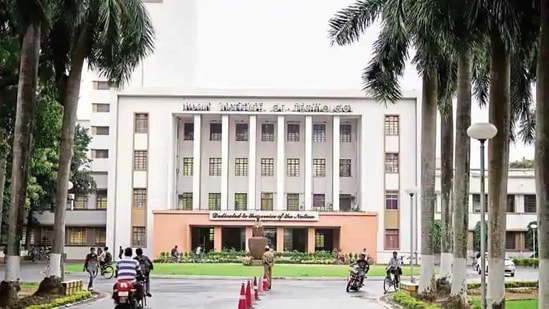
An efficient, low-cost, nano-filtration-based technology developed by the Centre for Technological Excellence in Water Purification (CTEWP) housed in IIT, Kharagpur has ensured access to safe and clean drinking water free of heavy metals.
The Department of Science and Technology (DST) on Thursday said the prototype of the highly compact vertical modular nano-filtration membrane system, designed for the removal of heavy metals from the groundwater, was developed by the Membrane Separations Laboratory, Council of Scientific and Industrial Research-Indian Institute of Chemical Technology (CSIR-IICT), with support from the DST Water Technology Initiative (WTI).
With a capacity of 100-300 litre per hour(L/h), the system based on a membrane technically called the hydrophilised polyamide membrane removes heavy metals such as iron from the groundwater.
It consists of pumps that force water first through a pre-filter assembly to remove suspended solids, colour and odour, and then spiral wound membrane modules that separate heavy metals.
It gives a purified permeate of reasonable total dissolved solids (TDS) devoid of contaminants such as iron, arsenic or excess hardness. Ultraviolet light is provided at the end to disinfect any pathogens that may be present in the tank or pipelines.
The CSIR-IICT team has also developed a simple, inexpensive, hand pump-operated hollow fibre ultrafiltration system that is lightweight, easy to operate, has high mobility and occupies less space.
{{/usCountry}}The CSIR-IICT team has also developed a simple, inexpensive, hand pump-operated hollow fibre ultrafiltration system that is lightweight, easy to operate, has high mobility and occupies less space.
{{/usCountry}}The technology supported by the DST is based on membranes called polyethersulfone hollow fibres. The pressure generated by the hand pump to transport floodwater into the membrane module provides a driving force to facilitate the permeation of clarified and disinfected water through the porous membrane, while a small chlorine cartridge installed at the membrane outlet leaches free chlorine to tackle any secondary contamination.
A total of 24 water plants were installed during recent floods in Karnataka, Maharashtra, Kerala, Bihar, Odisha and West Bengal to provide clean and safe drinking water to 50,000 people.