...
...
Next Story

Pro-incumbency stops 2019-like roll out

The decision of the DMK and the AIADMK to contest more seats in these elections than in 2019 has also yielded different results in terms of strike rates.

Updated on: May 3, 2021, 08:33:37 IST
By , , New Delhi
Prefer HTon Google
Advertisement

The Dravida Munnetra Kazhagam alliance has recaptured power in Tamil Nadu after 10 years. According to trends available at the Election Commission of India’s website at 11 pm, the DMK alliance was winning or leading in 157 out of the 234 assembly constituencies (ACs). The All India Anna Dravida Munnetra Kazhagam alliance was winning or leading in 77 ACs. While the DMK-grouping’s victory is convincing and huge -- it almost has a two-third majority in the assembly -- it has fallen short of its 2019 Lok Sabha performance when it won 38 out of the 39 Lok Sabha seats in the state. The AIADMK, while it has lost power, managed to prevent the kind of rout it faced in 2019.
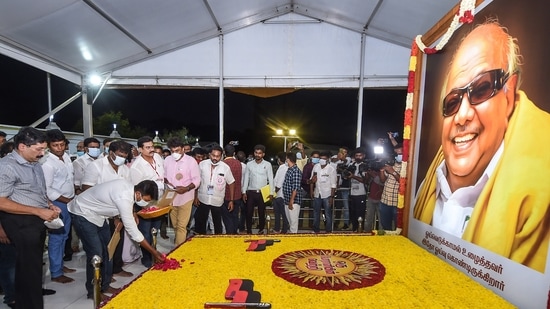
One of the reasons behind the AIADMK’s relative comeback -- it has still lost the elections with a big margin between 2019 and 2021 -- could be the government’s handling of the Covid-19 crisis. (PTI Photo) (PTI)

What explains the moderation of tailwinds in the DMK’s favour? An HT analysis suggests that some amount of pro-incumbency sentiment in favour of the AIADMK government might have led to this result.

Both the DMK and the AIADMK contested a larger number of ACs (188 and 191) in 2021 than in 2019 (138 and 126), although as is often the case in the state, some of those ACs are contested by allies on DMK and AIADMK tickets (for instance, the DMK itself contested 173 seats this time). The 2019 results have been disaggregated at the AC level for this analysis. This is one of the factors behind the increase in vote share of both these parties. However, contested vote share numbers reveal a different picture. While the DMK’s contested vote share went down from 54.3% in 2019 to 46% in 2021, the AIADMK’s increased from 33.2% to 41.4%. A direct manifestation of this trend can be seen in the strike rates of the DMK and the AIADMK against each other. The DMK won every AC it contested against the AIADMK in 2019. This went down to 66% in this election. Both these parties performed better against each other’s allies than in direct contests. This underlines the fact that the state’s politics continues to revolve around these two parties. Here too, the trend between 2019 and 2021 is the same. While the DMK continues to have a sizable lead over the AIADMK, it has come down between 2019 and 2021. (See Chart 1)

The decision of the DMK and the AIADMK to contest more seats in these elections than in 2019 has also yielded different results in terms of strike rates. The AIADMK contested 81.6% of the ACs in 2021 compared to 55.3% in 2019. It increased its strike rate from 7.1% to 38.7%. The DMK contested 80.3% of the ACs in 2021 compared to 59.2% in 2019. But its strike rate went down from 97.8% to 67.6%. To be sure, the DMK’s strike rate is significantly higher than that of its allies in both 2019 and 2021, which rules out the argument that it would have performed better had it given more seats to its allies. In fact, it lost an opportunity to form a government in 2016 because it made the mistake of giving more seats to allies, especially the Congress. (See Chart 2)

One of the reasons behind the AIADMK’s relative comeback -- it has still lost the elections with a big margin between 2019 and 2021 -- could be the government’s handling of the Covid-19 crisis. What this also means is that while voters are forthcoming in pushing back against the BJP’s ideological agenda, they care more about quality of governance when it comes to choosing their state government.

 
ABOUT THE AUTHOR
Abhishek Jha

Abhishek Jha is Assistant Editor-Data at Hindustan Times. He uses statistical programming to generate newsworthy insights from large datasets. He is part of the team that produces Number Theory, a daily data story feature of the paper’s print edition. Since March 2024, he has been writing Weather Bee, a weekly column for the Hindustan Times website. He is a chemical engineer by training, who specialises in stories related to weather, climate, and the environment. Jha has been at HT since 2018, where he offers data-driven perspective and analysis on politics, environment, weather, climate, economy and society. His work includes data coverage of elections in India and abroad, including the 2019 and 2024 Lok Sabha elections; the disasters and extreme weather resulting from changing climate, such as floods, droughts, heat waves, cold waves, and dwindling snow cap in the Himalayas; the factors that drive poor air quality in northern India; the changing patterns of land use; the Covid-19 pandemic and its impact on labour market conditions; the changing pattern of consumer spending seen in the new consumer spending surveys; and social norms seen in the surveys such as the National Family Health Survey.

ABOUT THE AUTHOR
Roshan Kishore

Roshan Kishore is the Data and Political Economy Editor at Hindustan Times. He heads the newsroom's data journalism team, which produces Number Theory, a daily data-driven feature for the print edition and the HT app. Number Theory uses data analysis and story-telling based on it to add value to the newsroom’s daily coverage by putting stories in a larger context on a range of issues, including politics, macroeconomy, markets, global affairs and climate. Under his leadership HT’s data journalism work has established itself as a niche product in Indian journalism and pushed the boundaries of marrying academic rigour with news sense and speed. Along with writing and editing data stories, he has also been writing a weekly political economy column called Terms of Trade for HT Premium. A trained economist with an MPhil degree from Jawaharlal Nehru University, Kishore has also been a visiting fellow at the Centre for Advanced Studies of India (CASI) at the University of Pennsylvania. Along with his journalistic work, his writings have also appeared in journals such as the Economic and Political Weekly and working papers for CASI and UNESCAP.

SHARE THIS ARTICLE ON
Hindustantimes wants to start sending you push notifications. Click allow to subscribe