E-Paper



Plainclothes review: Tom Blyth gives a breakout performance in gritty cop drama
HT at Sundance | Writer-director Carmen Emmi's debut feature starts off shaky, and overuses lo-fi VHS footage but there's no denying the film's raw emotion.

 Prefer HTon Google


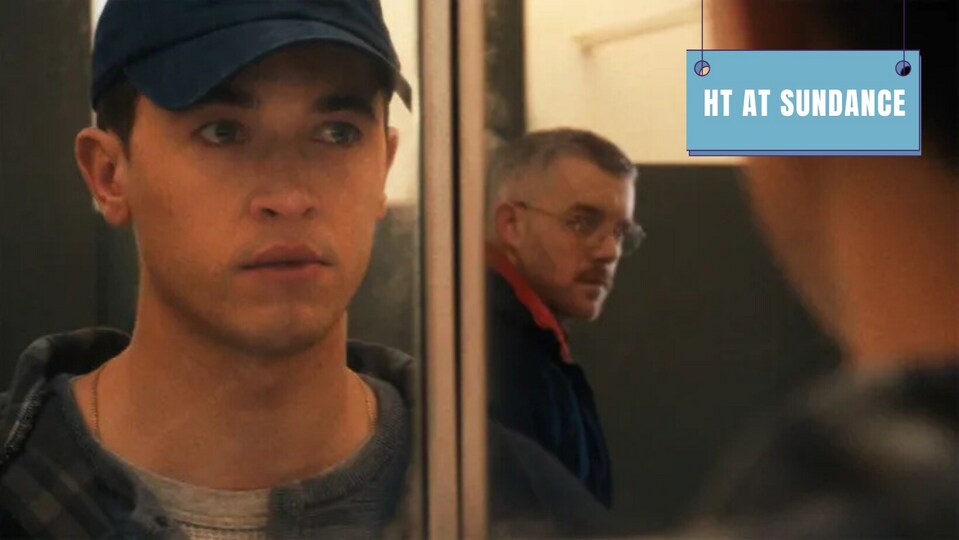
Carmen Emmi’s directorial debut strikingly depicts the anxieties of a closeted gay undercover officer set in 90s America. LGBTQ+ rights have come a long way since then, but queerphobia is a thing that existed everywhere, way more rigidly in the confines of the police force. Tom Blyth plays Lucas, a young police officer who has the job to work as a sly undercover, use himself as a scapegoat to trap and arrest unsuspecting gay men in a local shopping mall. He is young and handsome, and seems to have a good reputation for getting the work done. But no one else must discover the anxiety of Lucas, the internal trapping he feels of hiding in plain sight. (Also read: Hal & Harper review: Lili Reinhart shines in Cooper Raiff's absorbing and intimate family portrait)
The premise
Premiering at Sundance at the U.S. Dramatic Competition section, this is a sobering, gritty drama. Ethan Plamer's camera is sharply focused on Lucas' face at most times as he scans the faces of strangers at the mall, and lures them into the washroom. Back home, he takes care of his mother Marie (Maria Dizzia). He is also unsure of his breakup, where he embarrassingly admitted that he ‘might like guys.’ It all seems to go as usual until Lucas meets Andrew (Russell Tovey), a young man who cleverly escapes his trap, but leaves his phone number. “Give me some time to return your call,” reads the handwritten message.
It has a shaky, overdone start. Unfolding as a series of interspersed flashbacks from a New Year's Eve get together, Carmen Emmi experiments with the sense of time and space as several patches of Lucas' memory is shown via a grainy, lo-fi VHS footage. This visceral flashes of the past is juxtaposed with the present, as Lucas delves into a series of déjà vu, following up on Andrew and growing feeling for him. Lucas introduces himself as Gus, the middle name of his recently deceased father. The two men meet and Lucas wants to know more and more about Andrew, possibly hoping that they can have a life together.
What works
As riveting as this narrative choice is, Plainclothes goes to a degree of overusing the same trick. The flashbacks are not just about Lucas' memory, but it also deliberately disrupts the sense of chronology. At a key moment when Lucas confronts Andrew in the later parts, this trick fails to land. Even as Plainclothes wobbles under the weight of its own decisions, the central performance of Tom Blyth does more than enough to hold it back to shape.
The actor conveys the depths of Lucas' unresolved anxieties excellently, how his constant and numbing sense of fear often gets the better of him. The murky ethics of his job haunts him. Lucas is framing himself first, always hyper-aware of whether he is being watched. He is ably supported by Russell Tovey, whose Andrew gets one final chance to explain why he must not be pulled up for having to exercise some of his desires.
Plainclothes is a gritty, well-made coming-of-age drama elevated by a stunning, go-for-broke conclusion that is hugely satisfying. It is compact, intelligent and demands the trust of its audience. Sometimes the person standing in between our sense of fulfilment and identity is no one but ourselves. It only takes some time to know why.