
 E-Paper



Matthew McConaughey Trademarks Himself to Fight AI Misuse
Actor plans to use trademarks of himself saying ‘Alright, alright, alright’ and staring at a camera to combat AI fakes in court.


 Prefer HTon Google


Matthew McConaughey is taking a novel legal approach to combat unauthorized artificial-intelligence fakes: trademarking himself.
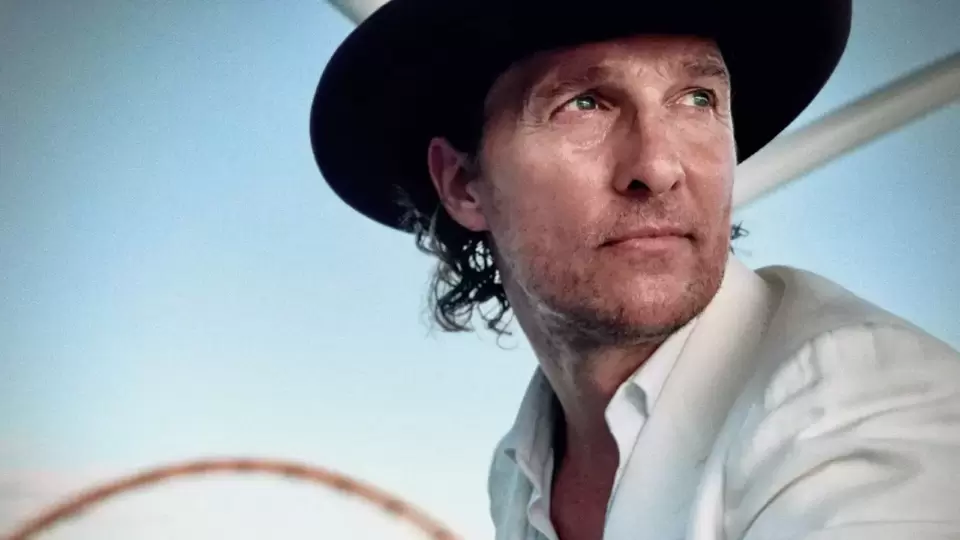
Over the past several months, the “Interstellar” and “Magic Mike” star has had eight trademark applications approved by the U.S. Patent and Trademark Office featuring him staring, smiling and talking. His attorneys said the trademarks are meant to stop AI apps or users from simulating McConaughey’s voice or likeness without permission—an increasingly common concern of performers.
The trademarks include a seven-second clip of the Oscar-winner standing on a porch, a three-second clip of him sitting in front of a Christmas tree, and audio of him saying “Alright, alright, alright,” his famous line from the 1993 movie “Dazed and Confused,” according to the approved applications.
“My team and I want to know that when my voice or likeness is ever used, it’s because I approved and signed off on it,” the actor said in an email. “We want to create a clear perimeter around ownership with consent and attribution the norm in an AI world.”
McConaughey’s lawyers say they aren’t aware of his likeness being manipulated by AI, but hope the trademarks can be used broadly against any unauthorized duplications of him.
“In a world where we’re watching everybody scramble to figure out what to do about AI misuse, we have a tool now to stop someone in their tracks or take them to federal court,” said Jonathan Pollack, one of McConaughey’s attorneys.
Numerous actors and singers have had to deal with fake videos, audio and images on the internet created by AI, including Tom Hanks and Taylor Swift.
State rights of publicity laws already protect actors from having their image or likeness stolen to sell products. McConaughey’s lawyers believe that the threat of a lawsuit in federal courts would help deter misuse more broadly, including for AI video that isn’t explicitly selling anything.
The lawyers said they aren’t aware of any other actors who have secured broad trademarks on themselves, particularly in the age of AI. They acknowledge that if a defendant fights one of McConaughey’s trademark claims, the outcome is uncertain.
“I don’t know what a court will say in the end. But we have to at least test this,” said McConaughey lawyer Kevin Yorn, who represents numerous top Hollywood actors including Scarlett Johansson and Zoe Saldaña.
McConaughey recently announced a partnership with AI voice company ElevenLabs to create a version of his newsletter “Lyrics of Livin’” in Spanish. McConaughey is an investor in ElevenLabs, as is Yorn through venture-capital firm BroadLight Capital, where he is a partner.
U.S. law lets individuals and companies make a trademark claim on images closely associated with them even if they haven’t been filed with the USPTO. But many seek approval in order to ensure the law is on their side.
Some performers have secured trademarks for catchphrases, such as singer Lizzo’s “100% That Bitch.”
Mark McKenna, a professor at the University of California, Los Angeles, school of law who studies intellectual property, said the trademarks granted under existing U.S. law without registration, as well as state right of publicity laws, protect against most commercial uses. But on internet video platforms where creative work generated by AI can be monetized with advertisements, the law is murkier.
“In some of the things people are most worried about with new technology, we don’t have crystal clear rules about whether they’re considered commercial,” he said.
McConaughey and his attorneys said they hope federal law will eventually clarify the issue and make trademarks such as his unnecessary. Hollywood unions and companies have supported legislation forbidding AI-generated replicas of people without their permission. A bill was introduced in Congress in 2024 but it hasn’t been voted on in the House or Senate.
Write to Ben Fritz at ben.fritz@wsj.com


