For decades, Remo Fernandes brought unmatched energy to the stage, turning every performance into a celebration of music. From independent rock to unforgettable Bollywood hits, the singer-songwriter carved a space that was entirely his own. Now, after a career spanning several decades, the musician has announced that he is stepping away from live performances, due to health setbacks following COVID-19.
Remo gives emotional goodbye on stage
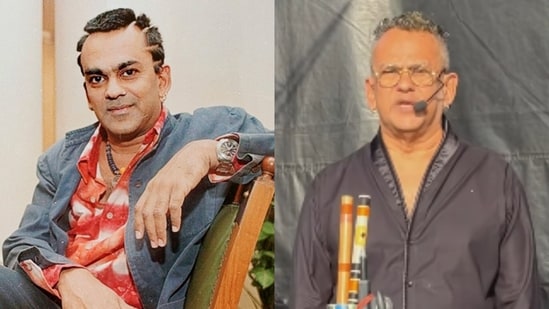
The retirement announcement was made during a Goa Day celebration organised by Cranford Community College in Hounslow, UK. Wearing a black shirt and jeans, Remo stepped on to the stage amidst a thunderous applause from the audience; he knew that it would be his last live performance. Before beginning his performance, the Padma Shri awardee explained why he had decided to retire from performing. “Now sitting down and performing is not really my cup of tea. So that's why I decided to call it a day and to stop performing,” he said.
Remo apologised to the audience for not being able to perform as he once did. “And I'm going to be performing for you. And I wish to apologise for the fact that my fingers are not what they used to be, what they used to be. My throat is not what it used to be. And I have to sit down and perform,” he added.
Remo talked freely about the health issues which ultimately resulted in making it very hard for him to continue playing the same way he used to play. He disclosed that he experienced a mild stroke after taking his third shot against coronavirus and that it affected his finger movement while playing guitar and flute. “Some years ago, after I took the third COVID vaccine, I suffered a light stroke. And that stroke gave me some problems in the use of my fingers. So that made my guitar playing and my flute playing a bit difficult. And it was not as it used to be before,” he went onto explain.
{{/usCountry}}Remo talked freely about the health issues which ultimately resulted in making it very hard for him to continue playing the same way he used to play. He disclosed that he experienced a mild stroke after taking his third shot against coronavirus and that it affected his finger movement while playing guitar and flute. “Some years ago, after I took the third COVID vaccine, I suffered a light stroke. And that stroke gave me some problems in the use of my fingers. So that made my guitar playing and my flute playing a bit difficult. And it was not as it used to be before,” he went onto explain.
{{/usCountry}}It was suggested by the doctors that he shouldn’t be singing standing up because he had never done that before, but still Remo felt the urge of going on stage once more to bid farewell to the fans on his own terms. “And then last year, I suffered from vertigo. I had a nasty fall for which I had to be operated on in my cranium. I was supposed to perform here last year but I could not perform because of my operation. And the president of the Goan UK, Mr Ravi Vaz, was kind enough to invite me again this year. And this year, I didn't want to say no, I could not say no. So here I am,” the singer added.
He also said the concert fulfilled a wish he had been holding onto. “Finally, my wish has come true," he concluded. Despite those challenges, he performed for nearly an hour, taking fans through some of his most loved songs, including Maria Pitache and Humma Humma.
A career that changed independent music
Remo Fernandes was born in 1953 in the state of Goa. He studied architecture in Mumbai and then pursued music career. Even before the Indian indie music gained popularity, he recorded and released his songs. In Bollywood, he gained popularity through the song Humma Humma, from Bombay (1995), which composed by A.R. Rahman. Before that, he grabbed attention with the title track of Jalwa (1987), which marked his breakthrough in Bollywood. Later he sang such songs as Pyaar To Hona Hi Tha, Huiya Ho from the movie Khamoshi: The Musical (1996) and the title track Daud (1997).
Beyond movies, Remo was one of the earliest musicians to demonstrate the viability of indie music in India. Tracks such as O Meri Munni became huge hits and played an instrumental role in building a loyal fanbase for him even before indie music became popular. Albums such as Goan Crazy and Old Goan Gold were made from his home studio in Goa. Moreover, he remained true to his roots with songs such as Maria Pitache, which was based on a Portuguese track that he listened to when he was in school, and Ya Ya Maya Ya, which he usually performed with fans joining him in chorus.
Get more updates from Bollywood, Taylor Swift, Hollywood, Music and Web Series along with Latest Entertainment News at Hindustan Times.
Get more updates from Bollywood, Taylor Swift, Hollywood, Music and Web Series along with Latest Entertainment News at Hindustan Times.