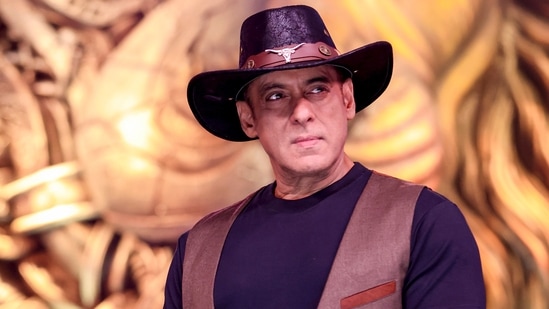
Every year, audiences wait to see their favourite television actors, film stars, influencers and social media personalities enter the Bigg Boss house and create the drama they can follow for the next few months. A strong contestant lineup usually becomes one of the biggest talking points even before the season begins. However, Bigg Boss 20 has had a different start. The lineup for Salman Khan’s show has left many viewers disappointed, with some calling it “weak” and others describing it as “worse casting than Lock Upp and Alliance”.
The Bigg Boss 10 blueprint
One of the biggest complaints has been the absence of top-tier television stars or established celebrities who can immediately command attention inside the house. But while the casting may not look impressive on paper, this is not necessarily bad news for the show. In fact, seasoned Bigg Boss viewers have seen this formula work before.
A decade ago, Bigg Boss 10 premiered with a similarly unconventional lineup. The season introduced the “Indiawale vs Celebrities” format, bringing relatively unknown commoners into the house alongside established names. The experiment took away some of the familiar star power and created a season that was far less predictable than its casting suggested.
{{/usCountry}}A decade ago, Bigg Boss 10 premiered with a similarly unconventional lineup. The season introduced the “Indiawale vs Celebrities” format, bringing relatively unknown commoners into the house alongside established names. The experiment took away some of the familiar star power and created a season that was far less predictable than its casting suggested.
{{/usCountry}}Deep Dive
What is the theme of Bigg Boss 20 and how does it differ from previous seasons?
Why do some viewers consider the Bigg Boss 20 contestant lineup to be weak?
How can the underdog contestant lineup in Bigg Boss 20 lead to more unpredictable behavior?
Bigg Boss 10 may not have achieved the kind of commercial impact later seasons such as Bigg Boss 11 and Bigg Boss 13 did, but it had no shortage of drama, arguments, controversies, memes, friendships and viral moments. Contestants such as Priyanka Jagga, Swami Om, Manveer Gurjar and Manu Punjabi became familiar names during and after the season.
This is why the underdog lineup of Bigg Boss 20 may not necessarily be its biggest weakness. It could actually be what the show needs.
The filter drops when stakes rise
One of the biggest criticisms against Bigg Boss in recent years has been that established celebrities often enter the house with carefully built public images. After the success of seasons such as Bigg Boss 13, viewers have increasingly complained that some A-list celebrities and established television names appear too conscious of how they are being perceived outside the house.
The problem with entering a reality show with an established image is that there is often a lot to protect. Contestants know that every argument, reaction and statement can be discussed on social media. They therefore have to think about their existing fanbase, professional relationships, brand commitments and public image before reacting. That has sometimes made a contestant look as though they are “acting” in a reality show.
An underdog-heavy cast can change that dynamic. Contestants who are still trying to establish themselves, influencers looking to expand their audience or personalities attempting a career comeback have much more at stake inside the house. They have something to prove.
For them, a task, an argument or even a Weekend Ka Vaar episode can become an opportunity to change how the audience sees them. There is less incentive to sit quietly and protect an already-established image. The result can be more immediate reactions, more arguments and more unpredictable behaviour.
Bigg Boss 10 provided several examples of this. Priyanka Jagga and Swami Om were among the season’s most controversial contestants. Their behaviour often crossed the line and attracted criticism, but they also became some of the most talked-about contestants of the season. They did not appear overly concerned about maintaining a polished image, and their presence generated constant conflict inside the house.
One of the most memorable moments came when Salman Khan himself lost patience with Priyanka and asked her to leave the show. The incident remains one of the most discussed moments from Bigg Boss history.
This could also work in Bigg Boss 20’s favour. With no obvious superstar contestant dominating the lineup, Salman does not appear to have an established favourite inside the house. That gives him an opportunity to react to contestants based on their actions inside the show rather than their status outside it. A more confrontational Salman could therefore become an advantage if the contestants themselves provide enough material.
The equal playing field advantage
Another problem with celebrity-heavy seasons is the hierarchy that can develop inside the house. When a hugely popular actor or television star enters, other contestants are often aware of their status. A relatively new actor or influencer may think twice before picking a fight with someone who has a massive fanbase or an established career. Sometimes, contestants even appear to treat a celebrity as the unofficial leader of the house.
The same hierarchy can extend to the audience and, at times, to the show itself. Viewers have often accused Bigg Boss of giving established celebrities preferential treatment, particularly during Weekend Ka Vaar episodes. Whether or not such claims are justified, the perception itself can affect how audiences respond to the season.
Bigg Boss 10 disrupted that equation. Commoners such as Manveer Gurjar and Manu Punjabi were not intimidated by the established celebrity contestants. They approached the game as contestants rather than fans. Their lack of celebrity status meant they had little reason to treat the more famous participants as untouchable.
That made the power dynamics more fluid. The same could happen in Bigg Boss 20. Without one undisputed superstar commanding the house, alliances will have to be built around convenience, friendship, strategy and personality rather than celebrity status. Contestants cannot simply gather around the biggest name in the room and expect that alliance to carry them through the season.
It also means Salman may have to find his favourite along the way, just like the audience. If one contestant emerges as a strong performer, entertainer or troublemaker, their popularity will have to be earned inside the house rather than being inherited from a pre-existing fanbase.
Production will have to work harder
A celebrity-heavy cast gives a reality show an advantage even before the first episode airs. Established stars already come with stories, rivalries, relationships, fan wars and years of public history. Their personal lives can become part of the show's narrative without much effort. With a relatively lesser-known cast, the production team cannot rely on that familiarity.
The contestants themselves have to create the content. That means every task, nomination, argument, friendship, romance and rivalry becomes more important. Contestants have to fight for screen time because there may not be a superstar whose presence automatically becomes the centre of an episode. This can force the format to do what it is supposed to do: create personalities rather than simply showcase already-famous ones.
That was one of the interesting aspects of Bigg Boss 10. Manveer Gurjar and Manu Punjabi entered as commoners but left the show with significantly greater recognition. The season demonstrated that Bigg Boss can turn relatively unknown personalities into reality-TV stars if they manage to create a strong enough connection with the audience.
Bigg Boss 20 could create its own stars
It is still too early to determine whether Bigg Boss 20 will recreate the unpredictability of Bigg Boss 10 or end up being remembered among the weaker seasons such as Bigg Boss 15. The initial response to the casting is certainly not what the makers would have wanted, but the season has only just started.
A weak-looking lineup on paper does not necessarily translate into weak show. In fact, the absence of obvious stars could give the contestants more room to become the stars themselves. They will have to create their own storylines, build their own fanbases and give audiences reasons to support or dislike them.
And that has always been one of the biggest strengths of Bigg Boss. The show does not only bring celebrities into a house; at its best, it creates celebrities out of people audiences did not know or care about before the season began.
So, while Bigg Boss 20 may not have the star power that fans expected, its lack of established names could eventually become its biggest advantage. If the contestants are willing to take risks, fight their battles and show more of themselves, the season may prove that a reality show does not necessarily need a house full of stars to produce stars.
Get more updates from Bollywood, Taylor Swift, Hollywood, Music and Web Series along with Latest Entertainment News at Hindustan Times.
Get more updates from Bollywood, Taylor Swift, Hollywood, Music and Web Series along with Latest Entertainment News at Hindustan Times.