A decline in low pressure activity could significantly reduce monsoon rains in India towards the end of this century while also leading to more extreme precipitation events in some parts of the country, according to a new study published in Proceedings of the National Academy of Sciences.
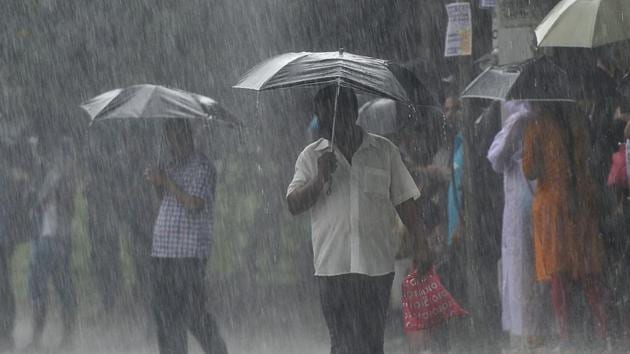
The study tracked changes in the occurrence of low pressure systems (LPS) across India and concluded that the activity could decline by around 45% by the years 2071-2095.
“Since LPS systems contribute about 60% of total rainfall received over the central Indian region during a typical monsoon season (June – September), our results assume significance,” Ajaya Ravindran, co-author of the study, said in an email.
The dip in rains is due to the combined effect of the decrease in low pressure activity in the Bay of Bengal by 60% and a 10% increase in northern states, over land. Low pressure systems formed over land do not carry the same amount of moisture.
The northward shift of (LPS’s) genesis distribution is documented but the impact of rising warming temperatures on monsoons is not fully understood.
“Temperatures are increasing, but there is a lot of uncertainty about its impact on monsoon,” DS Pai, a scientist at India Meteorological Department, said, adding that the only thing that has been established is that extreme rainfall events will increase because of warming.
{{/usCountry}}“Temperatures are increasing, but there is a lot of uncertainty about its impact on monsoon,” DS Pai, a scientist at India Meteorological Department, said, adding that the only thing that has been established is that extreme rainfall events will increase because of warming.
{{/usCountry}}The new study also predicts an increase in such events, with Jharkhand, Bihar, Chhattisgarh, Uttarakhand likely to be most affected by extreme precipitation.
“The (low pressure) systems that form over the land will be limited by moisture availability and they have typically shorter life cycles. Such systems result in a short span of intense rainfall over a relatively smaller area,” Ravindran said.
“This will result in an increase in the extreme rainfall events over the Gangetic plains and foothills of Himalayas,” he said.