In “Arthashastra”, an ancient Indian manual on statecraft, elephants were prized assets. Kings presented them to forge alliances. Generals relied on them to destroy the gates of forts. Today Ganesha, the elephant-headed Hindu god, is still worshipped as the remover of obstacles, and children, as elsewhere, learn “E for Elephant”.
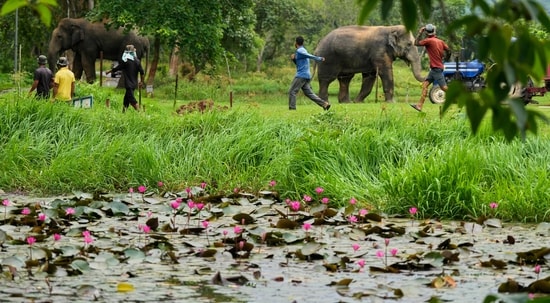
But reverence has not translated into protection. A survey published last year by the Wildlife Institute of India counted 22,446 elephants, 18% fewer than in 2017. The decline in some
In “Arthashastra”, an ancient Indian manual on statecraft, elephants were prized assets. Kings presented them to forge alliances. Generals relied on them to destroy the gates of forts. Today Ganesha, the elephant-headed Hindu god, is still worshipped as the remover of obstacles, and children, as elsewhere, learn “E for Elephant”.
But reverence has not translated into protection. A survey published last year by the Wildlife Institute of India counted 22,446 elephants, 18% fewer than in 2017. The decline in some states was “a shocker”, says Qamar Qureshi, the report’s lead author. Part of the problem is geography. Unlike in Africa, villages are scattered throughout the forests of densely populated India. Elephants are often confined to narrow corridors between patches of forest. Vivek Menon of the Wildlife Trust of India says that in 2010 his team identified 88 such routes. Today there are about 150, reflecting shrinking habitats.
As infrastructure cuts through forests, elephants stray into farms. Mining and blasting sites also get in their way. In West Bengal hulla (“noise”) parties see mobs hurl fireballs and firecrackers to drive the animals away, despite a Supreme Court ban. Electric fences sometimes block the elephants’ path. But they are excellent physicists, says Raman Sukumar, an ecologist. They use their tusks, which are poor electrical conductors, to break fences, or toss logs to short-circuit them. Forest guards and workers steering elephants back to safety are “utterly under-equipped and woefully unprepared”, says Prerna Bindra, a conservationist. Most lack basic equipment such as torches.
But not all is doom. Poaching for ivory has fallen since the 1980s. Co-ordination between state forestry departments and national customs has improved. Today India has a Wildlife Crime Control Bureau and states have anti-poaching plans. Last month India’s Supreme Court upheld the removal of commercial activity from an elephant corridor in Tamil Nadu.
Elephants act as landscape architects. They disperse seeds, shape forests and fertilise soil. They keep wetlands alive by digging. “Arthashastra” advised India’s rulers to protect forests inhabited by the magnificent beasts. Those in charge today would do well to take note.
Stay on top of our India coverage by signing up to Essential India, our free weekly newsletter.
One Subscription.
Get 360° coverage—from daily headlines
to 100 year archives.
Archives
HT App & Website