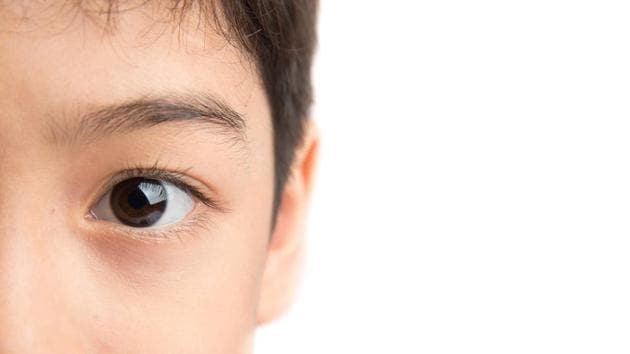
Soft contact lenses can be safely prescribed to children and adolescents, with no increase in adverse effects compared to adults, says a study.
In fact, the risk of safety problems from soft contact lens wear may even be lower in younger children compared to teenagers, according to the study in Optometry and Vision Science, the official journal of the American Academy of Optometry. “In the past decade, there has been increasing interest in fitting children with contact lenses,” said Mark Bullimore of the University of Houston College of Optometry in the US.
Recent studies have shown that multifocal contact lenses may help prevent or slow progression of near-sightedness (myopia) in children. Contact lenses can also improve self-esteem and quality of life in children and teenagers. Bullimore performed a comprehensive research review to identify previous studies on the safety of soft contact lenses for children and adolescents.
The analysis focused on signs of possible inflammation/infection called “corneal infiltrative events.” Although these events are usually mild, about five per cent are a serious infection called microbial keratitis.
The highest quality data came from nine prospective studies including 1,800 “patient-years” of soft contact lens wear in patients aged seven to 19 years. Analysis of the assembled data from the studies found a low rate of corneal infiltrative events: 136 events per 10,000 years.
One large retrospective study suggested that the rate of these events was lower in younger children: 97 per 10,000 years in 8 to 12-year-old children, compared to 335 per 10,000 years in teens aged 13 to 17 years. Microbial keratitis was uncommon, with no cases reported in the prospective studies.
{{/usCountry}}One large retrospective study suggested that the rate of these events was lower in younger children: 97 per 10,000 years in 8 to 12-year-old children, compared to 335 per 10,000 years in teens aged 13 to 17 years. Microbial keratitis was uncommon, with no cases reported in the prospective studies.
{{/usCountry}}A retrospective study reported no cases of microbial keratitis in younger children. In teenagers, the rate of microbial keratitis was 15 cases per 10,000 years -- similar to that reported in adults. The higher risk of complications in older patients seemed to be related to behavioural risk factors, such as showering and napping in soft contact lenses, the study said.
Follow @htlifeandstyle for more
Catch your daily dose of Fashion, Taylor Swift, Health, Festivals, Travel, Relationship, Recipe and all the other Latest Lifestyle News on Hindustan Times Website and APPs.
Catch your daily dose of Fashion, Taylor Swift, Health, Festivals, Travel, Relationship, Recipe and all the other Latest Lifestyle News on Hindustan Times Website and APPs.