Pradip Kumar Banerjee was a robust right-winger with a knack for goals who transitioned to a successful coach for East Bengal and Mohun Bagan and, to a lesser extent, for India. Exuding charisma on and off the pitch, Banerjee, a former India captain, was also a pundit and commentator whose connect with football stretched six decades. With its Centennial Order of Merit in 2004, Fifa acknowledged his remarkable life.
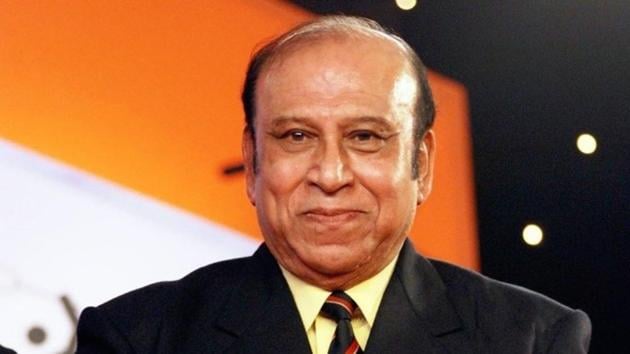
Banerjee, who died on Friday afternoon aged 83, played against Sailen Manna and with Mohammad Abdus Sattar and Sheo Mewalal --- all members of the 1951 Asian Games gold medal winning team --- not long after being in the Santosh Trophy. Still a teenager, he debuted for India, against Sri Lanka in Dhaka in 1955. His first match for India was also the last time Mewalal played for the country. Banerjee scored two goals on debut and 12 more in 45 internationals.
In 1956, Banerjee was part of the team that became the first from Asia to make the Olympics semi-final. In 1960 with his father fighting cancer, Banerjee led the India Olympics team. His house in Salt Lake in eastern Kolkata has Olympic rings as part of the architecture and there was a time when his autograph would say, ‘Captain of Indian Football Team, Rome Olympics, 1960’. Under his captaincy, India lost 1-2 to a Hungary team that had striker Florian Albert --- European Footballer of the Year in 1967 --- and players from top clubs such as Ferencvaros and Honved. Banerjee scored in the 1-1 draw against France.
By then, the foundation of India’s most famous attacking trio of Chuni Goswami, Banerjee and Tulsidas Balaram had been laid. India won 12 of the 16 games they played together, according to statistician Gautam Ray. In those games, all between 1958 and 1962, the trio scored 20 of India’s 36 goals, said Ray. Banerjee and Goswami scored seven each and Balaram six.
{{/usCountry}}By then, the foundation of India’s most famous attacking trio of Chuni Goswami, Banerjee and Tulsidas Balaram had been laid. India won 12 of the 16 games they played together, according to statistician Gautam Ray. In those games, all between 1958 and 1962, the trio scored 20 of India’s 36 goals, said Ray. Banerjee and Goswami scored seven each and Balaram six.
{{/usCountry}}Goswami was inside-left, Balaram outside-left and Banerjee outside-right in the five-forward line-up. On way to the 1962 Asian Games gold, they got nine of India’s 11 goals in five games; Jarnail Singh was the only other scorer.
Known to have a decent header and powerful shots off both feet, Banerjee had opened the scoring in the final against South Korea with 17th minute a tap-in. Singh, the central defender with a tiger-like resolve who was used as forward, made it 2-0 in the 20th in front of 1 lakh fans rooting for the Koreans.
India’s solid performance in the 1960 Olympics had forged a team that beat Japan, Thailand, South Vietnam and avenged the group stage loss to South Korea. The gold --- at Games where the men’s hockey team took silver --- was the team’s gift to coach SA Rahim who died of cancer in June 1963. These players were stars, Banerjee prominent among them. In 1961, the Arjuna awards were initiated and Banerjee was among the first recipients along with Ramanathan Krishnan (tennis), Prithipal Singh (hockey), Karni Singh (shooting) and GS Randhwa (athletics).
Banerjee’s marriage to Aarti Mazumdar in 1963 was quite an event with top playback singers and Bengali film actors attending. During courtship it was impossible to take Aarti anywhere where his fans wouldn’t be present, he said. “Sometimes we would go for long drives with my dear friend, actor Soumitra Chatterjee and his wife Deepa.” As a coach, he was close to the father-son music director duo of Sachin and Rahul Dev Burman.
Born on June 23, 1936, in Moynaguri near Jalpaiguri in North Bengal to Prabhat and Beena, Prodipto Banerjee became Pradip Kumar --- subsequently PK to even his family --- because of a “clerical error” at his alma mater Patna University. Fearing Jalpaiguri would be in Pakistan after Partition, Prabhat had relocated the family to Jamshedpur. It led to a long period of financial hardship.
Banerjee never played for Mohun Bagan or East Bengal. Mohun Bagan reached out a couple of times, Banerjee wrote in ‘Beyond 90 Minutes’, which he co-authored with Anirban Chatterjee, but didn’t follow up. Banerjee’s club career began with Kolkata’s Aryan Club, where Amal Dutta --- with whom he would have a storied rivalry as club coaches --- was a teammate. But because they made him a ticket collector on a monthly salary of Rs 135 in 1955, it was to Eastern Railway that Banerjee, the oldest of seven siblings, stayed loyal to through his playing career.
It was with an Eastern Railway team that had India stars Nikhil Nandi, Prodyut Burman and Prasanta Sinha that Banerjee won the Calcutta League in 1958. The only other time neither of Mohun Bagan, East Bengal and Mohammedan Sporting won it was in 2019.
After a disappointing Asian Games in 1966, Banerjee quit football in 1967. By 1969, he was a certified coach having earned his badge in Japan under Dettmar Cramer, Helmut Schoen’s deputy in the 1966 World Cup. Along with GM Basha, Banerjee helped India win bronze in the 1970 Asian Games beating Japan 1-0 in the third place playoff. After a disastrous campaign in the Merdeka Cup, where India lost 1-9 to Burma, Banerjee-Basha won the Pesta Sukan Cup in Indonesia in 1972. It would be India’s last trophy for 30 years.
Banerjee joined East Bengal in 1972 and began a second innings that ended in 2003 as technical director at Mohammedan Sporting. He was coach when East Bengal beat Mohun Bagan 5-0 in the 1975 IFA Shield final, still the biggest margin of victory between the archrivals. As Mohun Bagan coach, he forced a 2-2 draw against Pele’s New York Cosmos in 1977 and shared the 1978 IFA Shield with USSR’s Ararat Yerevan. By 1978, it used to be said, “wherever PK goes, trophies follow.”
Returning to East Bengal after a number of key players left, Banerjee drew the best out of Iranians Majid Beshkar and Jamshed Nassiri to share the Federation Cup th Mohun Bagan in 1980. Like in the 1978 IFA Shield final, when he moved Sudhir Karmakar to central defence and surprised Ararat by using substitute Bidesh Bose’s speed, Banerjee’s tactical nous also came through in 1997 when in front of 1.31 lakh people East Bengal, riding a Bhaichung Bhutia hattrick, beat Mohun Bagan 4-1. Using the midfield diamond, Dutta’s Mohun Bagan were scoring for fun en route that Federation Cup semi-final.
East Bengal lost the final but six years after having moved to Jamshedpur’s Tata Football Academy as technical director in 1991, Banerjee showed he was back.
Between coaching Kolkata clubs, he took up assignments with the senior India team. The 1974 Asian Games was a disaster but Banerjee’s India came close to making the semi-finals in the New Delhi Games in 1982 after preparations had started with a players’ revolt --- where Banerjee’s brother Prasun played a key role --- over club contracts. Beating China to second place in the group, India lost 0-1 to an 89th minute goal to bronze medallists Saudi Arabia in the quarter-finals. On advice of their fathers, Sourav Ganguly and Leander Paes were sent to train with Banerjee before they became, well, Sourav Ganguly and Leander Paes.
Conferred the Padma Shri in 1990, Banerjee was intermittently associated with the India coaching set-up till the mid-2000s by when he would also be known for seeking honourable defeats rather than trying to force wins.
Banerjee was sucker-punched by Aarti’s death in 2003 --- he is survived by daughters Paula and Purna --- and a cerebral stroke in 2006; the latter leaving him with a sharp mind in a body that wasn’t cooperating. Through physiotherapy sessions that were regular and rigorous, he recovered enough to resume public appearances, usually in flamboyant printed shirts and large steel-framed glasses. He was a raconteur who could reference Shakespeare and Tagore and be relevant even to a generation which hadn’t seen him coach. Such was his gift of the gab that the media, having fetched up for an East Bengal pre-match press conference on the day Princess Diana died, left uncomplaining after Banerjee had held forth on the paparazzi. Through anecdotes told and retold, through his rich and varied recollections of Indian football that course through generations, he will live.