The Haryana State Legal Services Authority (HALSA) on Wednesday launched two initiatives aimed at improving access to justice and strengthening grievance redressal for persons with disabilities, including prisoners with disabilities.
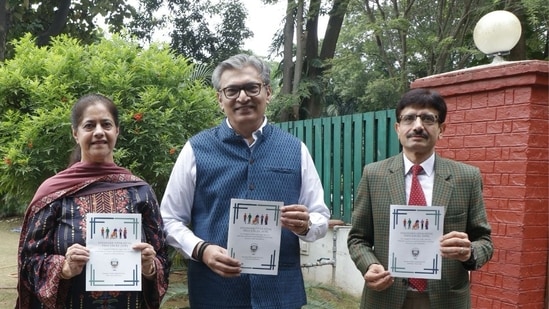
Justice Deepak Sibal, Judge of the Punjab and Haryana High Court and Executive Chairman of HALSA, launched “Nyay Mitra – Justice at Your Doorstep” and a Standard Operating Procedure (SOP) for complaint redressal, legal aid and protection of persons with disabilities.
Under Nyay Mitra, four Mobile Legal Services Vans were flagged off to function as mobile legal clinics. The vans will follow planned Justice Circuits across Haryana, focusing on remote villages, rural areas, aspirational blocks, industrial clusters, educational institutions and other underserved locations.
The mobile clinics will offer free legal aid, legal guidance, pre-litigation counselling, victim compensation assistance, alternative dispute resolution services, Tele-Law consultations and help accessing welfare schemes. Legal awareness activities will particularly target women, children, senior citizens, industrial workers and other vulnerable groups. Panel advocates and Para Legal Volunteers will support the teams.
The SOP provides a uniform, accessible and rights-based mechanism for complaints involving abuse, violence and exploitation of persons with disabilities. It provides for district-level Core Teams comprising legal services, administration, police, jail, social welfare and health officials, along with disability rights experts and legal professionals.
{{/usCountry}}The SOP provides a uniform, accessible and rights-based mechanism for complaints involving abuse, violence and exploitation of persons with disabilities. It provides for district-level Core Teams comprising legal services, administration, police, jail, social welfare and health officials, along with disability rights experts and legal professionals.
{{/usCountry}}Complaints can be filed by affected persons, caregivers, representatives, NGOs or anyone aware of abuse. They cannot be rejected because of informality, missing documents or communication barriers, and no fee will be charged.
Special safeguards have been included for prisoners with disabilities, covering identification, legal aid clinics, accessible infrastructure, medical care, assistive devices and regular legal counselling.
Justice Sibal urged stakeholders to work collectively so distance, lack of awareness or disability does not prevent access to justice.