A decade ago, few Indian students put Europe on a serious shortlist. Today, it is one of the growing destinations in international education, and Manifest Global has acquired one of the companies that operates within the continent.
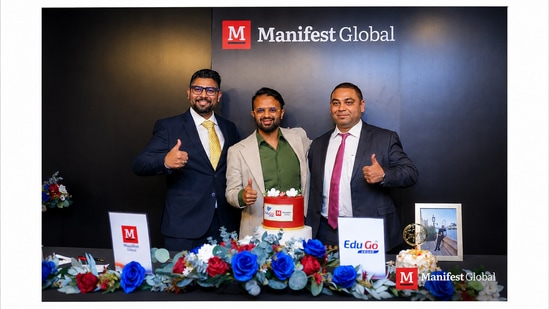
Manifest Global has completed the acquisition of EduGo Abroad, India’s only dedicated platform for European education, according to the company. Edugo joins a group that includes Cialfo, BridgeU, Explore, Kaaiser and Student Placements, operating across more than 150 countries.
The deal sits inside a shift that is changing who competes for talent. Developed economies face a projected shortfall of more than 85 million workers by 2030, and Europe is among the affected: its working-age population is shrinking at the same time as AI reorganises its economies, altering not only how many workers countries need but which skills those workers have to bring. Attracting international talent has moved from a policy preference to an economic requirement, and universities remain an established route through which it happens.
Moving people across borders is only part of the answer. Talent has to be prepared, educated, integrated and connected to real opportunity, and each of those steps is a separate problem for the student standing in front of it.
{{/usCountry}}Moving people across borders is only part of the answer. Talent has to be prepared, educated, integrated and connected to real opportunity, and each of those steps is a separate problem for the student standing in front of it.
{{/usCountry}}“Every student carries ambition. Every country needs talent to grow. Manifest exists to connect the two,” said Rohan Pasari, Founder and CEO of Manifest Global.
Manifest’s answer to that is structural. International education is one of the fragmented industries of its size: thousands of regional operators, each operating in one corridor,with limited capacity to fund a large-scale technology build. Manifest is consolidating that fragmentation, acquiring the operators who serve a route and running a single AI layer underneath all of them.
“Corridors are won locally and scaled globally,” said Pasari. “Every acquisition brings us an operator who knows their route better than anyone. What we bring is an AI platform none of them could have funded alone, and it gets better with every business that joins it.”
That is the roll-up logic. A single-corridor operator building AI on its own volume is solving one country’s problem at one country’s scale. The same investment sitting under six businesses across dozens of corridors becomes something that supports a wider network, and each acquisition makes the platform more applicable to the next one.
Founded in 2009 by brothers Chintan and Bhargav Modi, Edugo has built partnerships with more than 280 universities and colleges across 18 European countries and has supported close to 10,000 students. Its main destinations are France, Spain, Germany, Italy and Ireland.
“This is a genuinely diversified European footprint, not a bet on one or two markets,” said Pasari. “Eighteen countries means eighteen sets of entry requirements, timelines and expectations. Handling that well is exactly the kind of complexity AI should be absorbing, and exactly the kind of judgement that has to come from people who have done it for seventeen years.”
European universities have expanded English-taught programmes and opened defined routes for international graduates at the same time as demand has grown for options beyond the traditional four destinations. Edugo was early to that shift. Manifest’s view is that the operators who were early to a corridor are acquisition targets, because local credibility can be difficult to build from a head office.
“You cannot automate judgement you do not have,” said Pasari. “Edugo brings the knowledge. We bring the AI and the global network. Neither works as well without the other.”
For a student in Ahmedabad or Hyderabad, none of this reads as an acquisition strategy. It reads as a potential path to a life in Barcelona or Berlin.
Note to the Reader: This article is part of Hindustan Times' promotional consumer connect initiative and is independently created by the brand. Hindustan Times assumes no editorial responsibility for the content.