Persistent knee pain, stiffness and difficulty walking are often accepted as a normal part of growing older. But joint pain is not necessarily an inevitable part of ageing. Understanding the cause early can help preserve mobility and independence.
“Doctor, it is just age. What can I do?”
For many people, this is the first explanation for knee pain, hip stiffness or difficulty climbing stairs.
A little discomfort is ignored. Walking long distances becomes difficult. Getting up from a chair takes effort. Stairs become a challenge. Gradually, everyday activities begin revolving around pain.
People start taking the lift instead of the stairs, avoiding long walks, limiting travel or giving up activities they once enjoyed. In many cases, they simply adjust their lives around the pain.
But persistent joint pain is not necessarily an inevitable part of ageing.
When knee pain stops being “just a pain”
Osteoarthritis is one of the common causes of persistent knee pain, but it is not the only one. Previous injuries, ligament or cartilage damage, sports injuries, inflammatory joint diseases and other degenerative conditions can also affect the joints.
The scale of the problem is considerable. The Global Burden of Disease Study 2021 estimated that around 79.2 million people in India were living with osteoarthritis in 2021, compared with approximately 26.6 million in 1990. The age-standardised prevalence rate also increased during this period.
{{/usCountry}}The scale of the problem is considerable. The Global Burden of Disease Study 2021 estimated that around 79.2 million people in India were living with osteoarthritis in 2021, compared with approximately 26.6 million in 1990. The age-standardised prevalence rate also increased during this period.
{{/usCountry}}The burden of knee osteoarthritis is particularly significant. A 2025 systematic review of 16 population-based studies from India estimated a pooled prevalence of approximately 20.24%.
Yet many people continue to regard persistent joint pain as something they simply have to live with.
Common warning signs include:
- Pain while walking
- Stiffness after sitting or resting
- Difficulty climbing or descending stairs
- Difficulty getting up from a chair
- Swelling
- Reduced walking distance
- A feeling that the knee is unstable or may give way
These symptoms deserve attention, particularly when they persist or progressively interfere with everyday activities.
Does every painful knee need surgery? Absolutely not.
This is an important message because one of the common fears among patients is that consulting an orthopaedic surgeon automatically means being advised surgery.
Early assessment is about understanding what is actually causing the problem and how significantly it is affecting the patient’s function.
Depending on the diagnosis and severity, treatment may include medication, physiotherapy, appropriate exercises, activity modification, rehabilitation, injections or other non-operative approaches. In selected cases, arthroscopic procedures or other interventions may have a role.
For some patients with advanced joint damage, knee or hip replacement may eventually become appropriate.
The important point is that the decision should not be based simply on age or an X-ray. It should take into account symptoms, functional limitations, the underlying joint condition, overall health and the response to appropriate non-operative treatment.
Joint replacement: understanding what it really means
The words “joint replacement” can frighten patients.
Some imagine a major operation followed by months of restricted movement. Others avoid seeing an orthopaedic surgeon because they believe that a consultation will automatically lead to surgery. That should not be the assumption.
Joint replacement is one component of modern orthopaedic care. It may be considered when joint damage and symptoms significantly affect function and appropriate non-surgical treatments have not provided adequate relief.
Advances in surgical techniques, implant technology, anaesthesia, perioperative care and rehabilitation have changed the way joint replacement is approached.
The objective is not simply to replace a damaged joint. It is to restore mobility, independence and quality of life, with the treatment plan tailored to the individual patient.
Your joints can tell a much bigger story
Orthopaedic problems are not limited to knees and hips. Persistent shoulder pain may be related to a tendon or rotator cuff problem. A young athlete with recurrent knee instability may have a ligament injury. A person involved in an accident may require specialised management of complex trauma.
These problems affect people across age groups—from athletes and working professionals to older adults. This is why specialised orthopaedic assessment matters. Treatment depends on identifying the underlying problem, understanding the patient’s lifestyle and determining how much the condition is affecting function. The goal should not simply be less pain. The goal should be better movement.
Why specialised orthopaedic care matters
Pacific OneHealth Hospitals has developed a specialist-led healthcare model in Delhi/NCR, with technology-enabled Centres of Excellence designed to bring specialist care closer to patients.
Its Institute of Orthopaedics & Joint Replacement provides a connected pathway encompassing specialist consultation, diagnostics, procedures, joint replacement and rehabilitation.
The Centre addresses a broad range of bone, joint and musculoskeletal problems, including knee and hip osteoarthritis, sports injuries, ligament injuries, fractures, spinal conditions and complex trauma.
For patients, the starting point is not necessarily surgery. It is understanding what is wrong and determining what level of treatment is appropriate.
Specialist care, closer to patients
Access to appropriate orthopaedic care matters because delaying assessment can allow pain and reduced mobility to become part of everyday life.
Pacific OneHealth is developing its specialist-led network across Delhi/NCR, with facilities at Lajpat Nagar, Karol Bagh and Dwarka, bringing specialist consultation and diagnostic and treatment pathways closer to patients.
For orthopaedic patients, the aim is to connect clinical assessment with diagnostics, specialist intervention and rehabilitation rather than leaving patients to navigate separate services on their own.
Four decades of orthopaedic experience
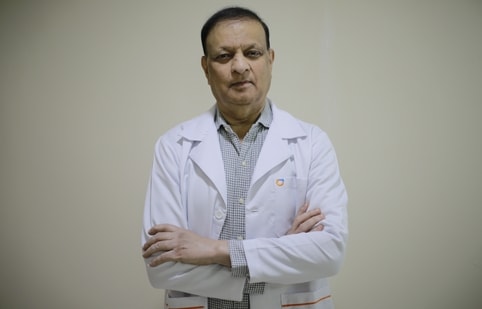
Dr. Naval Bhatia brings more than 40 years of experience in orthopaedics, with expertise in joint replacement, sports injuries and complex trauma management. He has served as Senior Consultant at the Sports Injury Centre, Safdarjung Hospital, New Delhi.
At Pacific OneHealth, his approach focuses on precision-driven, patient-centric orthopaedic care aimed at restoring mobility and improving quality of life.
Don’t let pain decide how you live
There is a difference between getting older and simply accepting worsening mobility. You may not need surgery. You may not need a joint replacement. But persistent pain, stiffness, swelling, instability or difficulty performing everyday activities deserves attention. The earlier the problem is understood, the more clearly the treatment pathway can be defined.
After more than four decades in orthopaedics, my message to patients is simple: Do not normalise pain simply because it has become familiar. Growing older is natural.
Living with avoidable pain does not have to be. At Pacific OneHealth, the emphasis is on moving patients from: “I have learnt to live with the pain” to “I understand what is causing it—and what can be done about it.”
For more information, visit www.pacificonehealth.com
The article is written by Dr. Naval Bhatia, Principal Director – Institute of Orthopaedics & Joint Replacement, Pacific OneHealth, New Delhi. The hospital has a total of 3 branches in New Delhi, one in Lajpat Nagar, one in Dwarka and one in Karol Bagh.
Note to the Reader: This article is part of Hindustan Times' paid consumer connect initiative and is independently created by the brand. Hindustan Times assumes no editorial responsibility for the content.
The information does not constitute medical/health advice. Readers are strongly advised to consult a registered medical practitioner.