The eight-year-old male leopard which strayed into the Maruti Suzuki plant in Manesar on Thursday was released in the Aravalli forest on Saturday.
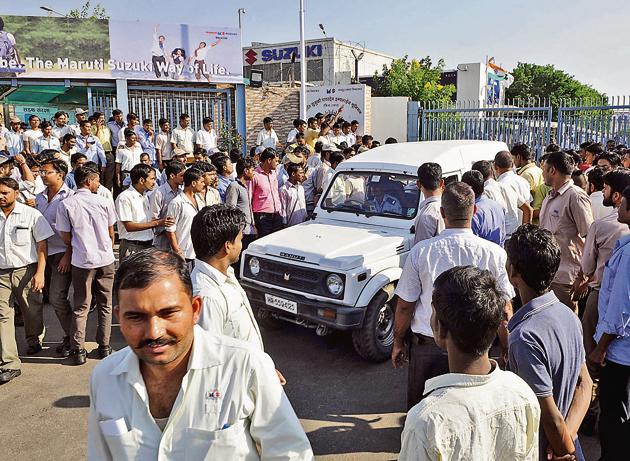
The leopard was first spotted inside the engine manufacturing plant of the factory, prompting an evacuation and bringing production to a halt.
“The medical report of the leopard was normal and at midnight the animal was released into the Aravalli forest safely. It is now back in its natural habitat,” Vinod Kumar, conservator of wildlife, south Haryana, said.
A seven-member wildlife team travelled deep into the forest to release the eight-year-old male leopard.
According to the wildlife team, the leopard was not given any food before it was released into the wild. “Before releasing the leopard, no food was given to him. He has been certified healthy and all its vital organs are functioning well,” Kumar said.
The exact location and the time the leopard was released were not disclosed in the interest of the animal’s safety. “After being rescued, a leopard should be released into the wild at the earliest. It is not advisable to keep it inside a small cage foe a long time,” R Anand, divisional forest officer, said.
This rescue operation was important to the wildlife wing as on November 24, last year, a leopard was beaten to death by the villagers after it strayed into Mandawar village in Gurgaon. As many as 12 people were injured in the melee that followed. The two-and-half-year-old male leopard was killed even as the forest and police officials were present in the village.
{{/usCountry}}This rescue operation was important to the wildlife wing as on November 24, last year, a leopard was beaten to death by the villagers after it strayed into Mandawar village in Gurgaon. As many as 12 people were injured in the melee that followed. The two-and-half-year-old male leopard was killed even as the forest and police officials were present in the village.
{{/usCountry}}Read I Leopard tranquilised in Manesar 36 hours after it strayed into Maruti plant
Wildlife experts were of opinion that locals in the region needs to sensitised about wildlife.
“Aravallis have a prey population prompting frequent leopard strayings. These incidents of animals venturing into civilian areas are expected to rise, as the numbers of leopards in the region have increased over the last five years. A sustainable programme is the need of the hour to conserve wildlife,” Bilal Habib, wildlife project head, Wildlife Institute of India (WII), said.
Stay updated with all the Breaking News and Latest News from Mumbai. Click here for comprehensive coverage of top Cities including Bengaluru, Delhi, Hyderabad, and more across India along with Stay informed on the latest happenings in World News.
Stay updated with all the Breaking News and Latest News from Mumbai. Click here for comprehensive coverage of top Cities including Bengaluru, Delhi, Hyderabad, and more across India along with Stay informed on the latest happenings in World News.