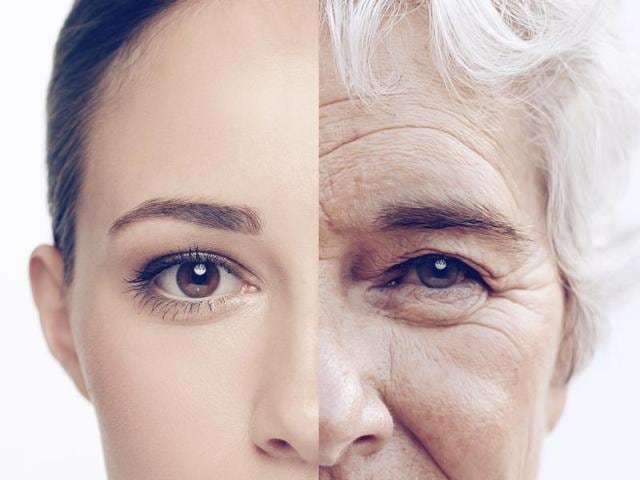
The question, “How old are you?”, now has a newfound meaning. The Dunedin Multidisciplinary Health and Development Study (more popular as The Dunedin Study) conducted by the University of Otago, New Zealand, brought to light that every human being has a chronological age and a biological age. The groundbreaking study set in motion several follow-up researches. The first episode of a documentary series based on this study, titled Why Am I?, was also aired in New Zealand last week.
Coming back to the concept, while chronological age is the actual amount of time the person has been alive, biological age is determined by various factors such as lifestyle, genetics, exercise, sleep habits and so on.
READ: Ultherapy? Banish signs of ageing without creams, fillers or toxins
Dermatologist Gitanjali Nandini explains, “Chronological age does not necessarily contribute to the ageing symptoms that we often see. It is not a determinant of health. For example, due to our regular use of knee joints, it would theoretically mean that after crossing a certain age, we are susceptible to arthritis [due to wear and tear]. But, that is not the case for everyone. We often see young people suffering from joint pain while a 70-year-old goes on a steep trek.”
Does that mean we should take our biological age more seriously than our chronological age? City-based physician Swapnil Jaiswal answers in affirmative. He says, “Biological age is a truer measure of your age than your date of birth. Our biological age is calculated by measuring the largest (scientifically researched) influences on longevity.”While we cannot eliminate the ageing process entirely, we can certainly help in slowing it down. According to experts, healthy ageing, or longevity, is dependent not only on the number of years lived, but on the quality of life too. For example, living for 90 years will not be considered healthy ageing if that person needs life-support at any stage or has had a very weak immune system throughout his or her life.
{{/usCountry}}Does that mean we should take our biological age more seriously than our chronological age? City-based physician Swapnil Jaiswal answers in affirmative. He says, “Biological age is a truer measure of your age than your date of birth. Our biological age is calculated by measuring the largest (scientifically researched) influences on longevity.”While we cannot eliminate the ageing process entirely, we can certainly help in slowing it down. According to experts, healthy ageing, or longevity, is dependent not only on the number of years lived, but on the quality of life too. For example, living for 90 years will not be considered healthy ageing if that person needs life-support at any stage or has had a very weak immune system throughout his or her life.
{{/usCountry}}Read: Facial workout guide: Look younger with these 10 exercises
Three simple tips for healthy ageing
Avoid the three ‘S’: Smoking, stress and sugar contribute to premature ageing.
Exercise: Exercising in any form — dancing, bicycling, skipping or walking — contributes to stress reduction. It also helps build stamina. These, in turn, help you look and feel younger.
Water: Drinking plenty of water not only flushes out the toxins from the body, but also helps keep skin supple. This slows the onset of fine lines and wrinkles.
- With inputs from Dr Anubha Singh, gynaecologist
Catch your daily dose of Fashion, Taylor Swift, Health, Festivals, Travel, Relationship, Recipe and all the other Latest Lifestyle News on Hindustan Times Website and APPs.
Catch your daily dose of Fashion, Taylor Swift, Health, Festivals, Travel, Relationship, Recipe and all the other Latest Lifestyle News on Hindustan Times Website and APPs.