Two foreign guests died of suspected electrocution in the swimming pool of Bengaluru's Conrad hotel on Friday evening, and police are examining its underwater lighting and whether its circuit had a device that cuts power automatically on a fault – two matters that India's pool safety code and electricity regulations address.
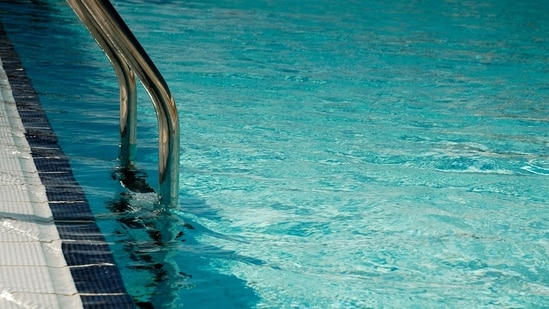
Alexander Maximilian Theiss, 52, a German Lufthansa crew member in the city on a layover, and Juraj Horvat, 45, a Slovak national who worked as a project manager with IBM in Bengaluru, died after the third-floor pool apparently became electrified after its lights were switched on, according to hotel staff cited by police. A US guest and a pool attendant who tried to rescue them were injured, and the hospital where they are admitted said both are stable.
Police registered a case of causing death by negligence against the hotel management and have asked the electrical inspectorate to examine the installation. An official of the Bangalore Electricity Supply Company (Bescom), the power distributor for the city, said on Saturday that the earthing may have been faulty.
A Conrad spokesperson said the cause “has not yet been established and remains subject to a comprehensive investigation by local authorities”.
{{/usCountry}}A Conrad spokesperson said the cause “has not yet been established and remains subject to a comprehensive investigation by local authorities”.
{{/usCountry}}It is not yet clear which rules apply in this case. A hotel pool can come under a national safety standard, central electricity regulations, and state and city building and licensing requirements. How any of these applied in the Bengaluru case is a question for the investigation.
But there are two sets of guidelines that set critical standards for electrical safety in such situations. The first is what all households are familiar with: the need for a circuit breaker in the event of a current leak. Under Central Electricity Authority (Measures relating to Safety and Electric Supply) Regulations, installations of up to 650 volts must be controlled by an electrical safety device that trips after detecting a leak. The other is the safety code for swimming pools, by the Bureau of Indian Standards, which is meant to be a reference point for all regulations, whether at the state level or national level.
Also read: Man, 25, drowns in a private pool in Dasna
India’s safety code for public pools
The Bureau of Indian Standards (BIS), the national standards body, published IS 16508:2017, Swimming Pool for Public – Code of Safety, in September 2017. It covers pool design and construction, water treatment, staff, rescue equipment, water quality, and operation and maintenance.
It requires artificial lighting at all indoor pools and at outdoor pools open after sunset, and for lights under the water, it specifies a “12V SELV supply” (clause 4.12.1). SELV stands for safety extra-low voltage in a circuit electrically separated from the mains supply.
For power outlets in the pool area, the code says, “All receptacles installed in the swimming pool area shall have waterproof covers and ground-fault circuit interrupter protection” (clause 4.12.2).
A ground-fault circuit interrupter works like a circuit breaker.
Metal fittings "like railings, grab rails, handrails" should be "connected to system earth", the code says, and wiring "should follow the stipulated regulations which requires the use of SELV systems" (clause 4.12.4).
Earthing gives current a path to the ground in case of a leak, allowing protective devices to detect the fault and cut the supply.
The code adds that lighting controls "should not be accessible to the public" and that a pool's electrical system "shall be maintained in accordance with the National Electrical Code", the BIS code for electrical installations, last revised in 2023.
Also read: 10-year-old boy drowns in private swimming pool in north Delhi, family alleges negligence
Electricity rules and inspections
India’s electricity safety rules, framed by the Central Electricity Authority (CEA) in 2023, govern electrical installations across the country. They require installations of up to 650 volts to be fitted with a residual current device (RCD). In houses, the device must trip at a leak of no more than 30 milliamperes, or 30 thousandths of an ampere.
A person feels about 1 milliampere as a faint tingle, and may be unable to let go of a live conductor at between 6 and 30 milliamperes. Contact with about 50 to 150 milliamperes can be fatal.
Installations must be inspected at least once every five years. Owners of lower-voltage installations test their own and send a self-certificate to the electrical inspector, who inspects higher-voltage installations directly.
In the Bengaluru case, police have asked the electrical inspectorate to examine the hotel’s installations and help establish the cause of death. Police have said they will examine the pool's wiring, underwater lighting, maintenance records and safety arrangements, and whether a technical malfunction or negligent upkeep caused the deaths. They are also checking CCTV footage, questioning staff and recording eyewitness statements.