
The Supreme Court on Thursday directed the Food Safety and Standards Authority of India (FSSAI) to bring in red warning labels on packaged food high in sugar, fat or salt in a single phase, and to revisit the nutrient limits it had proposed. The regulator has four months to finalise the draft regulations.
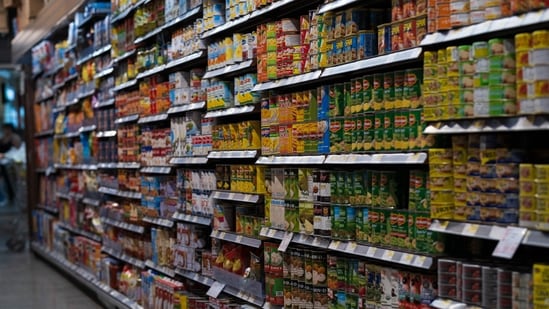
Once the rules are in force, manufacturers will have to print a separate red hexagon for each nutrient over the limit on the front of any packet of chips or carton of juice. The court directed that each hexagon take up at least 4-5% of the front of the pack, with a symbol and the words "HIGH FAT", "HIGH SUGAR" or "HIGH SALT".
India will not be the first country to do this. The governments of Israel, Chile, Mexico and several other countries already require warnings on the front of food packs, and researchers in those countries have spent years measuring whether the labels changed what people buy and what companies make.
Hindustan Times compared front-of-pack systems around the world in a SimplyPut explainer on August 20, and explained FSSAI's red hexagon proposal on August 29.
Israel: A close match
{{/usCountry}}Hindustan Times compared front-of-pack systems around the world in a SimplyPut explainer on August 20, and explained FSSAI's red hexagon proposal on August 29.
Israel: A close match
{{/usCountry}}The label: Israel's health ministry requires a red symbol on the front of packaged food above its limits for sugar, sodium or saturated fat. Companies can also choose to print a green symbol on food the ministry considers a healthier option. Israel's government was the first in the World Health Organization's European region to bring in such a system.
How it unfolded: The regulations were passed in 2018 and came into force on January 1, 2020. The ministry wrote two stages into them. From 2020, manufacturers had to label a solid food if 100g of it contained more than 13.5g of sugar, 500mg of sodium or 5g of saturated fat. In January 2021, the ministry lowered those limits to 10g, 400mg and 4g. Israel's limits cover total sugar and saturated fat, the measures India's Supreme Court has now told FSSAI to use in place of added sugar and added fat. Israel's ministry phased in how strict the limits were, while India's Supreme Court has ordered that all products be covered from the start.
What it led to: Israeli shoppers bought less of the labelled food. Economists Or Avishay-Rizi and Oren Reshef tracked sales across food categories and found that shoppers bought about 16% less of products with at least one warning than of products without one, and sales fell by about 10% more for each additional warning. Sales fell by about a quarter for products with a high-sugar warning and by 11% for those with a high-salt warning. They found no measurable effect from the saturated-fat warning. Their paper, dated August 2025, has not yet been peer-reviewed.
Israeli manufacturers also changed their recipes. The economists found that in 2020, 137 of 1,007 products made by Israeli firms, about one in seven, were reformulated to fall below the limits. Only seven of 554 imported products, about one in a hundred, were reformulated.
Three years after the labels came in, half of the people surveyed by the Myers-JDC-Brookdale Institute said they were buying fewer red-labelled products than before.
Researchers who worked with the health ministry on the policy had warned of side effects before the rules came into force. Companies, they wrote, could replace sugar with artificial sweeteners or cut pack sizes.
Chile: Among the first
The label: Black octagons with the words "ALTO EN" ("high in") sugar, salt, saturated fat or calories.
How it unfolded: Chile's government brought in the labels in June 2016 under its Law of Food Labelling and Advertising. Under the same law, it banned advertising labelled products to children and selling them in schools. The government tightened the limits in later phases.
What it led to: A team led by Lindsey Smith Taillie of the University of North Carolina tracked the purchases of about 2,400 urban households. After the law came in, the volume of labelled drinks they bought fell by 23.7% compared with the level the researchers projected from earlier trends. In a later study, the same group found that by the law's second phase, households were buying 36.8% less sugar from labelled foods and drinks than the researchers projected.
Companies changed recipes as well. Researchers studying Chile's breakfast cereal market found that Nestlé brought out a version of its best-selling Chocapic cereal with less sugar and fewer calories.
The researchers say they cannot separate the effect of the labels from that of the advertising and school bans, because the government introduced all three at once.
Mexico: Warnings, and no cartoons
The label: Black octagons for excess calories, sugar, saturated fat, trans fat and sodium. Manufacturers must add a line to products with caffeine or sweeteners stating that they are not recommended for children.
How it unfolded: The labels became mandatory in October 2020. Under the rules, manufacturers cannot print children's characters, cartoons, celebrities, athletes or mascots on a pack with any warning.
What it led to: Mexican researchers have relied mostly on surveys. In a 2025 study by Mexico's National Institute of Public Health, adults who said they had changed their shopping because of the labels were asked what they did: 38.7% decided not to buy the product, and 30.5% picked one with fewer warnings. Fizzy drinks and bakery items were the purchases they changed most.
A 2026 study in Preventing Chronic Disease, a journal of the US Centers for Disease Control and Prevention, compared Mexican adults with Americans, who see no such warnings on packs. Between 2018-19 and 2020-23, sugary-drink consumption rose in both countries, but by less in Mexico. Mexico has also taxed sugary drinks since 2014, so researchers cannot credit the difference to the labels alone.
France: A grade that companies can drop
The label: Nutri-Score, a colour-coded grade from A (green) to E (red) for a product's overall nutritional quality. There are no warnings, and companies decide whether to use it.
How it unfolded" France adopted Nutri-Score in 2017, and six other European countries have since joined. Scientists revised the scoring to rate sugary products more strictly, and Germany, Belgium, Switzerland and the Netherlands switched to the new version on January 1, 2024.
What it led to: Because the label is voluntary, a company can stop using it when its products score worse. Danone did so in 2024. Under the new scoring, drinkable yoghurts and plant-based drinks are graded as beverages, which are scored more strictly, and the company said it would remove the label from those products from September 2024.
Brazil: Too early to tell
The label: A black magnifying glass in a box with the words "ALTO EM" ("high in") added sugar, saturated fat or sodium, placed on the top half of the front of the pack.
How it unfolded: Brazil's health regulator Anvisa approved the rules in October 2020, and they came into force on October 9, 2022. Makers of drinks sold in returnable bottles had until October 2025.
What it led to: Researchers have not yet shown clearly whether Brazilians have changed what they buy because of the label.
Also read: HIGH FAT, HIGH SUGAR, HIGH SALT: The red hexagon FSSAI now wants on your chips packet and soda
What this means for India
FSSAI will decide which products need a warning when it sets the limits. The court told the regulator to base them on total sugars and saturated fat, which include what occurs naturally in an ingredient, and not only on what a manufacturer adds. The judges also warned against setting the limits at either extreme. If they are too low, nearly every pack would need a warning and shoppers could start ignoring them. If they are too high, most products would not need one.
In Israel and Chile, manufacturers changed recipes to bring products just under the cutoffs, so a product without a warning may still contain a lot of sugar, fat or salt.
Chile's government paired its labels with bans on advertising to children and on sales in schools.
The Supreme Court has ordered labels for India only. A large share of what Indians eat is sold loose or cooked fresh, from mithai and namkeen to street food, and sellers will not have to label any of it.
ABOUT THE AUTHOR
HT Explainers Desk delivers in-depth explainers and analysis on the stories shaping India and the world, from SimplyPut, Hindustan Times’ dedicated explainer section. The desk unpacks the science, policy, geopolitics and market forces behind major news events, breaking down complex developments into clear, accessible reporting for readers who want more than the headline. Explainers draw on the expertise of the journalists covering the story and insight from leading subject experts, translating specialist detail into plain language without losing precision or nuance. Coverage spans national and global news — from health and science breakthroughs to trade, technology, cybersecurity, aviation, energy and public policy — going beyond what happened to explain how it works, why it matters and what to watch next. Written for readers who want context, and not just the headlines, HT Explainers Desk brings together original reporting, data and expert analysis to make sense of the news as it develops. It is part of Hindustan Times, India's leading source for news, in-depth analysis and explanatory journalism since 1924.