The Centre on Tuesday announced a merchant discount rate (MDR) for UPI transactions, fixing a rate of 0.4 percent for transactions above ₹2,000 while exempting person-to-person payments.
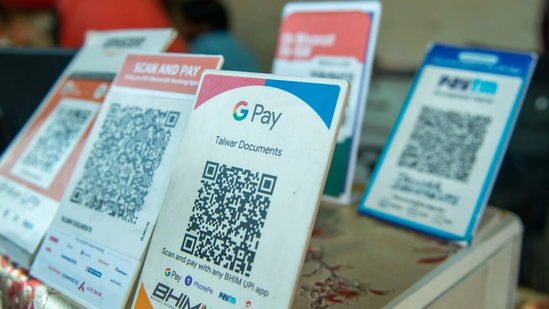
The government said there was no impact on small-value UPI transactions up to ₹ 2,000, which comprise more than 95% of the total volume of UPI (P2M) transactions. It said UPI services will continue without any cost to consumers.
It added that historical payment trends show that merchants absorb nominal digital processing costs to drive higher business volume—and that shopkeepers have no economic incentive to inflate retail shelf prices.
The move drew sharp criticism by the Opposition, with the Congress describing the merchant fees as "Modi tax", stepping up pressure on Prime Minister Narendra Modi.
The government's MDR move came a day after the Centre notified a change to the Payment and Settlement Systems Act on Monday to say that no charges can be imposed on UPI transactions of up to ₹2,000, settling one part of a broader debate over fees on a system that is now used for transfers of small everyday sums to tens of thousands of rupees.
The Ministry of Finance said in the gazette notification that the prohibition, issued under Section 10A of the Act, covers two categories: payments made through RuPay debit cards, and UPI transactions up to the ₹2,000 threshold. No bank or system provider, the notification says, may impose any charge, directly or indirectly, on a person making or receiving payment through these modes.
Will UPI payments above ₹2,000 attract a fee?
{{/usCountry}}The Ministry of Finance said in the gazette notification that the prohibition, issued under Section 10A of the Act, covers two categories: payments made through RuPay debit cards, and UPI transactions up to the ₹2,000 threshold. No bank or system provider, the notification says, may impose any charge, directly or indirectly, on a person making or receiving payment through these modes.
Will UPI payments above ₹2,000 attract a fee?
{{/usCountry}}No — at least not for the consumer. Speaking in the Rajya Sabha on August 11, when Parliament cleared the Taxation and Other Laws (Amendment) Bill, 2026, finance minister Nirmala Sitharaman said the amendment to Section 10A was "an enabling provision" that "does not impose any tax or transaction charge on UPI users".
She was categorical that no fee would apply to street hawkers, cab drivers, kirana stores or small merchants either. Any fee that does eventually come in, she said, would be paid by merchants, not by the person making the payment.
What the Bill will does is remove an existing provision that had barred banks and payment service providers from charging a Merchant Discount Rate (MDR) on UPI. That is what has kept the debate alive — nominal charges could yet apply on certain limited merchant transactions.
What is MDR?
MDR is a small fee that merchants pay to banks and payment companies each time a customer makes a digital payment. A customer pays a shopkeeper through a digital payment system, and the shopkeeper pays a small processing fee to the payment provider.
While that is the norm, in reality, many pass on MDR to customers, especially in high value card transactions where it does not have the same waiver as it does in UPI.
UPI has been exempt from MDR since 2020, a policy choice meant to push India away from cash and towards digital payments.
Why is MDR back under discussion?
UPI is the world's largest retail real-time payment system by transaction volume, according to a 2025 International Monetary Fund report. It processed 24.51 billion transactions worth ₹29.82 lakh crore in August. Running a network of that scale — technology, cybersecurity, fraud prevention, customer support — costs money.
Those costs are currently borne by banks, third-party payment apps and the National Payments Corporation of India (NPCI). The Union government has also been providing annual budgetary incentives to banks to offset the cost of the zero-MDR regime.
Payment companies have argued that being allowed to levy MDR would give them room to invest more in the system. The brokerage Jefferies estimated in August that merchant fees on larger UPI transactions could generate ₹5,000 crore to ₹10,000 crore a year for the industry.
Political row
The issue has triggered a political controversy, with Leader of Opposition in Lok Sabha, Rahul Gandhi, alleging on X that the government was acting in response to pressure from American companies.
Gandhi wrote on Tuesday that transactions above ₹2,000 may account for only about 5% by volume, but represent nearly 65% of their total value. He said that even if customers were not directly charged, merchants could recover the fee by increasing prices.
“The government says no fees will be charged to customers. But where will the fees imposed on shopkeepers ultimately come from?” Gandhi said, alleging that this was aimed at changing India’s zero-MDR policy.
The government has repeatedly maintained that that the move will not affect small everyday transactions. It has also said that the volume of transactions means that the system requires cybersecurity and infrastructure upgrades, and thereby, a sustainable revenue model.