Two of the three Election Commission of India (ECI) members formally objected to a change in Form 6, the application that Indian citizens fill to get their names on to the electoral roll for the first time, according to a report in The Indian Express.
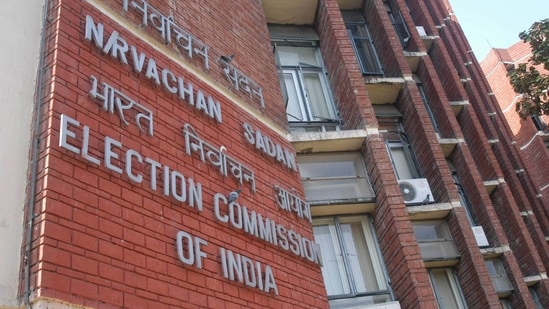
The report said election commissioners Sukhbir Singh Sandhu and Vivek Joshi placed objections on record at least 14 times over the past 10 months, including four of them on a single day, over decisions related to the rollout of the Special Intensive Revision (SIR) of electoral rolls. Some of those objections concern changes made to Form 6, it said.
A look at what changed and why it is controversial:
About Form 6
It is the form needed to enroll first-time voters, including Indian citizens turning 18 and adults who have never enrolled before. Voters who move to a new constituency use a different form, Form 8.
The form is prescribed under the Registration of Electors Rules, 1960, and asks for basic personal details, a photograph, proof of age and proof of address.
Also read: Two commissioners, one CEC, no veto: How the Election Commission decides
The objections & the controversy
{{/usCountry}}Also read: Two commissioners, one CEC, no veto: How the Election Commission decides
The objections & the controversy
{{/usCountry}}A form used by crores of applicants every year was changed without following due process, according to the report.
In May this year, Joshi warned that Form 6 could not be altered without the government amending the Registration of Electors Rules, 1960, and Sandhu agreed. The change was made anyway in July.
On August 13, according to the report, Sandhu described the change in the form as "unauthorised and illegal" and said it “must be removed immediately”, the report said. The question was still on the form this week, the IE report said.
The Election Commission of India, in a statement posted on X after the report was published, said on Wednesday that disagreements among election commissioners during internal deliberations were part of the standard "decision-making process". It also said all decisions of the full commission over the past year were unanimous.
When asked about the objections, former chief election commissioners SY Quraishi and OP Rawat told HT on Wednesday that the points raised by Joshi and Sandhu were significant. Rawat also said this change was "absolutely wrong and illegal".
What was changed, and how?
In July 2026, the online version of Form 6 on the ECI’s ECINet portal was modified to include a new declaration.
An unlettered section, inserted between Part J and Part K of the form, now asks applicants to declare one of three things: that their own name appeared in the electoral roll from the last SIR; that a parent’s or grandparent’s name appeared in that roll; or that neither did. Applicants cannot complete the form online without answering. In several states, the last SIR was held in the early 2000s, while others have completed one just last year or this year.
The declaration was added directly to the online form rather than through a formal amendment to the 1960 Rules. Two commissioners objected to exactly that, the report said.
Sandhu and Joshi argued on record that since Form 6 was part of the Registration of Electors Rules, 1960, it could only be changed through a formal government notification and amendment to the rules, and not by editing the online form.
Under Section 28 of the Representation of the People Act, 1950, the Centre frames and amends these rules after consulting the Election Commission. Any amendments must be laid before Parliament and notified in the gazette.
How the change could affect first-time voters
In states where the last SIR was held in the early 2000s, anyone turning 18 now was born around 2008, after the roll was revised, so they will not find their own names in it.
The revised online Form 6, therefore, pushes them to show that a parent's or grandparent's name appeared on the revised electoral rolls instead. This assumes that families can produce clean documentary links across two generations. Where a parent's name appears on the latest rolls, applicants must give the constituency, part number and serial number of the entry. Where it did not, they must give their parents’ names and, if available, their EPIC (the unique numbers on their voter IDs).
That is likely to be hardest for migrants, the poor and people who have relocated across states, critics say.
Voters ‘deleted’ in draft rolls
More than 13 crore names have been deleted from draft electoral rolls across states and Union territories under the ongoing SIR exercise, which began from Bihar in June 2025. Many of these voters, who may have been registered for years, are now being directed to use Form 6 to restore their names for the revised electoral roll.
Form 6, however, carries a mandatory declaration that the applicant is “applying for inclusion in Electoral Roll for the first time” and that their name is not included in any assembly or parliamentary constituency.
But a ‘deleted’ voter who is seeking to be added back to the electoral roll would have, by definition, been on the electoral rolls. In effect, signing the declaration on Form 6 could mean attesting to something that is factually false.
Under Section 31 of the Representation of the People Act, 1950, knowingly making a false declaration in connection with electoral rolls is a punishable offence, carrying imprisonment of up to one year, a fine, or both.