Retail onion prices are holding above ₹50 per kg despite government interventions, with supply constraints expected to keep the market firm through September and October. Fresh kharif crop arrivals, delayed by the late monsoon, are expected to bring some relief from November, experts said.
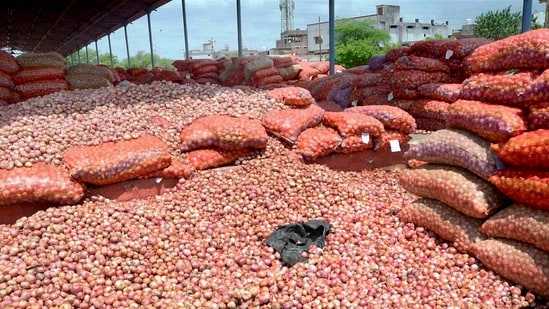
The all-India average retail price of onion was ₹53.86 per kg on September 18, 95% higher than the ₹27.6 a year earlier, according to Department of Consumer Affairs data. The average wholesale price was ₹45.76 per kg on the same day, more than double the ₹21.51 a year earlier.
The government has been releasing onions from its price-stabilisation buffer at a subsidised ₹35 per kg through the cooperatives NCCF (National Cooperative Consumers' Federation of India Limited) and Nafed (National Agricultural Cooperative Marketing Federation of India Ltd, Kendriya Bhandar outlets and mobile vans.
About 9,200 tonnes of onions have been dispatched so far from the government's 120,000-tonne buffer this year, according to a senior official in the consumer affairs ministry.
{{/usCountry}}About 9,200 tonnes of onions have been dispatched so far from the government's 120,000-tonne buffer this year, according to a senior official in the consumer affairs ministry.
{{/usCountry}}At the all-India level, the weighted average modal price in mandis fell 9.1% from ₹3,721 a quintal on September 2 to ₹3,383 on September 11, government data showed. In Maharashtra, modal prices declined 4.2% from ₹4,011 a quintal to ₹3,842 over the same period. Modal price is the price at which the largest quantity of a good is traded or sold in a market during a specific period.
“Retail prices have begun showing a visible easing in several cities, including Varanasi, Shimla, Patna, Kolkata, Delhi, Ghaziabad, Amritsar and Thrissur where we distributed onions,” the official said.
Why prices are high
“The recent firmness in retail onion prices is largely supply-driven,” said Pushan Sharma, director of research at Crisil.
The rabi crop accounts for about 60-70% of annual onion production and normally supplies the market until the end of September.
The crop is estimated to have declined 5-6% from a year earlier, mainly because low prices in the previous season led farmers to sow less. “Average mandi prices had been around ₹11-12 per kg, reducing the incentive to expand acreage," Sharma said.
Supply was further hit by unseasonal rainfall in Maharashtra during March-April, which damaged late-harvested rabi onions. Excess rainfall in Maharashtra and Karnataka during July also caused localised fungal infestation in stored stocks, affecting quality and reducing the quantity that could be marketed, Sharma added.
Next crop also running late
A larger concern is the gap between dwindling rabi stocks and the arrival of the next crop. The kharif crop accounts for the remaining 30-40% of annual onion production and normally bridges the lean-season supply gap. But the late onset of the monsoon pushed back planting in key producing regions, Sharma said.
A government statement on July 4 said onion sowing in the Nashik region was about 15 days late, while sowing in the Chitradurga and Challakere belt of Karnataka was estimated at only around 60% of normal. Market reports now point to a more prolonged delay.
"With rabi stocks running down and kharif arrivals likely to be delayed, market availability is expected to remain constrained through September and October, keeping retail and wholesale prices elevated," Sharma said.
A correction is expected from November, as fresh kharif arrivals improve supplies, he said.