India's power system is being tested by rising and increasingly unpredictable demand. Following one of the country's hottest summers on record, national peak electricity demand reached 271 GW in May 2026. The developing El Niño is expected to bring more erratic weather conditions, reducing renewable energy generation while driving up electricity demand for cooling due to excessive humid conditions. As a result, both renewable output and electricity demand are becoming increasingly variable, and the grid needs to be ready to shift quickly.
This evolving operating environment is reshaping how India's power system must be planned and operated. The conversation is no longer just about adding more renewable capacity. It is equally about ensuring the grid has the flexibility to respond when renewable output fluctuates, demand rises unexpectedly, or both happen at once. Building that resilience will require a broader mix of flexible technologies that can support a reliable, affordable, and increasingly low-carbon power system.
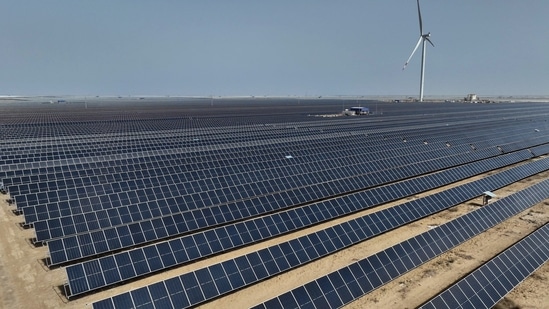
India's energy transition has entered a more complex phase, shaped by the country's energy security, decarbonisation, and economic growth goals. India ranks third globally in installed renewable energy capacity, with 274.68 GW as of March 31, 2026, including 150.26 GW of solar and 56.09 GW of wind. The next stage of this journey will be defined not only by how much capacity is added, but by how effectively the system manages variability.
That challenge is already visible in day-to-day grid operations. Between May and December 2025, India curtailed 2.3 TWh of solar generation to maintain system stability. This represents clean power that was generated but could not be used, largely because the system lacks sufficient flexibility to absorb midday output. Coal plants, which continue to anchor generation, cannot ramp below their technical minimum during high-solar periods. This limits the grid’s ability to adjust in real time.
{{/usCountry}}That challenge is already visible in day-to-day grid operations. Between May and December 2025, India curtailed 2.3 TWh of solar generation to maintain system stability. This represents clean power that was generated but could not be used, largely because the system lacks sufficient flexibility to absorb midday output. Coal plants, which continue to anchor generation, cannot ramp below their technical minimum during high-solar periods. This limits the grid’s ability to adjust in real time.
{{/usCountry}}At the same time, transmission constraints further increase the challenge, with several solar and wind projects operating under temporary grid access, with some being required to curtail significant shares of daily generation during constrained periods. As a result, the system experiences both surplus and scarcity within the same day: curtailed solar at midday, followed by tight evening peaks. This intra-day imbalance is a defining characteristic of India’s evolving power system, and a clear signal that new solutions are needed.
India has made a decisive push to scale battery energy storage systems (BESS). Viability gap funding now extends to over 43 GWh of BESS capacity across two tranches, energy storage obligations apply to discoms, and the National Electricity Plan projects a need of roughly 236 GWh of storage by 2032. The market has responded in scale: more than 130 GWh of energy storage tenders were issued in 2025 alone, the BESS project pipeline grew from 19 GWh to 92 GWh in a single year, and discovered prices fell sharply from ₹10.18 per kWh to ₹2.1 per kWh.
While the direction is positive, questions remain around pace and viability. Of the capacity tendered, only around 9 GWh is expected to reach commissioning in 2026, and analysts, including IEEFA, note that the lowest discovered prices may prove difficult to sustain commercially. In other words, storage will scale, but not necessarily at the same pace as the grid’s balancing needs. This is why storage should be viewed as a critical component of a broader flexibility stack but not the solution on its own.
India’s grid is increasingly operating under more volatile and demanding conditions. Extreme heat, El Niño-linked weather patterns, erratic monsoons, and sudden localised demand spikes are no longer exceptions, they are becoming the norm. In May this year, India’s peak power demand crossed 270 GW during an intense heatwave that exceeded the government’s summer forecast, prompting advisories urging citizens to use electricity judiciously. Sustained heat drives up cooling demand, while new loads like data centres, electric vehicles, and rising rural consumption, are adding further pressure to the system. This convergence of rising demand and variable supply is reshaping the grid’s requirements. Short-duration storage alone is not sufficient to manage both dynamics simultaneously.
Weather conditions can never be predicted with complete accuracy. Climate change is disturbing the standard weather patterns and high volatility makes renewable generation too fluctuate with it., while demand patterns too fluctuate heavily with shift in temperature and economic activity. Crucially, these dynamics rarely align. A system designed for this reality must provide flexibility across multiple time horizons:
- Short duration (seconds to hours): Batteries provide rapid response and energy shifting across a few hours.
- Longer duration (hours to days): Additional flexibility is needed to manage sustained peaks and extended drops in renewable output.
While batteries excel at fast response, they are constrained by duration. A two-hour or four-hour system may be sufficient for short imbalances, but the battery is exhausted long before the grid stress ends.
Global power system modelling consistently shows that combining renewables and storage with flexible balancing power delivers faster and more cost-effective decarbonisation than renewables and storage alone. Even a relatively small amount of balancing capacity can avoid excessive overbuild of renewables and storage, and improve overall system efficiency.
This is where fast-ramping, flexible gas-based engines play a critical role. They complement storage by providing dispatchable capacity during sustained peaks and extended breaks in renewable generation. These engines can reach full output in under five minutes and are designed for frequent starts and stops without loss of efficiency, an operating profile, which the inflexible traditional power generation technologies cannot match. Importantly, these gas engines are also future-proof as they are able to run on sustainable fuels such as green hydrogen as these become more widely available.
Policy signals are beginning to align with this need. The Draft National Electricity Policy 2026 places strong emphasis on grid resilience and flexibility and proposes exploring gas-based plants for peaking and balancing, supported by capacity markets to ensure their long-term financial sustainability.
International experience reinforces this approach. In markets such as Australia, the UK, and Germany, combining utility-scale batteries with fast-responding gas engines has proven effective in balancing high-renewable systems under variable conditions. For India, this integrated model offers multiple benefits: reduced dependence on diesel-based backup, lower total system costs, and improved grid stability under simultaneous supply and demand stress.
India's ambition on battery storage is moving in the right direction, and it is part of the solution. However, the key question for the country's energy planners is no longer how much capacity to build, it is whether that capacity can be reliably dispatched when needed. A complete flexibility stack, pairing storage with fast, flexible generation, provides the answer. It enables a power system that can absorb every unit of clean power produced while remaining resilient under increasingly complex operating conditions.
(The views expressed are personal)
This article is authored by Archana Bhatnagar, director, market & project development, India, Wärtsilä Energy.