This World Environment Day gives us pause to reflect not just on the environmental challenges we face, but also on the untapped potential that lies within them. This year’s theme of Combating Plastic Pollution highlights an urgent global priority that resonates strongly with India’s own mounting waste crisis. The country generates over 62 million tonnes of municipal solid waste annually, according to the Central Pollution Control Board (CPCB), and this figure is expected to reach 165 million tonnes by 2030
This World Environment Day gives us pause to reflect not just on the environmental challenges we face, but also on the untapped potential that lies within them. This year’s theme of Combating Plastic Pollution highlights an urgent global priority that resonates strongly with India’s own mounting waste crisis. The country generates over 62 million tonnes of municipal solid waste annually, according to the Central Pollution Control Board (CPCB), and this figure is expected to reach 165 million tonnes by 2030 if current trends persist. Of this, only about 70% is collected, and less than 20% is treated. The rest ends up in over 3,000 legacy dumpsites, many of which have become hazardous and unmanageable.
Take India’s Capital, New Delhi for instance- it sends tonnes of waste per day to just three landfills, all of which have long exceeded their capacity. These massive waste mountains are not just eyesores, they emit harmful gases like methane, pose severe health risks to nearby communities, and consume valuable urban land that could otherwise be used productively.
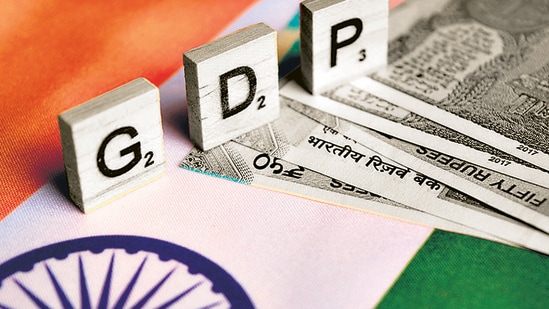
Yet, hidden within this looming crisis is a powerful opportunity: the circular economy. If approached with intent and innovation, India can turn this trash into treasure, converting an environmental liability into a key driver of GDP.
At its core, the circular economy is about rethinking how we produce, consume, and manage waste. Unlike the traditional linear model of take-make-dispose, the circular model is regenerative by design. It emphasises resource efficiency, reuse, recycling, and recovery, thereby minimising waste and extracting maximum value from every material.
India, with its demographic dividend and fast-growing urban population, is uniquely positioned to lead in this transition. Forging development through the circular economy path could bring India annual benefits of up to $ 624 billion in 2050 as per Ellen MacArthur Foundation’s report on Circular Economy in India: Rethinking growth for long-term prosperity.
This shift not only boosts GDP but also supports climate goals, reduces dependency on imports, and creates millions of green jobs.
There are practical pathways to realising the circular vision:
- Recovering raw materials and bio-resources: Every tonne of waste contains valuable materials- from metals and plastics to organic matter. Proper segregation at source can enable efficient recovery of recyclables and compostable waste. Organic waste, which makes up over 50% of municipal waste, can be converted into compost or biogas, reducing methane emissions and supporting sustainable agriculture.
- Reclaiming land and reducing emissions: Legacy dumpsites occupy prime real estate in urban areas. Scientific remediation and bio-mining not only reclaim this land but also reduce toxic leachate and greenhouse gas emissions. The reclaimed land can be repurposed for infrastructure, green spaces, or renewable energy projects.
- Creating green jobs and new business models: A robust recycling ecosystem requires a skilled workforce, from waste collectors to technicians and engineers. Empowering the informal sector through training, safety, and formal integration into waste-recycling systems can create dignified employment while improving recycling efficiency. Additionally, circular business models such as extended producer responsibility (EPR), reverse logistics, and product-as-a-service open new revenue avenues for companies.
- Enabling policy and public-private partnerships: To scale the circular economy, India needs stronger policy frameworks, clear enforcement mechanisms, and investment incentives. Recent initiatives like the Swachh Bharat Mission 2.0 and the National Resource Efficiency Policy are commendable starts, but their success hinges on effective implementation and collaboration. Public-private partnerships can bring in the necessary capital, technology, and operational expertise to transform waste systems at scale.
India’s waste crisis is undeniably daunting, but it is also a potential for innovation and economic renewal. The circular economy offers a path not just to cleaner cities but to a more resilient and inclusive economy. By viewing waste not as a problem but as a resource, we can rewrite the story of urban India
As we observe World Environment Day, let us not merely raise awareness but commit to action. The circular economy is not a distant ideal, it is a viable, scalable solution waiting to be embraced. It’s time India turns its trash into triumph and waste into wealth.
This article is authored by Dhruv Luthra, managing director, Luthra Group.
One Subscription.
Get 360° coverage—from daily headlines
to 100 year archives.
Archives
HT App & Website