A motorist sees E20 simply as petrol with a higher ethanol content. But before it reaches the vehicle, the fuel passes through blending facilities, storage terminals, transportation systems, underground storage tanks, pipelines, pumps and dispensing equipment. Every stage matters in determining whether the fuel reaching the consumer retains the quality with which it was produced.
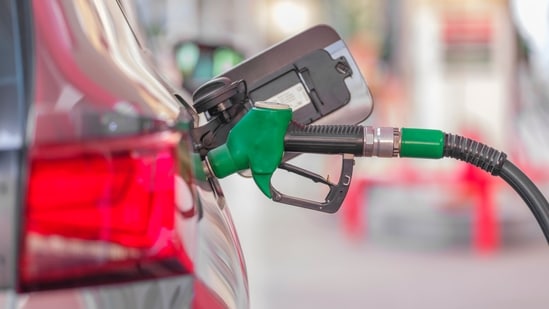
Yet India’s E20 debate has largely centred on the last link in this chain—the engine. Concerns about mileage, older vehicles, fuel system components, and maintenance costs are legitimate and should not be dismissed. But as India changes the composition of its transport fuel, another question deserves equal attention: Is the infrastructure that stores and delivers E20 ready for the change?
The question matters because ethanol behaves differently from conventional petrol. It has an affinity for water, and India’s E20 uses anhydrous ethanol, which is dried before being blended with gasoline. If water enters the blend, it can disrupt its stability and create a more challenging environment for certain metals, coatings, seals and other components.
In India, this makes moisture control important even before E20 reaches the petrol pump. At blending depots and terminals, tanks need to be dry and clean, and the ethanol received for blending must be protected from moisture. Water contamination can cause ethanol to separate from gasoline, compromising the quality of the final blend. At retail outlets, underground tanks are also checked for rust, water accumulation and the compatibility of gaskets and fittings. The concern, therefore, is not that E20 inherently contains problematic amounts of water, but that water must be kept out of a fuel system designed to handle anhydrous ethanol.
This brings the underground storage tank into the E20 conversation.
{{/usCountry}}This brings the underground storage tank into the E20 conversation.
{{/usCountry}}In India, underground storage tanks at retail outlets operate within the petroleum-safety framework overseen by the Petroleum and Explosives Safety Organisation (PESO), with OISD standards covering storage, inspection, handling and dispensing. The technical issue is not that steel tanks are inherently unsuitable for E20. India has a large installed base of carbon or mild-steel tanks, and their suitability depends on their condition, protective coatings, corrosion control and associated fittings.
The concern is more basic: Can a tank designed and maintained under an earlier fuel regime simply be assumed to provide decades of reliable E20 service? The answer cannot be presumed. Tank condition, piping, seals, pumps, valves and leak-detection systems need to be assessed together.
This is where the problem becomes practical. Underground tanks are not pieces of equipment that can be routinely taken out, inspected and replaced like a fuel dispenser. Replacing one can require excavation, removal or rehabilitation, installation of new equipment, testing and certification, and often disruption of the outlet’s operations. In practice, major tank replacement is more likely when a tank reaches the end of its certified life, fails an integrity test, or when a petrol pump undergoes a larger redevelopment or modernisation. It is, therefore, unrealistic to assume that thousands of legacy tanks can simply be replaced overnight as E20 becomes the norm.
But this does not mean that every outlet faces the same transition cost. The age profile of the retail network matters. An indicative distribution of outlets places around 50% in the newer category of less than 10 years, 30% in the 10–20-year range and around 20% among legacy outlets older than 20 years. This distinction is important for policy. Older outlets are more likely to enter a major redevelopment or replacement cycle in the coming years, allowing E20-compatible tanks, piping and equipment to be incorporated into investments that would have been required anyway. The more immediate challenge lies with newer and mid-age outlets, where existing infrastructure may still have substantial useful life but may nevertheless require targeted upgrades to demonstrate E20 compatibility.
The policy question, therefore, is not whether India should replace every underground tank. It is how to manage the transition between existing asset life and the new fuel requirement without imposing unnecessary costs.
Brazil offers an instructive comparison, but not a blueprint to be copied.
Brazil has used ethanol as a mainstream transport fuel since the late 1970s and today operates two distinct systems: Anhydrous ethanol blended into gasoline and hydrous ethanol sold directly as an automotive fuel. Its infrastructure and regulatory framework have consequently evolved around a longer experience with ethanol. Brazil’s underground-storage systems include carbon-steel tanks as well as fibre-reinforced alternatives, with greater emphasis on double-wall containment, leak detection and protection against soil and groundwater contamination.
The distinction in fuel chemistry also matters. Brazil’s hydrous ethanol contains water as part of the fuel itself, whereas India’s E20 is produced using anhydrous ethanol. Current Brazilian specifications permit up to 7.5% water by mass in hydrous ethanol, compared with a maximum of 0.7% for anhydrous ethanol. The two systems are, therefore, not directly comparable. But Brazil offers an important lesson: fuel specifications and the infrastructure that handles them have to evolve together.
India has already invested heavily in ethanol production, procurement and blending capacity. The next investment must extend downstream to the petrol pump. India has standards for petroleum storage, inspection and dispensing, but what remains less clear is whether the existing installed base—particularly older underground tanks—is being systematically assessed, maintained and certified for prolonged E20 service.
This requires more than checking whether a tank is leaking today. It means assessing the age and condition of tanks, protective coatings and corrosion controls; monitoring water accumulation; checking compatible piping and seals; and ensuring that leak-detection systems are functioning. Where existing infrastructure cannot meet the required standard, retrofitting or replacement should follow.
The age profile makes a targeted approach possible. For legacy outlets already approaching redevelopment, E20 readiness can be built into the replacement cycle. For newer and mid-age outlets, however, the focus may need to be on retrofitting rather than replacement—upgrading seals and fittings, strengthening corrosion protection, improving water and leak detection, and replacing only those components that cannot demonstrate compatibility.
The problem, however, is not only technical. It is financial.
A major underground-tank upgrade can require excavation, new piping and fittings, testing, certification and temporary closure of the outlet. For smaller retail operators, the cost can be substantial. If E20 is being pursued as a national strategy to reduce crude-oil dependence and strengthen energy security, the cost of making the retail network compatible with that transition should not fall entirely on individual dealers.
The government, together with oil marketing companies, should, therefore, consider an E20 Retail Infrastructure Transition Fund, targeted rather than universal. Support could prioritise older infrastructure requiring accelerated replacement, mid-age outlets requiring significant retrofits, and locations where environmental or operating risks are higher. Financial assistance should be linked to certified E20-compatible upgrades, so that public resources finance measurable improvements rather than routine maintenance.
A national audit could map the age and material of underground tanks, their maintenance condition, corrosion protection, water-monitoring systems, leak detection, piping and dispensing equipment. This could feed into an annual E20 Infrastructure Readiness Index, showing which outlets are fully ready, which require upgrading and which can be brought into compliance through their normal redevelopment cycle.
This does not mean India’s petrol pumps are currently unsafe. Recent industry testing reported that E20 samples met prescribed quality parameters, while inspections reported no widespread water ingress in underground storage tanks. But maintaining fuel quality today is not the same as demonstrating that the entire retail infrastructure is optimised for decades of E20 operation.
Nor should this infrastructure agenda dismiss concerns about vehicle compatibility. Older vehicles may experience differences in fuel economy and performance, and these concerns require transparent testing and consumer information. But the E20 transition cannot be judged only by the engine.
India has spent years preparing the ethanol. It now needs to prepare the infrastructure that carries it. The next E20 milestone should therefore not be another blending percentage alone. It should also answer a more fundamental question: how much of India’s fuel-retail infrastructure is demonstrably E20-ready? That is what will turn E20 from a blending target into a durable fuel transition.
(The views expressed are personal)
This article is authored by Sanjib Pohit, professor and Sovini Mondal, research analyst, National Council of Applied Economic Research, New Delhi.