Dada picked up his torch and walked into the darkness, alarming us all. We were in a village in central Assam, night was closing in and there was a herd of wild elephants in the paddy fields behind dada’s house. He was unperturbed by the presence of these elephants because he knew them well. He belonged to the Mising community, a Tibeto-Burman people who have lived for generations along the riverine belt of the Brahmaputra and knew this herd the way you'd know a neighbour you've lived next to for years, not by name, but by habit. He can tell you which female leads the herd, roughly from when and where they would come through, which nights they would stop to feed near the paddy and which nights they would just pass on toward the river. He had never studied elephants formally. He has simply paid attention for a very long time.
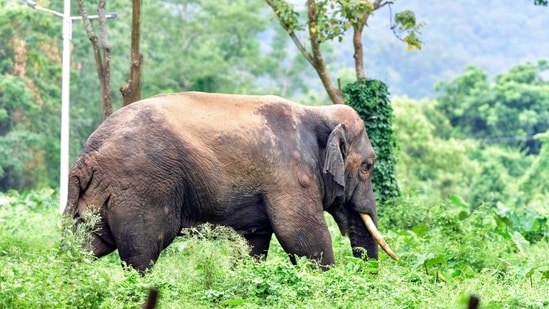
That kind of knowledge is often regarded as anecdotal and doesn't fit neatly into academic papers. However, for Dada, as for many other mising farmers, years of observation of this herd has given him a deep understanding of its behaviour – an ability to anticipate how the elephants are likely to react across different contexts. And he is not alone. A little towards the south in the Karbi Anglong hills, the Karbi community has developed an equally intricate understanding of elephant ecology. Like the Mising, the Karbis are an Indigenous community of Tibeto-Burman origins. They call themselves Arleng, meaning simply people. The overwhelming majority of them continue to depend on land, cultivating paddy maize, ginger and turmeric on hill slopes cleared and rotated under the old jhum system. Their fields sit directly in the path of elephants moving between the Kaziranga floodplain and the hill forests, a landscape that holds well over 2,000 of them.
The Karbis read the forest for the same kind of information that the Mising farmer reads in his herd. Which trails are used in which season? What signs appear before a herd arrives: A bamboo stand snapped at a particular height, dung still warm at the edge of a clearing, the sudden quieting of birds. And, crucially, what to do with those signs.
{{/usCountry}}The Karbis read the forest for the same kind of information that the Mising farmer reads in his herd. Which trails are used in which season? What signs appear before a herd arrives: A bamboo stand snapped at a particular height, dung still warm at the edge of a clearing, the sudden quieting of birds. And, crucially, what to do with those signs.
{{/usCountry}}That knowledge is passive. It tells a family which of the several routes to the weekly market to take that week and which to leave alone when to send children the long way to school; which nights the machan above the field needs someone sitting in it and which nights everyone can sleep; when a crop is worth harvesting a week early rather than losing it entirely. In a good year, a Karbi household calendar bends quietly around the elephants' calendar, and mostly nobody gets hurt on either side
The anthropologist Paul Keil, who spent two years doing fieldwork in Assam, describes these shared routes using the local word dandi, which means they are not simply human paths that elephants happen to intrude on, but routes made and kept open by both species walking them. In his book The Presence of Elephants Sharing Lives and Landscapes in Assam, Keil describes life alongside elephants in Assam not as a standoff between two separate territories but a continuous, uneven negotiation in which each side adjusts to the other.
That is a useful way of understanding what we kept encountering: a precise, place-based knowledge of elephants built not from a single observation, but from years of paying attention to how people and animals move through the same landscape. It is also the kind of knowledge that is often difficult to capture through conventional scientific methods, even as research is beginning to validate some of what communities have long observed. Rather than beginning with the usual alarming headlines about elephants and people, this is the relationship we want to examine: what becomes possible when co-existence is understood as a practice of paying attention and adapting to one another.
India has a long history of sharing space with elephants both wild elephants and captive. Mahouts (elephant handlers), indigenous communities, and elephants themselves have been working out that relationship for generations, through actual day-to-day contact, observations of each other's behaviour, and ways of knowing how to live in a shared landscape.
Take the mahouts, for instance those who spend a large majority of their time with their elephants of Karnataka, mostly from the Kadu Kuruba and Jenu Kuruba communities (forest shepherds and honey shepherds, roughly translated). A mahout from Bannerghatta was once asked how he could tell what his elephant was feeling. He didn’t overthink it. “I look at his eyes,” he said. The eyes would tell him if his elephant was calm, or if he wasn't in a good mood, which would then inform him how he needed to behave around his animal. Animal welfare research in the past few years has started focusing on the white of the eye as a measurable indicator of stress and emotional state. However, it's not just about these individual cues or indicators. Mahouts also know how their animals are doing or what mood they are in by focusing on the subtle shifts in behaviour or positions of certain body parts. It is similar to understanding when your mother has a headache or your best friend has a problem- they don't have to tell you, but you know because they aren't their normal expressive self. Other scientific behavioural assessment tools that welfare scientists use are ethograms which catalog the full range of behaviours typical of a given species, giving researchers a consistent, objective basis for observation and analysis. Qualitative Behaviour Assessment which looks at the expressive quality of animal behaviour. It considers animals as sentient beings, treating their movements and postures as meaningful expressions of inner psychological states Mahouts have been reading these behavioural and expressive states for most of their working relationships with elephants.
None of this is really about discovering something new. It’s about connecting things that already exist: the close, repeated observations the Mising and Karbi bring to a landscape, the reading a mahout brings to a single animal. And yet these are rarely the voices in the room, not in the academic papers that formalise this knowledge after the fact, and not in the policy meetings that decide how conservation plays out on the ground.
The people holding the first two of those, though, are rarely the voices in the room. Not in the academic papers that formalise their knowledge after the fact, and not in the policy meetings that decide how conservation plays out on the ground. Which is where the phrase decolonising conservation knowledge earns its keep, and where it is most often emptied out. It is not about citing a community in the acknowledgements. It is about accepting that a Karbi tracker and a peer-reviewed paper are making claims about the same forest, and that only one of them has been tested continuously, across generations, by people who cannot afford to be wrong.
It is also a plea for natural history itself. The long, undramatic work of watching animals in particular places over the years is exactly what produces this kind of knowledge, and it has fallen out of fashion in a discipline that rewards short studies and large datasets. It is worth remembering that this is how discipline started. Darwin spent 40 years watching earthworms in his garden, ran a single experiment on chalk burial for 29 of them, and published the results as his last book in 1881; asked why he bothered with something so insignificant, he simply said he had been studying their habits for 40 years. And when he came to write about emotion in animals, he did not do it alone. He sent out a questionnaire and built The Expression of the Emotions in Man and Animals on replies from people in India, Ceylon, South Africa, China, North America and Australia, alongside observations from animal keepers, breeders and his own family, precisely because they were the ones doing the looking. Natural history has always depended on people watching the same creatures for long enough to notice something. Communities never stopped doing that. We did.
So, we do not think this requires inventing a new relationship between people and elephants. It requires taking seriously one that indigenous communities, Missing farmers, Karbi trackers, mahouts and elephants themselves have already been building for a very long time and asking what science still must learn by finally listening and observing.
(The views expressed are personal)
This article is authored by Sagarika Phalke, conservation psychologist and Seema Lokhandwala, wildlife biologist and conservation scientist.