
 E-Paper



Rethinking climate action: Smarter solutions beyond summits and pledges
This article is authored by Sriparna Pathak.

 Prefer HTon Google


While the focus of international relations after World War II was to ensure that conflict on the scale of the two world wars never takes place, conflict in another format slowly begun--the conflicts caused by the climate crisis. While environmental issues were discussed in spurts before the 1970s, the decade of the ‘70s not just saw green theory gaining prominence in international relations, but also a surge in awareness and action, including the first United Nations (UN) conference on the environment. What was additionally witnessed was the rise of green political parties and policies. However, 50 years later, the problem not just remains but has become more acute over time.
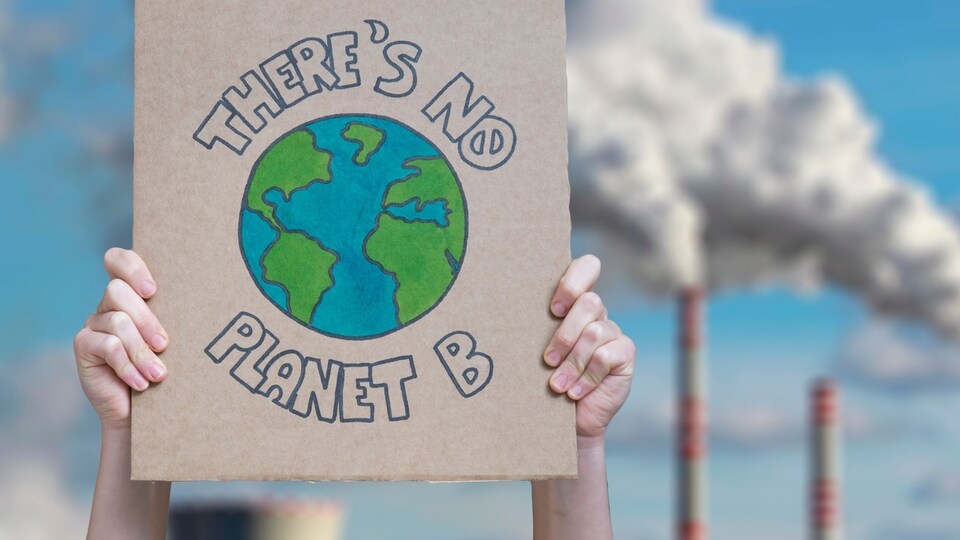
Year after year, global leaders and climate experts convene at lavish international conventions, ranging from COP summits to G20 sidebars, and millions are spent on logistics, travel and accommodation. Just the way the case was in the first UN conference on the environment, these gatherings today produce carefully worded pledges, ambitious emission targets and glossy reports, while global temperatures continue to soar, and extreme weather events become more frequent.
The report of the Intergovernmental Panel on Climate Change in 2023 noted that global emissions have to be necessarily halved by 2030 to limit warming to 1.5 degrees Celcius. However, progress remains pathetically slow. The question that arises is whether these costly, high profile summits can produce any results, or if there can be more practical, and localised innovations, which could plausibly offer a faster path to the climate crisis.
The cause for questioning these summits and meetings arises from the fact that international agreements like the Paris Accord prioritise diplomacy over action, and pledges are non-binding. Enforcement of these pledges is weak, and accountability is non-existent. Only a handful countries have met their 2020 Nationally Determined Contributions (NDCs). Major emitters like China are still reliant on coal.
The US had pledged under the Paris Agreement in 2015 to reduce greenhouse gas emissions by 26-28% below 2005 levels, by the year 2025. However, in the first term of the Trump administration, the US formally withdrew from the Paris agreement, and halted federal efforts to meet the targets. The administration under Trump’s first tenure rolled back over 100 environmental regulations, including the Clean Power Plan, which had aimed at curbing emissions from power plants, and weakened methane emission standards, for the oil and gas sector. The Biden administration rejoined the Paris Agreement in 2021 and ser a more ambitious target of 50-52% reduction by 2030. However, the Climate Action Tracker rated efforts of the US as of 2019 as critically insufficient, citing inconsistent federal action and reliance on State level efforts. Under Trump 2.0, the US has yet again withdrawn from its commitments.
The case of the world’s second most powerful economy and the world’s biggest emitter of greenhouse gases--China is further peculiar. China committed to peaking its carbon dioxide emissions before 2030 and to achieve carbon neutrality by 2060, as outlined in its NDCs under the Paris Agreement. However, China’s continued reliance on coal ensures that its actions do not match its commitments. After facing energy shortages in 2021 and in 2022, China approved of surges in new coal fired power plants, with 2022 seeing the largest permitting wave in a decade! The peculiar part is that China leads in renewable energy deployment, and unlike in the US, there has been no change in government in China. China’s coal expansion contradicts its climate leadership claims.
However, conventions and summits on climate continue, with countries trying to leverage these summits to showcase themselves as leaders in combatting the climate crisis, while the reality is completely different. The financial toll of these conventions, to add to it all, are staggering. For example, the 2022 COP 27 in Egypt cost about $ 150 million to the host country alone, and this is without factoring in the carbon footprint of thousands of delegates flying in on private jets. Tangible outcomes like funding for vulnerable countries, or even technology transfers fall short of promises way too often.
One alternative lies in the empowerment of local and regional initiatives, which address the climate crisis at the grassroots level. Community driven projects, such as reforestation in Ethiopia’s Green Legacy Initiative have planted billions of trees since 2019, restoring ecosystems and sequestering carbon. Such efforts cost a fraction of international summits and engage local stakeholders, thereby fostering long term commitment. Governments and other stakeholders including non-governmental organisations could scale some of these models by providing microgrants to communities for sustainable agriculture, coastal restoration or even renewable energy. Unlike the top-down approach of the pledges at flashy summits, these projects yield immediate environmental and social benefits, from cleaner air to job creation.
The urgency of the climate crisis now demands pragmatism over pomp and show. Redirection of resources from costly conventions and summits, to local projects, policy reforms, market innovations, and public engagement could actually deliver results where pledges have fallen short. The fact that even in 50 years, despite deliberations and discourses at flashy summits, nothing concrete has been produced, owing to double standards of countries, and particularly of the largest emitters, means that an inward-looking approach and regional and localised solutions are needed.
This article is authored by Sriparna Pathak, professor, China Studies and International Relations, Jindal School of International Affairs, OP Jindal Global University, Sonipat.


