
 E-Paper



World heritage in the age of climate crisis
This article is authored by Mahendranath Sudhindranath and John Bosco Lourdusamy.

 Prefer HTon Google


The 48th session of the UNESCO World Heritage Committee concluded in Busan, South Korea, with renewed global commitments to be more inclusive in the protection of sites, reflecting the world's diversity. Heritage is to be considered as a force for cohesion and empowerment, particularly in a volatile global order. The UNESCO director general, Khaled El-Enany, opined that shared memories and heritage knowledge would help restore exchanges after periods of violent division. With 25 new sites inscribed into the list, there are now 1273 World Heritage Sites spanning across 173 nations in the world.
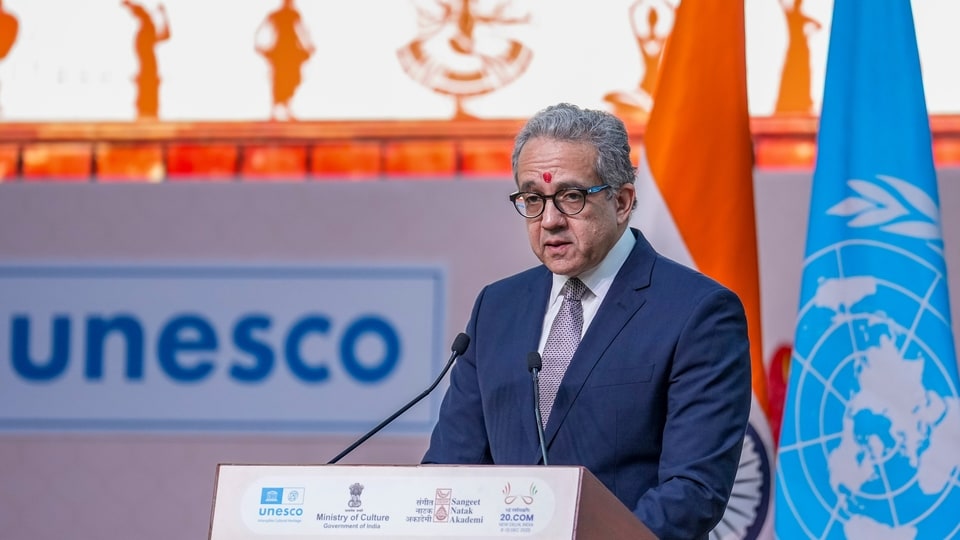
The World Heritage Convention is one of the most universally ratified international conventions, with 196 State parties – demonstrating the enormous global appeal it possesses. The highlight of the session in Busan was the focus it gave to bringing underrepresented regions onto the list. This was the first time three African countries got their first inscription – viz., South Sudan, Comoros and São Tomé and Príncipe, the last two being Small Island Developing States (SIDS). President Azali Assoumani of Comoros personally attended the convention to celebrate the milestone of his country’s first inscription, pointing to the political significance it holds in such underrepresented nations. Apart from that, for the first time, a World Heritage Strategy for SIDS for the period 2026 – 2034 was announced at Busan with a budget of $ 13 million. This is to enhance the capacity of SIDS in identifying, protecting and managing heritage – especially the impacts of climate change. The strategy for SIDS also complements the pre-existing strategy for Africa, and both aim to look at heritage as a tool of resilience, empowering local communities.
The emergency entry of three sites, viz., Boma-Badingilo Migratory Landscape (South Sudan), Mount Amel Castles (Lebanon) and Sebastia (State of Palestine) points to the growing threat posed by geopolitical tensions on heritage conservation. Along with these three, the Historic Inner City of Paramaribo (Suriname), the Ancient City of Tauric Chersonese and its Chora (Ukraine) and Tyre (Lebanon) were also inscribed on the List of World Heritage in Danger. These timely actions would ensure technical and financial assistance from the international community and save it from possible irreversible destruction.
The cultural and natural sites are irreplaceable and priceless assets of humanity with an ‘outstanding universal value.' The World Heritage Sites are enduring examples of humanity’s connection with nature. Many of them are inspiring cultural landmarks that symbolise the symbiosis of human genius and natural forces. A recent analysis by UNESCO and the World Resources Institute (WRI) finds that 73% of world heritage sites are threatened by water-related hazards, viz., drought, water stress, and riverine or coastal flooding. Nearly 600 sites across the globe experience water scarcity issues, while 400 sites face severe flooding conditions.
The rise in sea level is a huge threat, as one-third of the heritage sites are in coastal towns. Already, 60% of heritage properties in the Mediterranean region have reported risks of coastal flooding and erosion resulting from sea-level rise. And 70% of cultural heritage properties are in urban landscapes, exposing them to the pressures of urbanisation and climate change. UNESCO has succeeded in combining technical advancement, international cooperation, traditional knowledge, and community participation to ensure sustainable management practices at many sites.
With the inclusion of Sarnath in Uttar Pradesh after a long wait of 18 years in the Tentative List, India now has 45 World Heritage Sites. There is an evident geographical bias in inscribing heritage, as a disproportionate number of sites are from Europe and North America (46.16%). Almost 20 of the 48 World Heritage Conventions were held in Europe, of which Paris alone hosted nine conventions. India could host the convention only once in its history – the 46th session in 2024 at New Delhi.
In the future, given the emphasis on reflecting diversity, hopefully more and more sites will be inscribed from India. India has one of the richest tentative World Heritage Lists submitted to UNESCO, with around 69 properties in total. After implementing the best management plan for a particular site, it is nominated to the tentative list, followed by global scrutiny to select the site – a process which may require a long wait period. The climate crisis has already put its mark on World Heritage Sites in India. For instance, the rise in sea level and intense storms resulted in salt corrosion and water damage in coastal monuments like the Shore Temple in Mahabalipuram and the Sun Temple in Konark. The unpredictability of Indian monsoon patterns has resulted in waterlogging and foundation weakening of desert forts in Rajasthan and Himalayan monasteries in Ladakh. Urban pollution and acid rains have already disfigured monuments like the Taj Mahal and the Red Fort. Monuments here act as a lens to understand the impact of the climate crisis.
India, with a long continuity of its civilisation, however, lacks efficient heritage management owing to multifarious reasons, including institutional challenges, economic pressure, and technical gaps. There are around 3,693 protected monuments under the central heritage management agency--the Archaeological Survey of India, while approximately 4,600 monuments are protected by various states and Union Territories. According to a CAG report, a whopping five lakh monuments are unprotected and unregistered. The 2018 amendment to the Ancient Monuments and Archaeological Sites and Remains (AMASR) Act, lifting the 100-metre radius construction ban that had existed since 1958, will also threaten the already protected monuments. India’s aspiration of Viksit Bharat should be in consonance with laying a visionary framework of heritage management that fosters local employment and instils civic pride. Adopting strong policies of heritage conservation without any kind of bias is as important as adapting for a climate-resilient future for India’s tangible and intangible heritage.
(The views expressed are personal)
This article is authored by Mahendranath Sudhindranath, senior research fellow and John Bosco Lourdusamy, associate professor, the Department of Humanities and Social Sciences, IIT Madras.


