
 E-Paper



India needs more innovative young farmers
This article is authored by Jeganathan Chockalingam, vice chancellor, Sarala Birla University and Sumit Kaushik, social impact and public policy consultant.

 Prefer HTon Google


As India enters 2026, agriculture stands at a defining crossroads. It is no longer merely an economic sector to be measured in output and growth rates; it remains a living expression of India’s civilisational ethos. Agriculture sustains nearly half of the country’s population, anchors rural livelihoods, and fuels multiple downstream industries. As India advances toward its vision of Viksit Bharat by 2047, the welfare, resilience, and empowerment of farmers must remain central to the nation’s development model.
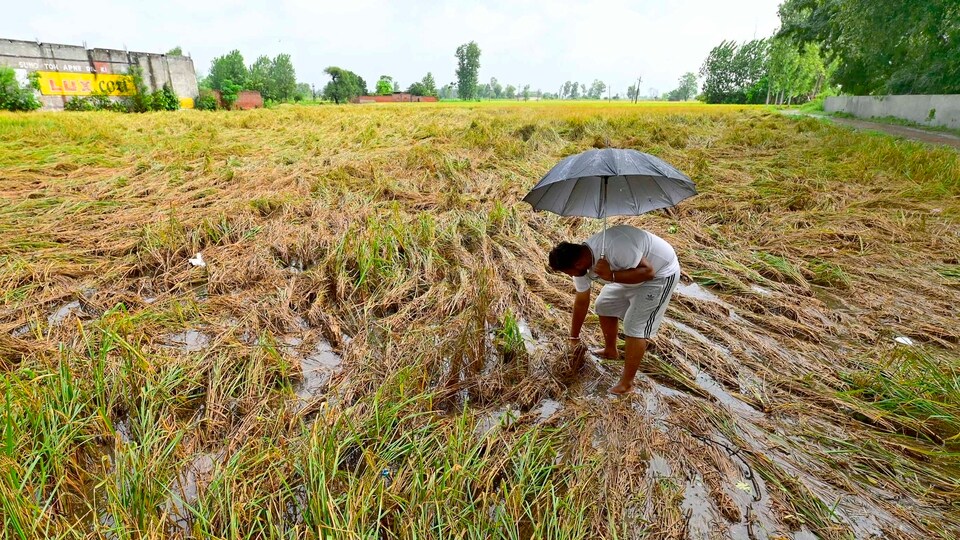
Yet this moment is also marked by urgency. Climate volatility, market fragmentation, rising input costs, and income uncertainty have intensified pressures on Indian farmers. Agriculture today sits at the intersection of environmental stress, economic reform, and social responsibility. How India responds in this decade will determine whether farming remains a source of distress—or becomes a driver of dignity, stability, and sustainable growth.
A few years ago, in a quiet corner of Jharkhand’s Gumla district, this challenge played out in deeply personal terms. Raghunath, a small farmer, had reached the brink of abandoning his land altogether. Unpredictable monsoons, escalating operational costs, and exploitative market intermediaries had steadily eroded both income and hope. What followed, however, offers a powerful lesson in what systemic intervention can achieve. Through the support of a Farmer Producer Organisation (FPO) and targeted government schemes, Raghunath gained access to soil health testing, assured price mechanisms, and training under a micro-irrigation programme. Today, his farm is viable once again. His journey underscores a crucial truth: Farmer distress cannot be addressed through sympathy alone. It requires structured, scalable, and sustainable solutions that restore agency and self-reliance.
Farmer suicides remain one of India’s most painful contradictions. In a nation where agriculture forms the backbone of the economy, the continued suffering of those who cultivate the land demands collective introspection. While public discourse often dwells on the magnitude of the crisis, the more urgent task now is to focus on solutions—on how India can redesign its agricultural ecosystem to deliver resilience, predictability, and dignity.
Over the past decade, the Government of India has undertaken a series of forward-looking interventions aimed at making agriculture more remunerative and less vulnerable to risk. These initiatives move beyond short-term relief and represent strategic building blocks aligned with India’s long-term development vision. Improving rural infrastructure, strengthening market access, and reducing exposure to climate and price shocks are no longer welfare measures; they are economic imperatives.
At the core of this transformation are targeted programmes designed to stabilise farm incomes and enhance productivity. The Pradhan Mantri Kisan Samman Nidhi provides direct income support to small and marginal farmers, offering financial stability during lean periods. The Pradhan Mantri Fasal Bima Yojana creates a critical safety net against crop failure, shielding livelihoods from climatic uncertainty. The Agri Infrastructure Fund and Micro Irrigation Fund strengthen rural productivity through improved water management, storage, and post-harvest systems.
Market access has also undergone structural reform. The National Agriculture Market (e-NAM) digitally integrates mandis, enabling farmers to access fair prices beyond local boundaries. Kisan Rail and enhanced farm-produce logistics have expanded opportunities for perishable goods, linking rural producers directly with urban consumption centres. The promotion of FPOs and the Cluster Development Programme under MIDH has empowered farmers through collective strength and diversification. Complementary initiatives such as the Soil Health Card Scheme and the promotion of organic farming encourage sustainable practices that enhance yields while preserving environmental integrity. Agricultural mechanisation and improved access to institutional credit have further reduced dependence on manual labour and improved efficiency.
Taken together, these measures represent a decisive shift—from reactive crisis management to proactive resilience building.
Looking ahead, the future of Indian agriculture will depend as much on farmer capability as on policy design. Continuous training, digital literacy, and exposure to market dynamics are no longer optional. A farmer equipped with knowledge of weather forecasting, financial planning, and technology-enabled irrigation is not merely a cultivator but a rural entrepreneur.
Equally important is the creation of vibrant start-up ecosystems across agriculture and allied sectors. Attracting young talent back to farming requires innovation at scale. From agri-tech platforms to drone-based precision agriculture, technology must become the defining feature of India’s farm economy. A new generation is already leading this shift. Start-ups such as FASAL, DeHaat, Ninjacart, AgroStar, and CropIn are deploying IoT, smart sensors, drones, and intuitive digital platforms to optimise farm decisions. Their work signals a future where Gen Z does not abandon agriculture but reinvents it—turning wastelands into productive assets through vertical farming, efficient water use, and controlled-environment agriculture.
Eliminating the tragedy of farmer suicides will ultimately require an ecosystem that balances empathy with efficiency. Universities, governments, and the private sector must converge to create models of shared prosperity. Academic institutions have a critical role to play in applied research, field-level innovation, and farmer training. Embedding practical agriculture as a mandatory component of education—where students spend time in villages during sowing and harvest seasons—can bridge the gap between theory and lived reality. Such immersive exposure reconnects young minds with India’s agrarian roots while equipping them to develop real-world solutions.
Structured academic engagement on drought management, flood mitigation, pest control, and climate adaptation must become integral to curricula. Empowering students to act as problem-solvers for farmers and stewards of the environment can nurture a generation of socially conscious innovators.
When farmers prosper, the nation advances. Viksit Bharat will not be realised through urban growth alone. It will take shape when agriculture regains dignity, resilience, and aspiration—powered by informed policy, technological innovation, and the energy of India’s youth.
This article is authored by Jeganathan Chockalingam, vice chancellor, Sarala Birla University and Sumit Kaushik, social impact and public policy consultant.


