India’s rise over the past three decades is a story of transformation on a scale few nations have matched. Our progress since 1991, anchored in urban renewal, expansive infrastructure, and a dynamic digital revolution, has vaulted us to the world’s top economic ranks while lifting millions out of poverty.
Yet, India’s ambitions are far from fulfilled. The pursuit of shared and broad-based prosperity by 2047 and net zero emissions by 2070 signals a new era, one that will be defined by how deftly India manages the trade-offs and tensions at the heart of its growth.
What links India’s earlier leaps with the challenges emerging today is something often overlooked: Materials. Every sign of development, from highways and metros to factories and homes, has depended on vast flows of steel, cement, and minerals. Now, as new needs emerge for advanced components and critical minerals, especially for the green transition, the country’s material story is being rewritten in scope and complexity.
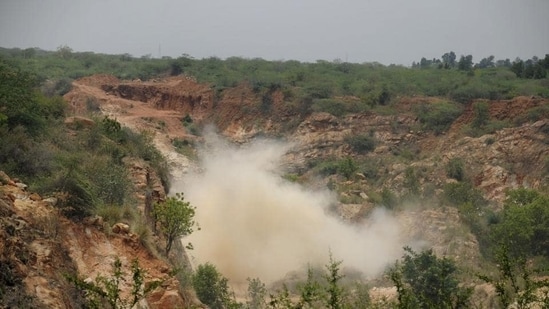
The dynamics of material demand have changed fundamentally. While megacities still account for enormous consumption, rapid growth in tier-II and peri-urban towns, along with rural roads and housing, is adding new pressure to supply chains. The green transition, with its appetite for rare earths, critical minerals and sustainable construction, is introducing entirely new categories into the mix. And, what’s more, surging demand exposes India to global market volatility and import risks, even as growing domestic extraction intensifies pressures on land, water, and biodiversity in mineral-rich states.
At this material crossroads, India faces a set of colliding imperatives. The country’s drive for jobs, infrastructure, and new industry demands a new calculus of basic resources, but not without attendant environmental and social challenges. Many of these challenges are unevenly distributed, creating new lines of inclusion and exclusion: mining brings jobs but can also alienate communities; urban expansion generates prosperity and strain in equal measure.
{{/usCountry}}At this material crossroads, India faces a set of colliding imperatives. The country’s drive for jobs, infrastructure, and new industry demands a new calculus of basic resources, but not without attendant environmental and social challenges. Many of these challenges are unevenly distributed, creating new lines of inclusion and exclusion: mining brings jobs but can also alienate communities; urban expansion generates prosperity and strain in equal measure.
{{/usCountry}}The dilemma is clear: Can India sustain speed and scale, or must it choose environmental security, resilience, and equity? The answer is not a binary choice, but a reimagining of the foundations themselves: A “material turn” that builds the next leap on smarter, more adaptive systems.
So, what does this material turn look like in practice? It starts with integration. Coordinated policymaking, linking mining, industry, infrastructure, construction, and urban planning, must replace fragmented implementation. Targeted policy shifts are needed to ensure India not only secures supplies of traditional materials, but also the new categories essential for industry, transition, and technology.
Innovation needs to be unleashed across sectors, and much of it will be triggered by growing and intensifying climate risks and the need to mitigate those risks. Clean steelmaking, green cement, and circular manufacturing--recycling and reusing everything from construction waste to industrial by-products--can reduce and redirect demand instead of simply fanning it. But more is needed: We must make efficiency and circularity the default, not the exception, across its supply chains. This means investing in new skills, modern equipment, and resilient logistics, particularly in fast-growing and vulnerable regions.
Finance and partnerships have a part to play. Innovative financing instruments such as blended finance, targeted green bonds, and cross-sector investments can help scale up both infrastructure and material innovation. Just as crucial, local governments and communities need to be brought into the planning process, ensuring benefits are shared and negative impacts are mitigated.
Importantly, today’s pressures are already yielding green shoots of possibility. Cities are trialling large-scale recycling, and public-private partnerships are experimenting with new business models for resource recovery. Some industrial regions are showing how material stewardship can build both jobs and resilience. These early efforts, if expanded and replicated, are the proof that a material turn is more than an ideal: it is within reach.
India’s material crossroads is ultimately a test of collective capacity. Success will require not just new policies, but a clear vision for how the very foundations of growth are managed and rebuilt. If we get this turn right, India can sustain its progress and set standards for an age where prosperity is measured as much by resilience and shared benefits, as by headline GDP.
A nation’s future is shaped as much by what’s visible in its skylines as by what lies beneath. At India’s current crossroads, the next leap will hinge on seeing materials, how they’re sourced, used, and renewed, not as a hidden cost, but as the cornerstone of ambition. The crossroads moment is here; the direction we choose now will determine the strength and stability of India’s path forward.
This article is authored by Manish Dubey, chief, Practice, and Amir Bazaz, head, Practice (Infrastructure and Climate), Indian Institute for Human Settlements (IIHS).