A woman is called a witch. A crowd gathers, she is humiliated, beaten, ostracised, driven from her home, dispossessed of her land—or killed.
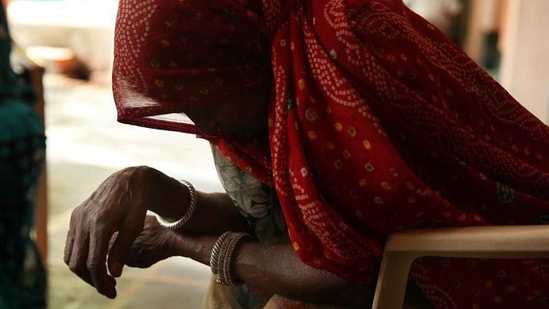
We often call the final act witch-hunting. But that is where our understanding of this violence goes wrong. Witch-hunting is not merely an act of murder or assault. The accusation itself often initiates a continuum of violence involving humiliation, social exclusion, dispossession, intimidation and, in extreme cases, death. Women who are widowed, elderly, isolated or socially vulnerable are disproportionately targeted. It is one of the most brutal forms of gender-based violence and it is rarely an individual act rather than collective actions with the involvement of the entire community. A woman is identified, usually by someone claiming special knowledge or authority, and the accusation is then legitimised through family, community and sometimes local institutions. Her dignity, reputation, livelihood and social belonging can be destroyed long before physical violence occurs.
An effective response, therefore, requires prevention, protection and response framework involving early identification of risks along with institutional accountability.
On August 13, 2026, the Supreme Court called witch-hunting an “anathema to human dignity” and held that superstition cannot override the rule of law, constitutional morality, or reason. Noting that victims—mostly women—face torture, sexual violence, ostracism, and other abuse beyond killing, the Court recognised witch-hunting as a form of social prejudice that exposes vulnerable women to collective violence and humiliation.
NCRB recorded 663 witch-hunting-related murders in India from 2015 to 2021, while Jharkhand reported 593 deaths between 2001 and 2021. Fear, community pressure, and distrust of law enforcement conceal many cases of harassment and persecution. Only death counts understate the violence and the need for earlier legal intervention.
Six states have enacted anti-witch-hunting laws reflecting local forms of the offence. Bihar’s 1999 and Jharkhand’s 2001 laws recognised witch-branding but remain narrow and weak. Later laws added compensation, police duties, and collective responsibility. Assam went further by criminalising witch-branding and accusations, including the accuser’s role, while providing for prevention, rehabilitation, and accountability. Assam's approach is instructive because it moves towards criminalising the identifier and recognising instigation, aiding and abetment.
{{/usCountry}}Six states have enacted anti-witch-hunting laws reflecting local forms of the offence. Bihar’s 1999 and Jharkhand’s 2001 laws recognised witch-branding but remain narrow and weak. Later laws added compensation, police duties, and collective responsibility. Assam went further by criminalising witch-branding and accusations, including the accuser’s role, while providing for prevention, rehabilitation, and accountability. Assam's approach is instructive because it moves towards criminalising the identifier and recognising instigation, aiding and abetment.
{{/usCountry}}In many cases, it is not a single individual. Witch-hunting can involve traditional practitioners, family members, neighbours, community leaders and others who participate in or legitimise the accusation. An effective anti-witch-hunting law must disrupt the chain behind the violence: Who makes and legitimises the accusation, mobilises the community, benefits from dispossession, or stays silent. It must also address the land disputes, inheritance conflicts, illness, poverty, and gender norms that sustain such accusations.
Punishment alone will not end witch-hunting as conviction rates remain extremely low. Without a measure of protection, community action, tougher sentences may have little effect. The State must be required to act before a woman is killed.
The State must prevent violence, not only prosecute it. An accusation should trigger immediate risk assessment and protection. Survivors may lose homes, land, livelihoods, relationships, and community support, while their children face stigma. Justice, therefore, requires not only an FIR and conviction, but also safety, medical and legal aid, counselling, compensation, livelihood and property restoration, and a dignified return to life.
Witch-hunting is not merely superstition; it is shaped by land and inheritance disputes, poverty, illness, gender inequality, and women’s marginalisation. In rural and tribal communities, accusing a woman of witchcraft can legitimise her dispossession. Treating such cases as ignorance alone obscures the material interests and power relations driving the violence.
Official records reflect both violence and the legal system’s capacity to register it. Success should therefore be measured not only by FIRs, arrests, and convictions, but also by preventing escalation, ensuring rapid response, and restoring survivors’ safety, compensation, livelihoods, and land.
* Prevention: Community awareness, engagement of influencers, myth-busting communication and social norm change activities. Fixing the responsibility on community and PRI leaders for any such incidence starting from the accusation.
* Protection: Early identification of threats, safe reporting channels and immediate support to at-risk women. Community actions are needed.
* Prosecution: Timely investigation, accountability for instigators, community member around it and coordinated legal action.
* Rehabilitation: Compensation, psychosocial care, livelihood of restoration, reintegration with dignity and linking them with various government welfare schemes. Regular follow up with victims and the community is important to bring back the confidence.
Success should be measured by prevention, rapid response, survivor protection and rehabilitation—not only FIRs, arrests and convictions. A community-based, multi-sectoral approach is the most sustainable way to end witch-hunting and protect vulnerable women’s dignity and rights. This requires coordinated action by district administrations, police, health and social welfare services, and local institutions. Communities must dismantle the conditions that turn accused women into scapegoats and deny their humanity, credibility and dignity.
(The views expressed are personal)
This article is authored by Kiran Kumari Passi, director Jharkhand Women’s Development Society.