
 E-Paper



A reactor goes critical at a critical moment
Authors - Omkar Dhanke, research analyst & Debajit Palit, centre head, Centre for Climate Change and Energy Transition, Chintan Research Foundation, New Delhi.

 Prefer HTon Google


India’s 500 MWe Prototype Fast Breeder Reactor (PFBR) at Kalpakkam achieving first criticality on April 6, 2026, is not just a technical milestone in India’s civil nuclear journey; but a strategic signal at a moment when energy security, technological sovereignty, and climate commitments are converging. Criticality marks the start of controlled fission chain reaction in the reactor core. Though it will take some more time for commercial operation to produce electricity, it is big leap in India’s nuclear programme particularly towards successful operationalising the second stage of India’s three-stage nuclear programme.
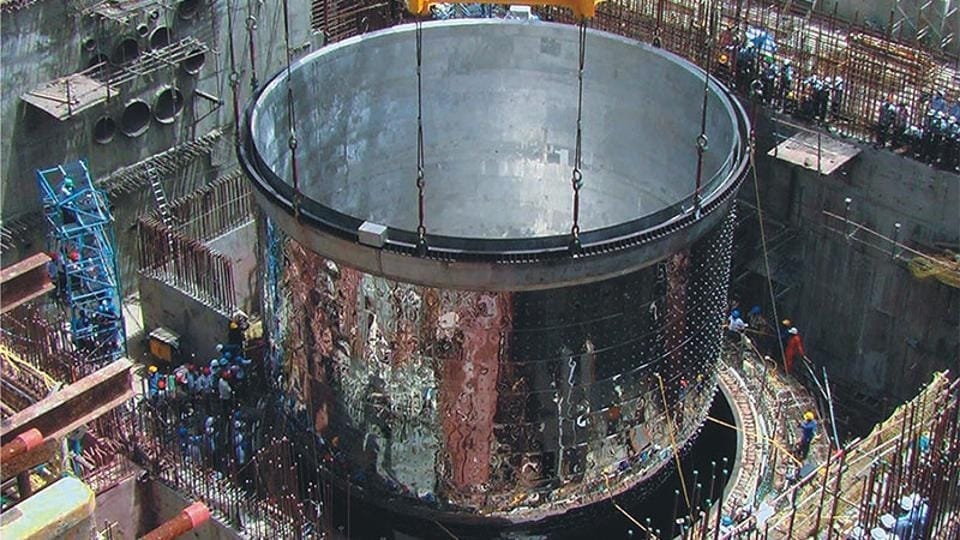
The timing could not be more consequential. The ongoing West Asia conflict has disrupted energy flows exposing India’s structural dependence on imported hydrocarbons. At the same time, India’s updated Nationally Determined Contributions demand a reliable expansion of non-fossil electricity towards net-zero trajectory. PFBR criticality, therefore, sits at the intersection of geopolitical uncertainty, climate commitments and economic growth. Though it took over two decades, twice the original budget, and missed deadlines, the success signals not merely technological progress, but a strategic choice - to respond to energy vulnerability through indigenous capability.
Conceived by Dr Homi Bhabha in the 1950s, the programme was designed around India’s unique resource constraints: limited domestic uranium but among the world’s largest thorium reserves.
The first stage relied on pressurised heavy-water reactors (PHWRs) using natural uranium – mostly U238, which can't sustain a chain reaction, but a small fraction of U235 it has can. The U235 absorbs a neutron and splits (fission) to produce energy (heat) and neutrons. The leftover U238 absorbs neutron to produce plutonium (Pu239). This along with the unused U238 forms the spent fuel along with other radioactive substances.
In the second stage, the PFBR is designed to use the spent uranium from the PHWR as well as produce more plutonium. The core of PFBR is surrounded by a blanket of uranium-238. Fast neutrons convert the uranium into fissile plutonium-239, enabling the reactor to produce more fuel (Pu239) than it consumes. The reactor is designed to eventually use thorium-232 in the blanket, after enough Pu239 inventory is generated. Through transmutation, thorium-232 will be converted into uranium-233, which will fuel the third stage reactors. More thorium conversion will be used, by absorbing neutrons, to produce U-233 to generate more energy.
The success of PFBR, only the second country globally after Russia, is, therefore, not simply another reactor in India’s expanding nuclear fleet. It is the bridge that enables the multiplication of fissile material inventories by strengthening the technical and material foundation necessary for the eventual deployment of thorium-based reactors in the third stage. Without the breeder stage, India’s long-term nuclear strategy would remain structurally dependent on imported uranium. Today, more than two-thirds of India’s uranium requirements are met through international supply agreements. As nuclear capacity expands toward the target of 100 GW by 2047, reliance on external fuel sources would only deepen. PFBR thus represents a structural response to fuel vulnerability rather than just a technological achievement.
Equally significant is the closed fuel cycle approach that underpins India’s nuclear power programme. Unlike once-through nuclear systems that treat spent fuel as waste, India reprocesses spent fuel to recover plutonium and reusable materials for subsequent cycles. Fast breeder reactors extend the energy extracted from each tonne of uranium several-fold while reducing the volume and radiotoxicity of high-level waste requiring long-term disposal. The Kalpakkam complex, where fuel fabrication, reprocessing and waste management will coexist alongside reactor operations, demonstrates that India’s nuclear strategy is built as an integrated industrial ecosystem.
The milestone also assumes greater importance considering the recently passed SHANTI Act 2025. By streamlining licensing processes, strengthening regulatory structures, and enabling broader participation in nuclear infrastructure development under defined safeguards, the Act creates the institutional conditions necessary for scaling advanced nuclear technologies through both public and private sector engagement. PFBR criticality thus complements a wider policy shift: indigenous technological capability is now being matched with regulatory reforms. Furthermore, PFBR was made possible by joint effort of Indian public and private sector working in tandem, the intent with which the government brought in the SHANTI Act.
The chain reaction that has now begun quietly inside the PFBR core may not immediately transform India’s energy landscape. But structurally, it marks the beginning of a transition toward a likely thorium-enabled future. It signals the opening chapter of India’s pathway toward technological self-reliance and energy sovereignty in a VUCA world. What unfolds from here will be critical to track in the years ahead.
(The views expressed are personal)
This article is authored by Omkar Dhanke, research analyst and Debajit Palit, centre head, Centre for Climate Change and Energy Transition, Chintan Research Foundation, New Delhi.


