The Assam Cabinet’s approval of the Assam Hydrocarbon Exploration, Production and Upstream Ecosystem Development Policy, 2026, comes at a critical moment. The policy, which has now come into force and is reported to remain operational for 10 years, seeks to attract fresh investment into oil and natural gas exploration, particularly in areas where geological indications suggest potential but commercial discoveries have not yet been made. This policy is significant not because it promises another oil boom, but because it confronts a structural problem that has been ignored for too long: The state’s petroleum economy is increasingly dependent on mature discoveries while exploration in new, riskier areas remain adequate.
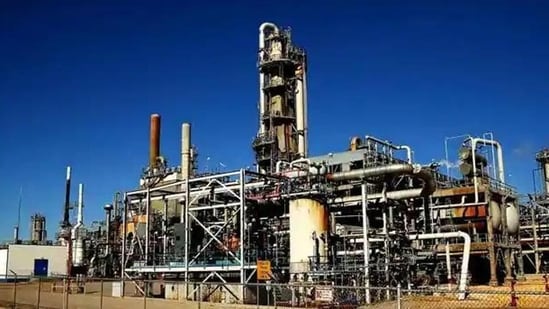
Assam’s oil story began more than a century ago with the discovery of oil at Digboi. Today, the state faces an uncomfortable paradox: It remains one of India’s historic hydrocarbon-producing regions, but its future production base is increasingly dependent on discoveries made decades ago.
The urgency is evident from the numbers. Assam currently produces around four million metric tonnes (MMT) of crude oil annually. Chief minister (CM) Himanta Biswa Sarma has warned that without new reserves, production could begin declining within the next decade. More significantly, he has pointed out that Assam has not witnessed a significant new oil or gas discovery in nearly two decades, with exploration increasingly concentrated around existing fields. This is not merely a production problem. It is an exploration problem.
Hydrocarbon exploration is fundamentally a high-risk business. Drilling a new exploratory well requires substantial expenditure on seismic surveys, geological studies, drilling equipment, manpower and environmental safeguards. Yet there is no guarantee that commercially recoverable hydrocarbons will be found. This uncertainty has discouraged companies from moving aggressively into unexplored areas of Assam. If an exploratory well turns out to be dry, a large part of the investment may simply be lost. The new policy attempts to address precisely this market failure.
{{/usCountry}}Hydrocarbon exploration is fundamentally a high-risk business. Drilling a new exploratory well requires substantial expenditure on seismic surveys, geological studies, drilling equipment, manpower and environmental safeguards. Yet there is no guarantee that commercially recoverable hydrocarbons will be found. This uncertainty has discouraged companies from moving aggressively into unexplored areas of Assam. If an exploratory well turns out to be dry, a large part of the investment may simply be lost. The new policy attempts to address precisely this market failure.
{{/usCountry}}The state government plans to offer incentives such as GST-related concessions, subsidised or concessional land arrangements and logistical support to encourage companies to undertake exploration. The intention is not to guarantee profits but to reduce some of the initial risks associated with exploration. That is a sensible intervention. But incentives alone cannot revive Assam's hydrocarbon economy.
Assam should not measure the success of the policy simply by counting new wells or additional barrels of crude. Exploration can generate a much wider economic ecosystem involving seismic services, drilling equipment, engineering, logistics, geological technologies, data analytics and specialised manpower. This is particularly important because Assam can potentially become the Northeast's hub for hydrocarbon services.
Recent developments indicate the possibility of such integration. ONGC has commissioned gas-evacuation facilities at Khoraghat in Golaghat district, connecting production infrastructure with the North East Gas Grid. Such infrastructure can improve gas evacuation, reduce wastage and expand the availability of natural gas for households, industry, transport and power generation.
The state should, therefore, use the 2026 policy to build an ecosystem around exploration rather than merely provide concessions to producers. Universities and research institutions should be brought into this process. Assam's higher education institutions, IIT Guwahati and industry players can collaborate on Artificial Intelligence-based exploration, remote sensing, geospatial mapping, methane monitoring, drilling technologies and environmental management. Such partnerships would allow Assam to capture more of the technological value generated by its hydrocarbon resources. Yet Assam's hydrocarbon ambitions come with an important caveat: exploration must not come at the expense of the state's fragile ecology.
Oil and gas operations in Assam have historically existed alongside wetlands, forests, agricultural land and densely populated settlements. The 2020 Baghjan blowout remains a stark reminder of the environmental and social risks associated with hydrocarbon operations. The new policy should make environmental safeguards part of the investment proposition rather than treating them as regulatory hurdles. Modern exploration must involve advanced well-integrity systems, methane monitoring, emergency response mechanisms, reduced surface footprints and strict environmental compliance. The objective should be responsible exploration, not exploration at any cost.
There is also a larger economic question. If new exploration succeeds, how much of the resulting economic value will remain within Assam? The answer should not be limited to royalties or taxes. The state should insist on developing local supply chains, training Assamese youth, encouraging local enterprises to enter oilfield services and creating partnerships between energy companies and educational institutions. A new generation of geologists, petroleum engineers, environmental specialists, data scientists and technicians should emerge from the state's own talent pool. This would transform hydrocarbon exploration from an extractive activity into an employment and knowledge-generating sector.
Assam's new hydrocarbon policy is ultimately a gamble on exploration. The government is betting that modest incentives and a more investor-friendly environment can persuade companies to take risks that they have so far avoided. The logic is compelling. If Assam continues producing from old discoveries without sufficiently replacing them, today's four MMT crude economy could gradually weaken. But the policy's success should not be judged merely by the number of companies attracted or wells drilled.
The real test will be whether Assam can convert its century-old petroleum legacy into a modern upstream ecosystem—technologically sophisticated, environmentally responsible and locally embedded. Assam gave India its first oil industry. Its next challenge is to show how an old hydrocarbon province can reinvent itself for a changing energy economy. The objective should not simply be to extract more oil. It should be to extract more value, more technology, more employment and greater energy security from Assam's hydrocarbon potential—while preparing for a future in which oil will no longer dominate the energy landscape.
(The views expressed are personal)
This article is authored by Monalisa Deka, assistant professor, Department of Public Administration, Assam Don Bosco University.